Your home is probably the single biggest thing you own. It’s also probably the single biggest thing draining your wallet every month through wasted energy.
So where do you start?
Eco home design isn’t about ripping out your kitchen and starting over with bamboo everything. It’s about making smart, targeted choices in how your home is built, powered, and finished, so it uses less energy without asking you to sacrifice comfort. That’s it. That’s the whole idea.
I’ve spent years testing this stuff in my own home, one upgrade at a time, and I’ve watched the results show up in my energy bill. Below are 15 ideas that actually move the needle, organized into three groups: structure, systems, and materials. Each one comes with what it costs, what it saves, and how long it takes to pay for itself.
Quick note on terminology. “Eco,” “green,” “sustainable,” and “net-zero” get thrown around like they’re interchangeable. They’re not.
- Eco-friendly / green home: Uses less energy, water, and resources than a standard home.
- Sustainable home: Built and maintained to minimize long-term environmental impact, including the materials themselves.
- Net-zero home: Produces as much energy as it consumes over a full year, usually through solar.
- Passive house: Built to an ultra-strict efficiency standard where heating and cooling loads are dramatically reduced through design alone.
You don’t need to hit “net-zero” to make a real difference. Most of the gains here come from the boring stuff nobody puts on a mood board.
Passive & Structural Design Ideas
This is the foundation. Get these right and everything else works better, and costs less.
1. Design (or Retrofit) for Passive Solar Orientation
The first sentence you need to know: passive solar design uses your home’s position relative to the sun to heat and cool it for free.
If you’re building new, orient the longest side of the house to face south (in the Northern Hemisphere), with larger windows on that side to capture winter sun. Add overhangs sized to block that same high summer sun. That’s it. No equipment, no maintenance, just physics working in your favor.
Can’t build new? You can still capture some of this benefit. Add deciduous trees on the south and west sides. They shade you in summer and drop their leaves to let sun through in winter.
The simple fix? Even without a full redesign, moving furniture and adjusting window coverings to match the sun’s seasonal path can shave real degrees off your indoor temperature swings.
2. Upgrade Your Insulation
Here’s a stat that surprises people: the EPA estimates that proper air sealing and insulation can cut heating and cooling costs by an average of 15%, or about 11% off your total energy bill.
Most homes built before 1990 are under-insulated by today’s standards. Attics are the worst offenders, because heat rises and escapes right through an under-insulated roof.
Where to focus, in order:
- Attic (highest ROI, easiest access)
- Basement/crawlspace rim joists
- Exterior walls (more invasive, save for a bigger renovation)
Because:
Poor insulation doesn’t just waste energy. It creates cold spots, drafts, and rooms that never feel quite comfortable no matter what your thermostat says.
3. Air Seal Before You Do Anything Else
If insulation is the blanket, air sealing is what stops the blanket from having holes in it.
Gaps around windows, doors, outlets, recessed lighting, and where pipes enter the house let conditioned air leak out constantly. A blower door test (part of most home energy audits) will show you exactly where.
Sealing these gaps with caulk and weatherstripping typically costs under $500 in materials and a weekend of labor. It pays for itself faster than almost anything else on this list.
Real talk: I sealed the gaps around my own attic hatch and recessed lights and watched our winter heating runtime drop noticeably within the first cold snap. It’s not glamorous work. It works.
4. Install Triple-Pane Windows
Old single-pane windows are basically holes in your wall with a view.
Triple-pane windows use three layers of glass with insulating gas between them, cutting heat transfer dramatically compared to standard double-pane. Builders and energy auditors increasingly call this one of the highest-impact renovations for sustained comfort, not just because of the energy savings, but because it eliminates the cold draft you feel sitting near an old window in winter.
The catch? Triple-pane windows are expensive, often $1,000-$2,000 per window installed. The payback period is long, 10 to 20 years. This one’s a long-term play, best done when your existing windows need replacing anyway, not as a standalone project.
5. Choose a Cool or Reflective Roof
Standard dark asphalt shingles absorb heat. A cool roof, made with reflective coatings or lighter-colored materials, bounces solar heat away instead of soaking it up.
In hot climates, this can lower attic temperatures by 30°F or more, which means your AC works less. In cold climates, the benefit shrinks, so weigh this one against your local weather before spending extra on it.
Best for: homes in the South and Southwest with high AC use.
Skip or deprioritize if: you’re in a cold northern climate where heating dominates your energy bill.
Energy & Water Systems
Once the structure is tight, systems are where the biggest dollar savings live.
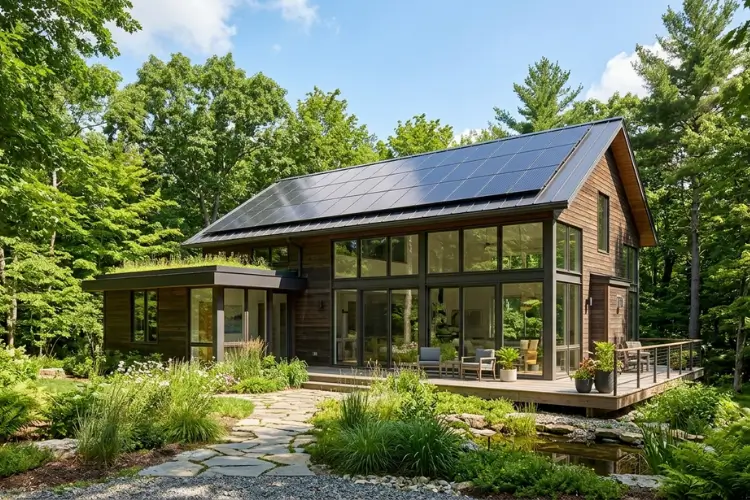
6. Add Solar Panels
Solar gets all the attention, and for good reason: it’s the idea most likely to actually zero out a chunk of your electric bill.
A typical residential solar system runs $26,000–$34,000 before incentives, according to 2026 marketplace data, for a system sized to cover a typical home’s usage. Heads up: the 30% federal Residential Clean Energy Credit that used to offset this cost expired for installations after December 31, 2025. Check with a tax professional and your state energy office for what’s still available, since state rebates, utility incentives, and net metering programs vary widely and change often.
The simple fix? Start with an energy audit and insulation upgrades first. A smaller, tighter home needs a smaller, cheaper solar system to hit net-zero. Solar without efficiency work first is like filling a leaky bucket.
Solar isn’t the only option either. If your roof doesn’t get great sun or your budget doesn’t stretch that far yet, it’s worth comparing other renewable energy sources that might fit your situation better.
7. Switch to a Heat Pump
Heat pumps do the work of a furnace and an air conditioner in one system, by moving heat rather than generating it. That makes them dramatically more efficient than traditional gas furnaces or electric resistance heating, and they’re part of a bigger wave of green tech innovations reshaping how homes use energy.
ENERGY STAR-certified heat pumps can cut heating costs by hundreds of dollars a year compared to older systems, depending on your climate and what you’re replacing.
They work best in moderate climates. In very cold regions, look for a “cold-climate heat pump,” a variant specifically engineered to stay efficient well below freezing.
8. Go Geothermal, If Your Budget and Lot Allow It
Geothermal heat pumps use the constant, stable temperature underground, usually between 50°F and 60°F just a few feet down regardless of season, to heat and cool your home with remarkable efficiency. The Department of Energy notes this can cut energy bills by up to 65% compared to standard HVAC systems.
They’re quieter than air-source systems and don’t rely on outdoor air temperature to work well. That makes them a strong option in climates with brutal winters or summers.
But:
The upfront cost is steep, often $20,000-$40,000 including the ground loop installation. This is the most expensive idea on this list. It’s usually only worth it for new construction, a major renovation, or homeowners planning to stay put for a decade or more.
9. Install an ERV or HRV
An energy recovery ventilator (ERV) or heat recovery ventilator (HRV) brings fresh air into a tightly sealed home while capturing most of the heat (or coolness) from the outgoing stale air.
Here’s the thing about air sealing: the tighter your home gets, the more it needs mechanical ventilation to stay healthy. You can’t just seal a house shut and hope for the best.
An ERV/HRV solves that, keeping indoor air quality high without throwing away the energy savings you just paid for with insulation and air sealing. Think of it as the finishing move for ideas #2 and #3.
10. Install a Smart Thermostat
This is the cheapest, fastest win on the entire list.
A smart thermostat learns your schedule and automatically adjusts temperatures when you’re away or asleep. ENERGY STAR estimates typical savings of around 8% on heating and cooling costs, for a device that usually costs $130-$280 installed.
Payback period: under two years, often under one.
If you do nothing else on this list, do this one first.
11. Add a Greywater or Rainwater Collection System
Water efficiency is the overlooked half of eco home design. Everyone talks about energy. Fewer people talk about water, and water heating alone accounts for a real chunk of most home energy bills.
A greywater system reroutes water from sinks, showers, and laundry to irrigation instead of the sewer. A rainwater collection system catches runoff from your roof for outdoor use.
Neither one is cheap to retrofit properly, and local plumbing codes vary a lot, so check regulations in your area before you plan around this. Where it’s allowed, it’s a genuinely underused lever.
Materials, Interior & Landscaping
Structure and systems handle the big energy numbers. This last group is where eco design gets personal, healthy, and visible day to day.
12. Choose Reclaimed and Low-Carbon Materials
Every material in your home carries “embodied carbon,” the emissions created by manufacturing, transporting, and installing it, separate from the energy it uses once installed.
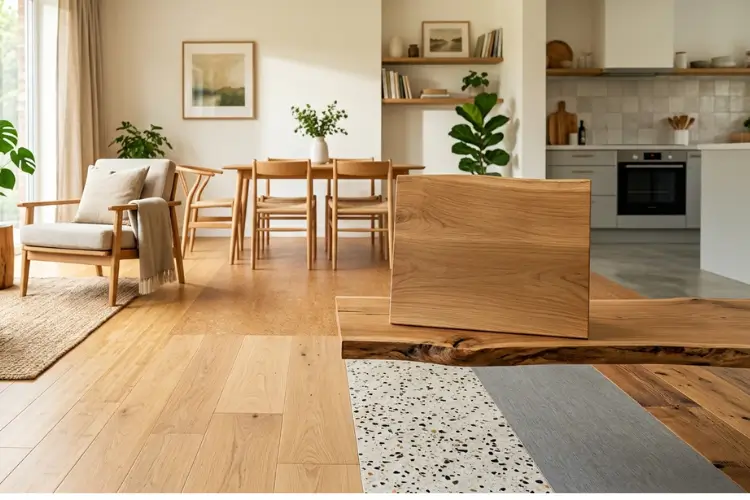
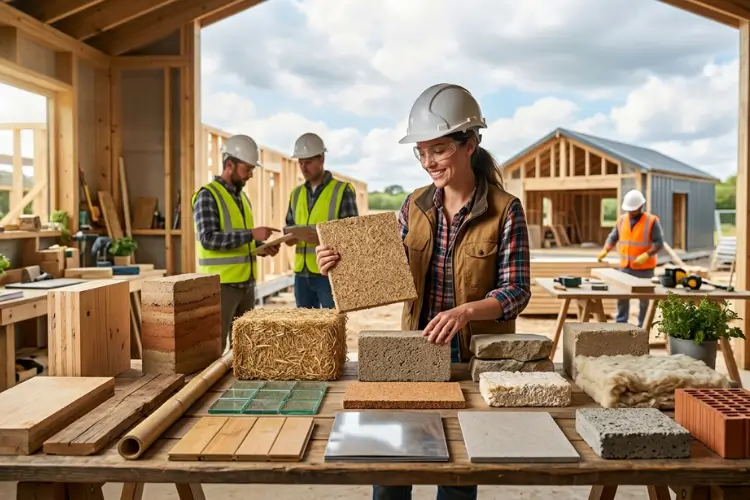
Reclaimed wood, recycled metal, and locally sourced stone all carry a fraction of the embodied carbon of new, shipped-in materials. This idea won’t lower your utility bill. It lowers your home’s total environmental footprint, which matters just as much. If you want a fuller list to work from, these sustainable building materials are a good starting point.
Where to start: flooring, countertops, and structural beams are the highest-impact places to choose reclaimed or low-carbon options, since they’re the largest material volumes in a typical build. If flooring is near the top of your list, these eco flooring options are worth comparing before you commit.
13. Switch to Low-VOC Paints and Finishes
Standard paints and finishes off-gas volatile organic compounds (VOCs) for months after application, degrading indoor air quality the whole time.
Low-VOC and zero-VOC paints cost only slightly more than standard options now, often just a few dollars more per gallon, and they’re available at basically every major paint retailer. This isn’t an energy-saving upgrade. It’s a health upgrade, and it belongs on this list because eco home design was never only about the utility bill.
14. Landscape with Native and Drought-Tolerant Plants
A standard lawn is one of the most resource-intensive things you can put in your yard: constant mowing, constant watering, constant chemical treatments.
Swap it, or even just part of it, for native plants suited to your local climate, and you’ll cut outdoor water use dramatically. In drier regions, xeriscaping (landscaping designed around minimal irrigation) can reduce outdoor water use by 50% or more. Pair whatever you plant with organic fertilizers instead of synthetic ones, so you’re not undoing the water savings with chemical runoff.
The bonus? Native plants also support local pollinators, which standard turf grass does nothing for.
15. Switch to LED Lighting and Maximize Daylighting
LEDs use up to 75% less energy than incandescent bulbs and last far longer, according to ENERGY STAR. This is the easiest, cheapest swap on the entire list, and there’s genuinely no reason left not to do it.
Pair it with daylighting, arranging your living spaces and window placement to rely on natural light during the day, and you reduce your lighting energy use even further before you’ve spent a single extra dollar.
The 15 Ideas at a Glance
| # | Idea | Cost Tier | Typical Annual Savings | Payback Period |
| 1 | Passive solar orientation | $ (new builds only) | Varies by climate | Immediate (design cost only) |
| 2 | Upgraded insulation | $$ | $200–$600 | 3–7 years |
| 3 | Air sealing | $ | $150–$400 | 1–3 years |
| 4 | Triple-pane windows | $$$ | $100–$400 | 10–20 years |
| 5 | Cool/reflective roofing | $$ | $50–$200 | 5–10 years |
| 6 | Solar panels | $$$ | $600–$1,800 | 10–20 years |
| 7 | Heat pump (air-source) | $$ | $200–$600 | 4–8 years |
| 8 | Geothermal heat pump | $$$$ | $500–$1,500 | 8–15 years |
| 9 | ERV/HRV ventilation | $$ | $50–$150 | 8–12 years |
| 10 | Smart thermostat | $ | $50–$180 | 1–2 years |
| 11 | Greywater/rainwater systems | $$ | $50–$250 | 7–15 years |
| 12 | Reclaimed/low-carbon materials | $-$$ | Not energy savings, embodied carbon reduction | N/A |
| 13 | Low-VOC finishes | $ | Health, not bill savings | N/A |
| 14 | Native/xeriscape landscaping | $$ | $100–$300 (water) | 3–6 years |
| 15 | LED lighting + daylighting | $ | $75–$225 | Under 2 years |
($ = under $500, $$ = $500–$5,000, $$$ = $5,000–$20,000, $$$$ = $20,000+. Ranges are national estimates and will vary by region, home size, and local energy prices.)
Here’s the truth nobody tells you: the ideas with the biggest sticker price aren’t always the ones with the biggest impact. Insulation and air sealing, which cost almost nothing compared to solar, are usually where the real savings start.
By the way: the numbers above are averages, not promises. Get a home energy audit before you spend a dollar. It’s the single highest-ROI thing you can do before starting any of this.
Eco Home Design Costs: What You Actually Pay and Save
Let’s put real numbers side by side, because vague promises of “big savings” don’t help you plan a budget.
| Idea | Upfront Cost | Annual Savings | Payback Period | Best For |
| Air sealing | Under $500 | $150–$400 | 1–3 years | Everyone, every home |
| Smart thermostat | $130–$280 | $50–$180 | Under 2 years | Everyone, every home |
| LED lighting | Under $200 | $75–$225 | Under 2 years | Everyone, every home |
| Attic insulation | $1,500–$4,000 | $200–$600 | 3–7 years | Homes built before 1990 |
| Heat pump | $4,500–$15,000 | $200–$600 | 4–8 years | Moderate to cold climates |
| Solar panels | $26,000–$34,000 | $600–$1,800 | 10–20 years (longer than before, since the federal tax credit expired) | High sun exposure, high electric rates |
| Triple-pane windows | $1,000–$2,000/window | $100–$400 | 10–20 years | Old, drafty windows |
| Geothermal | $20,000–$40,000 | $500–$1,500 | 8–15 years | New builds, long-term homeowners |
The simple fix? Notice the pattern. The cheapest ideas have the fastest payback. Start there, and let the savings from those upgrades help fund the bigger ones later.
How to Prioritize These Ideas on a Budget
You don’t need $40,000 to start living in a more eco home. Here’s how to sequence it, whatever your budget looks like.
- Get a home energy audit first. Many utility companies offer this free or heavily discounted, and it tells you exactly where your money is leaking before you spend on guesses.
- Seal and insulate before anything else. These are the cheapest fixes with the fastest payback, and they make every system you add later work more efficiently.
- Swap the easy stuff immediately. LED bulbs and a smart thermostat cost almost nothing and start saving money within weeks.
- Tackle windows and roofing when they need replacing anyway. Don’t rip out functional windows early just to upgrade. Time it with natural replacement cycles.
- Add solar or a heat pump once your home is tight. A smaller, better-insulated home needs a smaller, cheaper system to hit the same comfort level.
- Save materials and landscaping for your next renovation or curb appeal project. These matter, but they’re not where your urgent dollars should go first.
If you’re renting, you’re not shut out of this either. Smart thermostats, LED bulbs, draft stoppers, and low-VOC cleaning and finishing products are all renter-friendly, no permission or permit required.
Start Small. Just Start.
Eco home design isn’t one big renovation. It’s a series of smart, sequenced decisions, most of them boring, all of them worth it.
Start with the free and the cheap: sealing, insulation, a smart thermostat, LED bulbs. Let those savings build toward the bigger systems, solar, heat pumps, maybe geothermal down the line.
Your home doesn’t need to be perfect to be better. It just needs to start. And these upgrades work best when they’re part of a broader set of sustainable habits, not a one-time project you check off and forget.
Ready to plan your next step? Get a home energy audit, pick two ideas from this list, and start there. If you want to extend these choices beyond your walls, this zero waste beginner guide is a natural next stop.