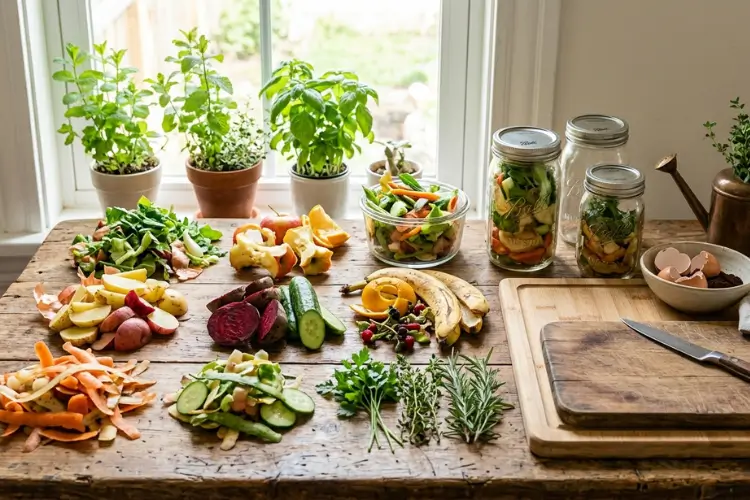
Zero waste living means sending less trash to landfills. You do this by refusing, reducing, reusing, recycling, and composting, in that order.
You don’t need to hit 100%. Most beginners start small. Audit your trash. Swap three to five single-use items. That’s it.
Quick summary:
- Zero waste isn’t about perfection. It’s about generating less waste over time.
- Most beginners can start for under $50. Often for free.
- A 30-day plan beats trying to overhaul your life in one weekend.
What “Zero Waste” Actually Means (And What It Doesn’t)
Zero waste is a set of principles. The goal is simple: send as little waste as possible to landfills, incinerators, and oceans.
It’s not a purity test. Bea Johnson popularized the modern movement. Her family’s annual trash fits in a mason jar. But even she says zero waste is a direction, not a destination. Most people who practice it still throw things away. They just throw away a lot less. For a deeper look at what this looks like day-to-day, see our guide to the zero waste lifestyle.
Zero Waste vs. Minimalism vs. Sustainability
These three terms get mixed up online. They’re not the same thing.
- Sustainability is the broad goal. It means living in a way that doesn’t deplete resources for future generations.
- Minimalism is about owning fewer things. It’s usually about reclaiming time, money, or space.
- Zero waste is specifically about your trash. The goal is diverting it from the landfill through refusing, reusing, recycling, or composting.
You can be zero waste without being a minimalist. You can be a minimalist without being zero waste. This guide focuses on the waste piece.
Is 100% Zero Waste Realistic?
For most people, no. And that’s fine.
Medications come in blister packs. Recycling infrastructure varies by location. Life happens.
The real goal isn’t a jar of trash a year. It’s cutting your household waste noticeably, often 30 to 50%, through a handful of consistent habits.
Chasing perfection is why most people quit in week two. Chasing progress is why people stick with it for years.
How to Start Zero Waste Living: Your First 30 Days
Don’t try to change your kitchen, bathroom, and closet in one weekend. That’s the fastest way to burn out.
Here’s a sequence that actually sticks.
Week 1: Audit Your Trash
Don’t change anything yet. Just pay attention to what ends up in your trash can for one week.
At the end of the week, look at what’s in there. For most households, a few repeat offenders dominate: plastic food packaging, paper towels, disposable cups, takeout containers.
This audit tells you exactly where to start. No guessing required.
Week 2: Make the “Big Five” Swaps
Start with the five changes that cut the most waste for the least effort:
- Reusable water bottle
- Reusable shopping bags
- Reusable coffee cup
- Cloth napkins or rags instead of paper towels
- Reusable produce bags for groceries
These five items alone eliminate a big chunk of what most people throw away weekly. If you want more options beyond bags, check out these eco friendly alternatives to plastic bags.
Week 3: Fix Your Kitchen and Bathroom
Move into the two rooms that generate the most packaging waste.
In the kitchen: buy pantry staples from bulk bins when available. Bring your own containers.
In the bathroom: swap disposable razors for a reusable one. Try a bar soap or shampoo bar to cut plastic bottle waste.
Week 4: Build Habits That Stick
Set up systems that make the new habits automatic. Don’t rely on memory.
Keep reusable bags in your car or by the door. Keep a few produce bags in your purse or backpack. Put your compost bin somewhere convenient, not buried in a cabinet.
Habits that require remembering fail. Habits that are physically in your path succeed. For more ways to build sustainable habits into your daily routine, this is a good next read.
The 5 R’s of Zero Waste, Explained Simply
Bea Johnson’s book Zero Waste Home made these 5 R’s popular. They’re listed in priority order for a reason. The earlier ones prevent waste before it happens. The later ones manage waste that already exists.
Refuse
Say no to things you don’t need before they enter your home. Free promotional items. Straws you didn’t ask for. Junk mail. The extra bag at checkout.
This is the highest-leverage habit. It stops waste before it starts. And it costs nothing.
Reduce
Own and buy less overall. This isn’t about deprivation. It’s about honesty: buying fewer, better-made things instead of a lot of disposable ones.
Reuse
Use things more than once instead of throwing them away. A refillable water bottle instead of disposable ones. Cloth napkins instead of paper towels. Glass jars, including old candle jars, instead of new storage containers.
Most beginners start here. It’s the most visible, most satisfying category of change.
Recycle
Recycling comes fourth on purpose. It’s a last resort, not a substitute for refusing, reducing, or reusing first.
Recycling still uses energy and resources. And contamination rates mean a lot of what people put in the bin never actually gets recycled. Learn your local rules. They vary more than most people expect.
Rot (Compost)
Compost your food scraps instead of sending them to a landfill. In a landfill, food waste breaks down without oxygen and releases methane.
The EPA estimates food waste makes up roughly a quarter of what ends up in U.S. landfills. That makes composting one of the highest-impact habits on this list, even though people usually adopt it last. Finished compost also doubles as one of the best organic fertilizers for your garden.
Zero Waste Swaps for Beginners
Not every swap deserves the same investment. Here’s how the most common starter swaps compare.
| Swap | Approx. Cost | Difficulty | Waste Reduced |
| Reusable water bottle | $10 to $25 (one-time) | Easy | High: replaces dozens of bottles/month |
| Reusable shopping bags | $0 to $15 | Easy | Medium: replaces plastic bags per trip |
| Cloth napkins / rags | $0 (use old t-shirts) | Easy | Medium: replaces paper towels |
| Reusable produce bags | $10 to $20 for a set | Easy | Medium: replaces plastic produce bags |
| Bar soap / shampoo bar | $5 to $12 per bar | Easy | Medium: replaces plastic bottles |
| Safety razor | $20 to $40 (one-time) | Medium | Medium: replaces disposable razor waste |
| Compost bin (backyard or countertop) | $0 to $50 | Medium | High: diverts a large share of household waste |
| Beeswax wrap | $15 to $25 for a set | Easy | Low-medium: replaces plastic wrap |
Want more options beyond the basics? Check out our full guide to zero waste swaps for room-by-room picks and budget alternatives.
Zero Waste on a Budget
One myth trips up more beginners than any other: that zero waste requires an expensive shopping trip to a specialty store.
It doesn’t. Most of the highest-impact changes are free.
Free/No-Cost Changes
Refusing freebies, straws, and unnecessary packaging costs nothing. Cutting old t-shirts into rags costs nothing. Bringing your own containers for restaurant leftovers costs nothing. Freezing scraps until you drop them at a local compost collection point costs nothing.
Under $50 Starter Kit
A reusable water bottle, a set of produce bags, and a bar of soap or shampoo together run about $30 to $50. Each one replaces a recurring disposable purchase. They pay for themselves within a few months.
What NOT to Buy Yet
Skip the full “zero waste starter kit” bundle. Skip the specialty stainless steel containers. Skip the expensive compost tumbler, for now.
Beginners who buy everything at once often end up with unused gear and no real habits. Swaps only save money and waste if you actually use them.
Room-by-Room Zero Waste Guide
Here’s where to focus in each room of your home.
Kitchen
Buy staples like rice, oats, nuts, and flour from bulk bins with your own containers when available. Store leftovers in glass jars instead of buying new plastic containers. Start a simple compost system for scraps. Even a small countertop bin works.
Bathroom
Swap liquid soap and shampoo bottles for bar versions. Replace disposable razors with a reusable safety razor. Switch to a bamboo toothbrush once your current one wears out. No need to toss a good one early. For more ideas, see our full list of zero waste bathroom swaps.
Closet
Buy secondhand first. Repair items instead of replacing them when something breaks. Donate unwanted clothing to a thrift store instead of the trash. Try a clothing swap with friends before buying new. These habits also line up closely with ethical fashion principles.
Home Office / Living Room
Go paperless on bills and statements where possible. Reuse packaging materials, like boxes and bubble wrap, for your own shipping needs. Repair electronics or furniture before replacing them, when it’s reasonable. Want to take it further? Here’s how to green your office space.
Common Zero Waste Beginner Mistakes
- Trying to change everything at once. Overhauling your kitchen, bathroom, and closet in one weekend leads to burnout. Sequence your changes instead.
- Buying a bunch of “zero waste products” before building habits. Gear doesn’t reduce waste. Using it consistently does. Buy less. Use what you already own first.
- Throwing away usable items to replace them with “greener” versions. Replacing a working plastic container with a glass one before the plastic one breaks creates more waste, not less. Use what you have until it wears out.
- Ignoring your local recycling rules. Putting the wrong materials in the bin can get a whole batch rejected. Check your municipality’s specific guidelines. Don’t assume.
- Giving up after one imperfect week. A missed swap doesn’t undo your progress. Zero waste is a long-term average, not a daily perfect score.
How Much Waste Does the Average American Actually Produce?
Americans generate roughly 4.9 pounds of municipal solid waste per person, per day, according to EPA data. Food waste alone makes up close to a quarter of what ends up in landfills. A single plastic bag can take hundreds of years to decompose.
Even small, consistent changes add up. A reusable bottle. Composting scraps. Buying less packaged food. Over a year, these meaningfully cut one household’s contribution to that number.
Your Next Step
Zero waste living isn’t a switch you flip overnight. It’s a set of habits you build one week at a time.
Start with the trash audit. Make the big five swaps. Give yourself permission to make progress, not chase perfection.
Once the basics feel automatic, you’ll naturally look for the next room, the next swap, the next habit to improve.