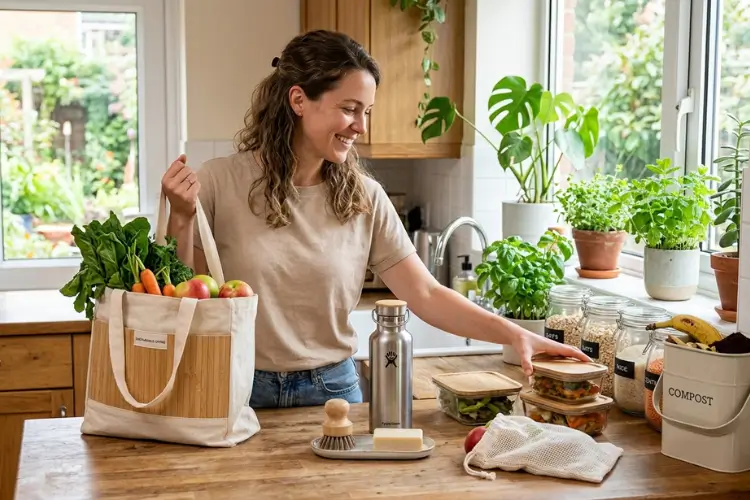
Sustainable habits are small, repeatable daily actions, like cutting waste, using less energy, and buying more thoughtfully, that lower your environmental impact over time. They don’t require a lifestyle overhaul.
Nearly a third of people already practice six or more sustainable habits every day, and 70% say they want to add more, according to 2025 research from Bain & Company.[1] So if you’re starting from zero, you’re not behind. You’re just getting started.
Here’s the truth nobody tells you: most “go green” advice online is either too vague to act on or too extreme to stick with. This isn’t that.
Below are 20 sustainable habits for everyday living, grouped by where they actually fit into your day: home, food, shopping, transportation and energy, and work and money. Each one comes with why it matters and how to start it this week. No guilt, no lecture, just things you can actually do.
If you want the bigger picture first, we’ve also covered zero waste lifestyle in depth, and if you’re starting from scratch, our zero waste beginner guide walks through it step by step.
TL;DR: The 20 Habits at a Glance
- Switch to a reusable water bottle
- Ditch single-use shopping bags
- Line-dry your laundry when you can
- Unplug devices and switch off power strips
- Set your thermostat two degrees smarter
- Plan meals to cut food waste
- Eat more plant-based meals, even a few a week
- Start composting your food scraps
- Buy in bulk where it makes sense
- Store food properly to make it last
- Buy secondhand before buying new
- Ask “do I need this?” before checking out
- Choose quality over quantity in clothing
- Repair instead of replace when you can
- Walk, bike, or take transit when it’s realistic
- Combine errands into fewer car trips
- Switch to an energy-efficient thermostat or bulbs
- Reduce your digital footprint (streaming, storage, devices)
- Bank and invest with sustainability in mind
- Bring sustainability into your workplace
Let’s go through each one.
Sustainable Habits at Home
These are the habits that live closest to your daily routine, small enough to forget about once they stick.
1. Switch to a Reusable Water Bottle
This is the easiest habit on this list, and it’s also one of the most repeated. That’s because it works.
A single reusable bottle can replace hundreds of single-use plastic bottles a year. Multiply that across a household, and the plastic savings add up fast.
How to start this week: Buy one bottle you actually like carrying, insulated if you drink cold water, glass or steel if you’re avoiding plastic entirely. Keep it somewhere you’ll actually grab it, by your keys, not in a cabinet. And if you’re rethinking what goes in the bottle too, here’s distilled vs spring vs purified water broken down.
2. Ditch Single-Use Shopping Bags
Reusable bags are cheap, durable, and hold more than plastic ones anyway.
How to start this week: Keep two or three in your car, your bag, or by the front door. The habit only breaks when the bag isn’t within reach when you need it. If plastic bags are still sneaking into your routine, here are some solid eco friendly alternatives to plastic bags.
3. Line-Dry Your Laundry When You Can
Your dryer is one of the biggest energy users in your home. You don’t have to give it up entirely, but even drying a few loads a week on a rack or line cuts your electricity use.
How to start this week: Pick your lowest-stakes laundry, towels, gym clothes, and dry those on a rack first. Build from there. While you’re at it, keep the machine itself running efficiently with this diy washing machine cleaner.
4. Unplug Devices and Switch Off Power Strips
Here’s a habit most people skip because it feels too small to matter. It’s not.
Devices plugged in but turned off still draw power, it’s called phantom load, and it can quietly account for a real slice of your electricity bill over a year.
How to start this week: Put your TV, game console, and chargers on one power strip you switch off at night.
5. Set Your Thermostat a Few Degrees Smarter
A couple of degrees in either direction, warmer in summer, cooler in winter, barely registers on comfort but shows up clearly on your bill.
How to start this week: Adjust it two degrees this week and see if you even notice. Most people don’t.
Sustainable Habits for Food and Kitchen
For a deeper dive once you’ve got these five down, we’ve also put together a full set of zero waste kitchen tips.
6. Plan Meals to Cut Food Waste
Food waste is one of the most overlooked sustainability issues, and one of the easiest to fix. Wasted food means wasted water, wasted energy, and wasted money, all for something that ends up in a landfill.
How to start this week: Plan five dinners before you shop, not twenty. A short list beats an ambitious one you won’t follow.
7. Eat More Plant-Based Meals
You don’t have to go vegetarian overnight. Even swapping a few meals a week for plant-based ones reduces the resource footprint of your diet, since meat and dairy production generally require more land, water, and energy than plant foods.
When I started doing this, here’s what actually worked: picking one night a week and committing to it, rather than trying to overhaul every meal at once. It’s the difference between a habit that lasts and one that quietly disappears by February.
How to start this week: Pick one night. Call it whatever you want, just make it recurring.
8. Start Composting Your Food Scraps
Composting keeps food scraps out of landfills, where they produce methane, a much more potent greenhouse gas than the CO2 released when food breaks down aerobically.
How to start this week: You don’t need a backyard system. A small countertop bin and a local drop-off point (many farmers markets and city programs offer one) is enough to start. If pests find your bin before you empty it, these natural how to get rid of ants tips help without reaching for harsh chemicals.
9. Buy in Bulk Where It Makes Sense
Buying staples like grains, beans, and pasta in bulk cuts packaging waste and is often cheaper per unit.
How to start this week: Start with one or two pantry staples you buy often. Bring your own containers if your store allows it.
10. Store Food Properly to Make It Last
Half of food waste happens simply because food goes bad before it’s used, not because anyone meant to waste it.
How to start this week: Learn where your fridge actually keeps things coldest (usually the back, not the door) and store accordingly.
Sustainable Habits for Shopping and Consumption
A lot of people avoid this category because of a few common misconceptions, our zero waste myths piece clears up the biggest ones.
11. Buy Secondhand Before Buying New
Secondhand shopping reduces demand for new production, and fast fashion in particular carries a significant environmental cost, from water use to textile waste.
How to start this week: Before your next clothing purchase, check a thrift store or resale app first. You’ll often find something better for less.
12. Ask “Do I Need This?” Before You Check Out
The simple fix? A pause.
Most unsustainable consumption isn’t a big dramatic purchase, it’s a hundred small ones that add up. A five-second pause before checkout catches more of them than you’d think.
How to start this week: Add items to a cart and wait 24 hours before buying anything that isn’t a necessity. If you’re shopping for someone else, these zero waste gift ideas make it easier to give without adding to the clutter.
13. Choose Quality Over Quantity in Clothing
Fewer, better-made pieces last longer and cost less over time than a constant stream of cheap ones. It’s also just a better closet.
How to start this week: Next time you shop, check the fabric and the seams before you check the price.
14. Repair Instead of Replace When You Can
A loose button or a broken zipper doesn’t mean an item is done. Repairing something keeps it out of a landfill and often costs a fraction of replacing it.
How to start this week: Look up a local tailor or cobbler, or a repair-focused community group, before you toss something that’s just slightly broken. The same mindset applies to containers and jars around your house, here’s what to do with old candle jars instead of tossing them.
Sustainable Habits for Transportation and Energy
This is where small choices about how you move and power your home start to add up.
15. Walk, Bike, or Take Transit When It’s Realistic
You don’t need to give up your car. You just need to notice the trips where you don’t actually need it.
How to start this week: Pick one regular short trip, the coffee shop, a nearby errand, and do it without the car once this week.
16. Combine Errands Into Fewer Trips
Four separate car trips burn more fuel than one trip that covers the same ground.
How to start this week: Before you leave the house, glance at your to-do list and see what else is on the way.
17. Switch to Energy-Efficient Lighting and a Smart Thermostat
LED bulbs use a fraction of the energy incandescent bulbs do and last far longer. A smart thermostat takes that same efficiency idea and applies it to heating and cooling, your biggest home energy draw.
How to start this week: Swap the bulbs in your most-used rooms first. You’ll notice the energy savings before you notice the difference in light. Once you’ve cut usage, the next question is where your power comes from, we’ve broken down the best Renewable Energy Sources for home use.
Sustainable Habits for Work, Money, and Digital Life
This is the part most sustainable-habit lists skip entirely. But your digital and financial choices carry a real footprint too.
18. Reduce Your Digital Footprint
Data centers use significant amounts of electricity, and demand keeps climbing as AI tools and streaming become more common. Every video you rewatch, every photo backed up twice, adds a small load somewhere.
How to start this week: Download the shows and music you return to often instead of streaming them repeatedly. Clear out duplicate photos and old cloud folders once a month. This ties into a bigger shift happening across the industry, we’ve rounded up the most promising green tech innovations worth knowing about.
19. Bank and Invest With Sustainability in Mind
Here’s something most people never think to change: where your money sits while it’s not being spent.
Choosing a bank or investment fund based on ethical and environmental criteria can move more impact than a hundred small shopping decisions combined, simply because of the scale banks and funds operate at.
How to start this week: Look up whether your current bank publishes any environmental or lending policy. If it doesn’t, that’s information too.
20. Bring Sustainability Into Your Workplace
Sustainable habits don’t have to stop when you clock in.
How to start this week: Unplug your monitor and shut down your computer properly at the end of the day instead of leaving it in sleep mode. If you’re in an office, suggest a recycling bin where there isn’t one.
The Real Impact: Sustainable Habits by the Numbers
Not every habit on this list has the same payoff. Here’s a rough side-by-side, so you can prioritize based on what matters most to you: cost, effort, or impact.
| Habit | Primary Impact | Cost to Start | Difficulty |
| Reusable water bottle | Cuts hundreds of plastic bottles per year | Low ($10-$25) | Easy |
| Line-drying laundry | Reduces household electricity use | Free | Easy |
| Composting food scraps | Cuts methane-producing landfill waste | Low to medium | Medium |
| Buying secondhand | Reduces fast-fashion water and textile waste | Often saves money | Easy |
| Smart thermostat | Cuts heating and cooling energy use | Medium ($100-$250) | Medium |
| Reducing digital clutter | Lowers data center energy demand | Free | Easy |
| Sustainable banking | Redirects capital at scale | Free (a decision, not a purchase) | Easy |
By the numbers: Cost is consistently the top barrier to sustainable living, cited by 55 to 65% of people surveyed across recent years, according to Sustainable Jungle’s consumer research. [2] Notice something in the table above? Most of the highest-impact habits here are free or nearly free. Cost is a real barrier for some choices, but it isn’t the barrier for most of this list.
How to Actually Stick to Sustainable Habits
Here’s the part almost every sustainable-living list leaves out: how to make any of this last past week one.
So where do you start? Not with all twenty. With one.
- Pick one habit, not twenty. Trying to change everything at once is the fastest way to change nothing. Choose the habit from this list that felt easiest to you as you read it.
- Stack it onto something you already do. Attach the new habit to an existing routine, unplug the power strip when you brush your teeth, bring your bag when you grab your keys. Habits that ride along with existing routines stick far better than habits that require you to remember something new from scratch.
- Track it visibly for a few weeks. A checkmark on a calendar, a note in your phone, anything that makes the habit visible. You’re not trying to prove anything to anyone. You’re just giving your brain a reason to notice the streak.
- Add the next one once the first one is automatic. There’s no fixed timeline here, some habits click in days, others take longer. The point isn’t speed. It’s that each habit you lock in makes the next one easier to add.
Because: perfection was never the goal. Consistency was.
Start With One Habit, Not All Twenty
Sustainable habits for everyday living aren’t about getting everything right. They’re about picking a few things and actually keeping them up.
Start with one habit from this list. Not the hardest one, the easiest one. Build from there.
Because the goal was never perfection. It was just: start.