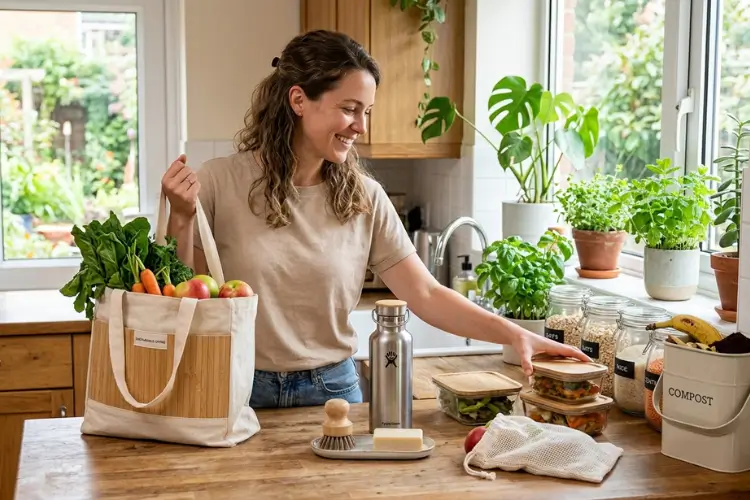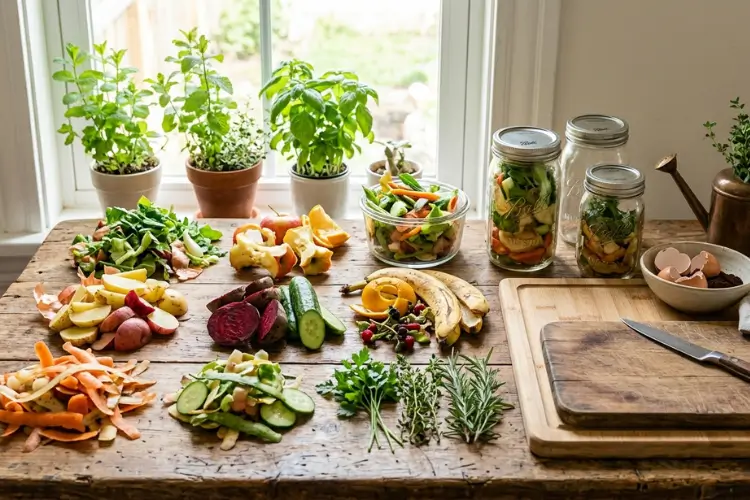
Most of what you throw away isn’t trash. It’s ingredients.
The USDA estimates that 30 to 40 percent of the food supply in the United States goes to waste every year. The EPA puts wasted food at the top of the list of materials filling US landfills. That’s not a distant, abstract problem. It’s happening in your kitchen, one banana peel and one bag of vegetable trimmings at a time.
Here’s the thing: you don’t need a compost bin, a backyard, or to buy into every zero-waste living myth to fix this. You just need to know what your scraps are actually good for.
So where do you start? Right here. I’ve organized 20 tested, genuinely creative ways to reuse food waste by scrap type, so you can jump straight to whatever’s sitting in your kitchen right now.
Quick Answer: Where to Start Today
Short on time? Start with whatever’s already in your fridge. Here’s the fastest overview:
- Fruit and veggie scraps → stock, regrowing, sautéing stems
- Peels, rinds, and skins → pickling, jam, natural air fresheners
- Bones, meat, and dairy fat → bone broth, homemade suet
- Stale bread and pantry odds and ends → croutons, breadcrumbs, frozen tomato paste
- Coffee grounds, tea bags, and eggshells → garden fertilizer, cleaning scrub
- Non-food household uses → natural dyes, pest deterrents, DIY cleaners
If you want more day-to-day habits beyond scraps, these zero waste kitchen tips pair well with this list. Now let’s get into the specifics.
Fruit & Vegetable Scraps
This category does the most work. It’s also the easiest place to build a habit, because you’re generating this waste every single day.
1. Make vegetable stock from trimmings
Save your onion skins, carrot peels, celery ends, and mushroom stems in a freezer bag. When it’s full, simmer everything in water with a bay leaf and some peppercorns for 30 to 45 minutes.
Strain it. Freeze it in jars (leave headspace so the glass doesn’t crack), and cleaned-out old candle jars work perfectly for this.
That’s it. Free stock, and you probably won’t buy the boxed stuff again.
2. Regrow vegetables in water
Celery, green onions, lettuce, and bok choy will all regrow from their base.
Cut off the bottom inch or two. Set it in a shallow dish with just enough water to cover the roots. Change the water every couple of days.
You won’t feed a family off this alone, but it’s a genuinely fun way to stretch a grocery trip, and it’s a great project if you’ve got kids who want to see something grow.
3. Sauté the stems of leafy greens
Kale, chard, and collard stems are fibrous, but they’re not garbage. Slice them thin and sauté them in olive oil with garlic.
I do this every time I buy a bunch of kale. It takes an extra five minutes and turns what used to be trash into a genuinely tasty side dish.
4. Save root vegetable tops for pesto
Carrot tops, beet greens, and radish tops are edible, and most people never touch them.
Blitz carrot tops with olive oil, garlic, parmesan, and toasted nuts for a pesto that tastes just as good as the basil version. Beet greens sauté beautifully, just like chard.
5. Turn overripe fruit into freezer jam or baking
Bruised bananas, soft berries, and overripe stone fruit aren’t spoiled. They’re just past their photogenic prime.
Freeze bananas whole (peel first) for smoothies or banana bread. Cook down soft berries with a little sugar and lemon juice for a quick freezer jam that skips the canning process entirely.
6. Make broth-free “waste soup”
Here’s the truth nobody tells you: almost any combination of vegetable odds and ends becomes soup if you add stock, salt, and heat.
Half an onion, a couple of wilting carrots, that last handful of spinach. Simmer, blend if you want it smooth, and season to taste. This is the single easiest way to zero out your vegetable waste on a Sunday.
Peels, Rinds & Skins
Peels get thrown away almost automatically. Here’s why that’s a habit worth breaking.
7. Pickle watermelon rinds
Trim the green outer skin, cut the white rind into strips, and simmer it in a mixture of vinegar, water, sugar, and salt until it softens.
Add ginger or cinnamon if you want it spiced. Store in the fridge. It’s a genuinely good snack, not just a waste-reduction consolation prize.
8. Make citrus peel jam
Simmer orange or lemon peels in water for 25 to 30 minutes, strain, then boil the liquid with sugar and a splash of lemon juice until it thickens.
Pour into a clean jar. Use it on yogurt, toast, or a cheese board.
9. Turn citrus peels into a natural air freshener
Simmer citrus peels with water and a cinnamon stick or a few cloves on the stove. Your kitchen will smell better than any plug-in air freshener, and it costs nothing.
You can also dry the peels and stuff them into a sachet for a drawer or closet. It pairs well with other zero waste cleaning hacks if you’re trying to cut synthetic sprays out of your kitchen entirely.
10. Use potato and carrot peels for crispy chips
Toss the peels with olive oil, salt, and whatever spices you like. Bake at a low temperature until crisp.
The simple fix? Don’t peel over the trash can. Peel into a bowl, and you’ll actually remember to use what falls into it.
Bones, Meat & Dairy Scraps
This is where the biggest dollar savings live, and where you need to be a little more careful about food safety.
11. Make bone broth
Save bones from roasted or cooked meat in the freezer until you’ve got enough for a batch. Cover them with water in a large pot, bring to a simmer, and let them cook for 24 to 48 hours (low and slow).
Strain, jar, and freeze what you won’t use in a week. Bone broth at the store runs several dollars a cup. Homemade costs you almost nothing beyond time.
12. Render bacon or meat fat into cooking fat
Strain leftover bacon grease or roast drippings through a fine mesh sieve and store it in a jar in the fridge. Use it in place of butter or oil for roasting vegetables or frying eggs.
By the way: don’t pour hot fat down your drain. It solidifies in the pipes and causes real plumbing problems. Straining it into a jar solves two problems at once.
13. Make bird suet from meat drippings
Strained bacon or meat fat can also be mixed with peanut butter, unsalted nuts, or dried fruit and packed into a mold for backyard bird feeders.
A quick safety note: don’t reuse fat that’s been sitting out at room temperature for more than two hours, and skip this entirely if the drippings smell off. Food safety matters more here than in almost any other category on this list.
Stale Bread, Grains & Pantry Odds and Ends
Bread going stale isn’t an ending. It’s a different recipe.
14. Turn stale bread into croutons
Cube stale bread, toss with olive oil, garlic powder, and black pepper, and bake at 400°F for 10 to 15 minutes until golden and crisp.
Store in an airtight container. They’ll outlast the loaf ever did.
15. Make your own breadcrumbs
Pulse stale bread in a food processor, then toast the crumbs in a dry pan until golden. Freeze in a bag.
You’ll never buy a canister of breadcrumbs again.
16. Freeze leftover tomato paste
Recipes rarely use a full can. Scoop the leftover paste in tablespoon portions onto a lined baking sheet, freeze until solid, then transfer to a bag.
Grab exactly what you need next time, no more half-used cans going moldy in the back of the fridge.
Coffee Grounds, Tea Bags & Eggshells
These three items pile up fastest and get thrown out without a second thought. Don’t.
17. Use coffee grounds as garden fertilizer
Used coffee grounds add organic material to soil and can help improve drainage and water retention. Sprinkle a thin layer around the base of your plants, or work it into the top few inches of soil.
Because: too much at once can clump and actually block water from reaching the roots. A light hand works better than a heavy one, and it’s one of the easiest organic fertilizers you can make without buying a thing.
18. Use eggshells for calcium-rich garden soil or seed starters
Crushed eggshells add calcium to soil over time, which helps tomatoes and peppers in particular. Rinse them, let them dry, then crush and scatter around your plants.
Whole eggshell halves also make surprisingly good tiny seed-starting pots.
19. Reuse cooled tea bags for puffy eyes or minor irritation
Chill used tea bags in the fridge, then place them over your eyes for a few minutes. The tannins in tea are commonly credited with helping reduce puffiness.
It’s a genuinely nice five-minute reset, and it costs you nothing extra since you already made the tea.
Non-Food Household Uses
Food waste isn’t just for the kitchen or the garden. Some of the best uses happen entirely outside the plate, right alongside other simple swaps like cleaning with vinegar and baking soda.
20. Make natural fabric dye from food scraps
Onion skins produce a golden-brown dye. Avocado pits and skins produce a surprisingly pretty pink. Beet peels produce a deep magenta.
Simmer the scraps in water for 30 to 45 minutes, strain, then soak fabric, yarn, or Easter eggs in the liquid. It’s a fun weekend project, and it’s the kind of thing that makes food waste feel less like a chore and more like a hobby.
Food Waste Reuse vs. Composting vs. Throwing It Out
Reusing isn’t the only option, and it’s not always the right one. Here’s how the three approaches actually compare.
| Method | What Happens to the Waste | Best For |
| Reuse | Turned directly into food, garden input, or household product | Peels, bones, stems, grounds, still-edible trimmings |
| Compost | Broken down into soil-enriching material over weeks or months | Moldy scraps, eggshells, anything past reusing but not diseased |
| Trash | Sent to landfill, generates methane as it decomposes | Only what’s genuinely unsafe (spoiled meat, moldy bread, diseased plant material) |
The simple rule: reuse first, compost second, trash last. If you can’t eat it, feed your garden. If you can’t feed your garden, that’s when the bin is the right call, not the default.
How to Start a Food Scrap Reuse System in Your Kitchen
You don’t need a full system on day one. You need one habit that sticks.
- Keep one labeled freezer bag for vegetable trimmings. Onion skins, carrot peels, celery ends. Fill it up, then make stock.
- Keep a second small container for coffee grounds and eggshells. Empty it into your garden or a plant pot once a week.
- Peel and trim into a bowl, not the trash. This one change makes every other habit here automatic.
- Pick one “use it or lose it” day per week. Sunday works well. Look at what’s about to turn and cook it into soup, a sauté, or a smoothie.
- Only compost or trash what’s genuinely spoiled. If it still looks and smells fine, it probably still has a use somewhere on this list.
Give it two weeks. That’s about how long it takes for “peel into a bowl” to stop feeling like an extra step and start feeling like how you cook, the same way any of these sustainable habits tend to stick once they’re automatic.
Start With One Scrap, Not Twenty
None of this requires a lifestyle overhaul. It requires one freezer bag and a slightly different relationship with your trash can.
Start with one idea from this list. Not all twenty. One.
Make the stock. Save the bones for broth. Peel into a bowl instead of the sink.
That’s how a habit sticks, and that’s how “food waste” quietly stops being waste at all.