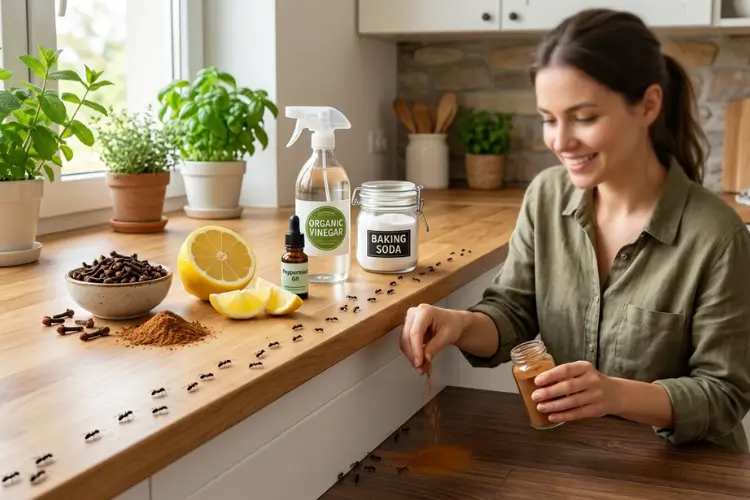
Nobody wants to reach for a can of spray the second they see one ant. Most ant problems don’t need one. A handful of pantry staples and a little patience usually does the job no fumes, no chemical residue on the counter you just wiped down.
Ants moving fast? Vinegar is your quickest fix. Mix it 1:1 with water. Spray it along the trail. It breaks their scent path in minutes.
That buys you time. It doesn’t solve the whole problem.
Here’s the short version. Use it as your cheat sheet.
- Fastest fix: Vinegar and water spray. Works in minutes. Doesn’t kill the colony.
- Best for a full infestation: Borax and sugar bait. Slower. Reaches the queen.
- Best if you have pets: Diatomaceous earth. No fumes. No poison.
- Best for the kitchen: Dish soap spray. Kills on contact. No lingering smell.
- Best all-around repellent: Peppermint oil spray. Cheap. Smells good. Keeps most ants out.
Below are all 15 remedies. Ranked by speed. Explained so you know why each one works.
Why You Have Ants in the First Place
Ants want three things. Food. Water. Shelter.
Your kitchen has all three. So does your bathroom. So does any spot with a leaky pipe or a crumb trail.
Ants show up more in spring and summer. Warmer weather sends scout ants looking for new food sources. One scout finds your counter. It lays a scent trail back to the nest. Then the whole colony follows.
That’s why you never just see one ant. You see a line.
A cleaner kitchen means fewer scouts finding a reason to stay. If you’re already sealing food and wiping counters, these zero waste kitchen tips cover the same habits that keep ants from settling in.
15 Natural Remedies for ants
Before you reach for a chemical spray, try one of these 15 natural ant remedies. Most use everyday household ingredients and are safe around kids and pets.
1. Vinegar and Water Spray
Vinegar doesn’t kill ants. It erases their scent trail.
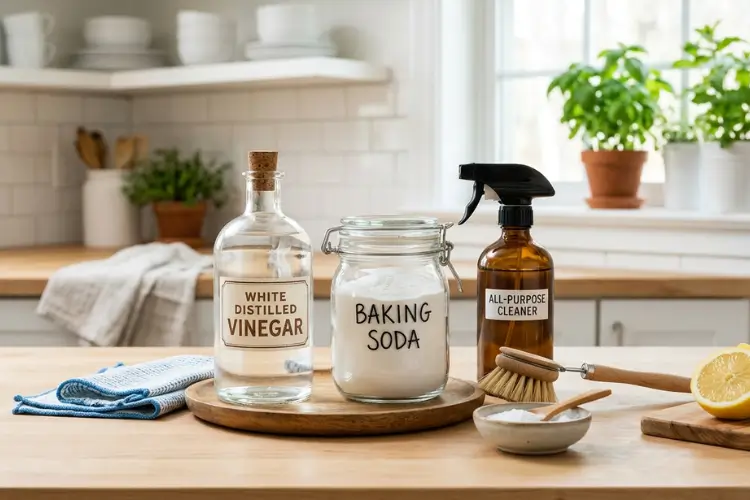
Ants navigate by pheromones. No trail, no route back to the food. Mix equal parts white vinegar and water in a spray bottle. Spray it directly on ants and along the trail. Wipe surfaces after. Vinegar is also a staple in most natural cleaning routines, worth pairing with a regular vinegar and baking soda cleaning routine so counters stay less appealing to scouts in the first place.
Effect is almost instant. It won’t stop new scouts from showing up later.
“Vinegar alone won’t touch a nest you can’t see — but if you switch to it for daily counter and floor cleaning, ants stop bothering with that surface entirely. It’s less a one-time fix and more a habit change.”
2. Dish Soap Spray
Dish soap kills on contact. It breaks down an ant’s outer shell. That shell holds moisture in. Without it, the ant dries out and dies.
Mix a few drops of dish soap into a spray bottle of water. Spray it straight on the ants you see.
This only kills what it touches. It does nothing for the ants back at the nest.
3. Diatomaceous Earth
Diatomaceous earth is a fine powder made from fossilized algae. It’s sharp at a microscopic level. It cuts into an ant’s exoskeleton. The ant dries out and dies over the next day or two.
Use the food-grade version. It’s safe around pets and kids. Sprinkle it along baseboards, entry points, and any trail you see. Wear a mask while applying it, since it’s a fine dust.
It works slower than a spray. It also keeps working as long as the powder stays dry and in place.
“Don’t overapply. A thin, even layer works better than a thick pile — ants will just walk around a big mound of it. And keep it dry; one rainstorm or a wet mop and you’re starting over.”
4. Borax and Sugar Bait
This is the one that actually reaches the colony.
Sugar draws the ants in. Borax is toxic to them, but slow enough that they carry it back to the nest first. They feed it to other workers. Some feeds it to the queen. That’s how you kill the whole colony, not just the ants on your counter.
Mix 1 part borax with 3 parts sugar. Add a little warm water to make a paste. Place small amounts on bottle caps or index cards near ant trails.
Give it one to two weeks. Keep it far from pets and kids. Borax is toxic if eaten in quantity.
“The mistake most people make is cleaning up the bait station too soon because it looks like it’s not working. Give it the full two weeks — the slow part is the whole point. That’s how it gets back to the queen.”
5. Baking Soda and Sugar Bait
Same bait logic as borax, gentler ingredient. Sugar attracts. Baking soda disrupts an ant’s digestion once eaten.
Mix equal parts baking soda and sugar. Place small piles near trails and entry points.
It’s slower and less reliable than borax. Some ants avoid it. Still worth trying if you want the mildest option.
6. Peppermint Oil Spray
Ants hate strong mint scent. It overwhelms their sense of smell, which is how they track food and each other.
Mix 15 to 20 drops of peppermint essential oil with a cup of water. Spray it around doors, windows, and any entry point.
It repels. It doesn’t kill. Reapply every few days, since the scent fades.
“This is the one I keep going back to for daily upkeep. It doesn’t solve an infestation, but as a routine spray on entry points it genuinely cuts down how often new ants show up — and the house smells like a candle store instead of vinegar.”
7. Tea Tree Oil Spray
Same idea as peppermint. Different scent.
Mix 10 to 15 drops of tea tree oil with water in a spray bottle. Apply it at entry points and along counters.
Keep it away from cats. Tea tree oil is more toxic to cats than to dogs or humans.
8. Clove Oil Spray
Clove oil is one of the stronger essential-oil repellents. The scent disrupts an ant’s ability to follow its trail.
Mix a few drops of clove oil with water. Spray it into cracks, corners, and along baseboards where ants nest.
Best used alongside a bait method, not alone. It repels traffic but doesn’t remove the colony.
9. Cinnamon Barrier
Cinnamon contains a compound called trans-cinnamaldehyde. It’s toxic to ants and disrupts the fungus some ant species feed on.
Sprinkle ground cinnamon along windowsills and entry points. Or mix a few drops of cinnamon oil with water for a spray.
It’s a barrier, not a killer. Ants generally won’t cross it.
“Ground cinnamon is the easiest of all these to clean up — just sweep or vacuum it. Sprinkle it right in the path they’re using, not just near the door, and it works faster.”
10. Citrus Peels and Lemon Juice
Citrus is toxic to a fungus certain ants rely on for food. That makes citrus peel and juice a natural deterrent.
Rub lemon juice along entry points. Or leave citrus peels near doors and windows.
Mild option. Best combined with a stronger method for an active infestation.
11. Cucumber Peels
Ants generally avoid the smell of cucumber, especially bitter varieties. Peel a cucumber and place the peels near entry points or wherever you’ve seen ant activity.
This is one of the gentlest remedies here. It won’t solve a real infestation on its own.
12. Coffee Grounds
Used coffee grounds have a strong scent that many ants avoid. Sprinkle dried grounds along entry points or near an ant trail outdoors.
This also doubles as a soil amendment if you’re using it in the garden.
Mild deterrent. Best for prevention, not for an active problem inside.
13. Cornmeal Bait
Ants carry cornmeal back to the nest as food. They can’t digest it. Over time, that reduces the colony.
Place small piles of cornmeal near trails and entry points.
This is slow. Give it a couple of weeks before judging results.
14. Cayenne or Black Pepper Barrier
Strong pepper scent disrupts an ant’s ability to smell its own trail. Sprinkle cayenne or black pepper along windowsills, thresholds, and any crack ants use to get in.
Works as a barrier. Doesn’t touch the colony itself.
15. Talcum Powder Barrier
A thin line of talcum powder along entry points breaks up the scent trail. Some sources also note it can be absorbed through an ant’s body, adding a mild toxic effect.
Simple, cheap, and safe near most areas of the home. Reapply after cleaning the area.
Here’s a quick visual summary of all 15 natural ant remedies keep reading below.
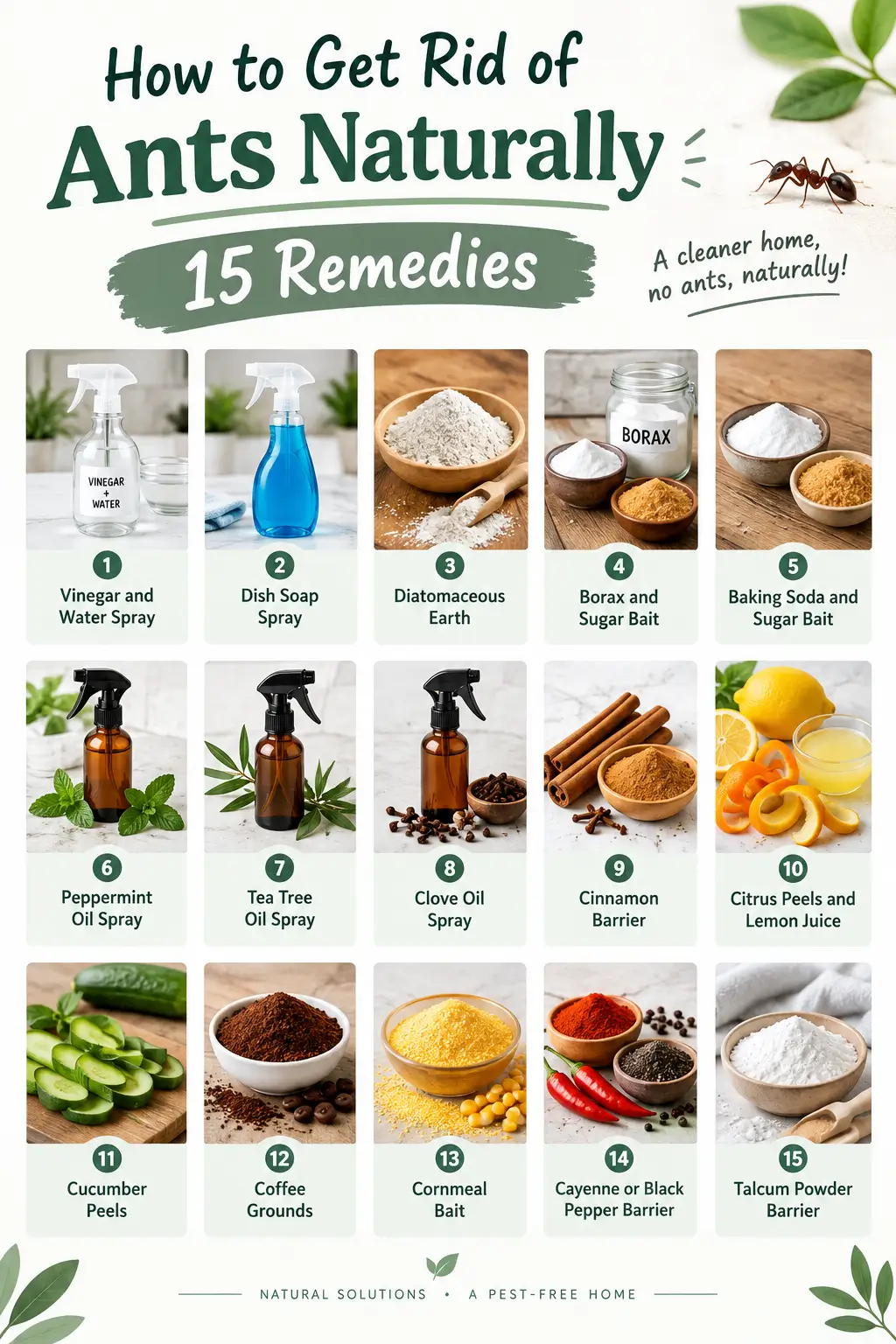
Natural Remedy For Ants – Comparison Table
| Remedy | How It Works | Speed | Kills the Colony? | Pet/Kid Safe? | Best For |
| Vinegar spray | Erases scent trail | Minutes | No | Yes | Immediate cleanup |
| Dish soap spray | Breaks down exoskeleton | Instant | No | Yes | Ants on contact |
| Diatomaceous earth | Cuts exoskeleton, dries them out | 1–2 days | Partially | Yes (food-grade) | Ongoing trails |
| Borax + sugar bait | Poisons the colony via shared food | 1–2 weeks | Yes | No — keep away from pets/kids | Full infestations |
| Baking soda + sugar bait | Disrupts digestion | 1–2 weeks | Partially | Yes | Mild infestations |
| Peppermint oil spray | Overwhelms scent tracking | Ongoing | No | Yes (avoid direct pet contact) | Entry-point prevention |
| Tea tree oil spray | Disrupts scent tracking | Ongoing | No | No — toxic to cats | Prevention (dog/no-pet homes) |
| Clove oil spray | Disrupts trail scent | Ongoing | No | Caution with pets | Prevention alongside bait |
| Cinnamon barrier | Toxic to ants, disrupts fungus | Ongoing | No | Yes | Entry points |
| Citrus peels/juice | Disrupts fungus ants feed on | Ongoing | No | Yes | Mild deterrence |
| Cucumber peels | Ants avoid the scent | Ongoing | No | Yes | Mild deterrence |
| Coffee grounds | Strong scent deterrent | Ongoing | No | Yes | Prevention, outdoor use |
| Cornmeal bait | Ants can’t digest it | 1–2 weeks | Partially | Yes | Slow colony reduction |
| Cayenne/black pepper | Disrupts scent tracking | Ongoing | No | Yes | Entry-point barrier |
| Talcum powder | Breaks scent trail | Ongoing | No | Yes | Simple, cheap barrier |
Which Remedy Should You Use?
In the kitchen: Start with dish soap spray for what you see. Follow with borax bait behind appliances, out of reach of kids and pets.
Outdoors: Diatomaceous earth around the foundation. Cinnamon or coffee grounds near entry points.
If you have pets: Diatomaceous earth (food-grade), vinegar spray, and baking soda bait are your safest bets. Skip borax and tea tree oil unless you can fully block pet access.
For a full infestation: Borax and sugar bait is the one method here that actually reaches the queen. Give it one to two weeks. Don’t clean up the bait stations too soon.
How to Make a Natural Ant Repellent Spray
- Get a clean spray bottle, at least 8 oz.
- Fill it halfway with water.
- Add 15–20 drops of peppermint or tea tree essential oil.
- Add 2 tablespoons of white vinegar.
- Shake well before every use.
- Spray along windowsills, doors, and any entry point.
- Reapply every 3–4 days, or after cleaning the area.
This spray repels. It doesn’t replace a bait method if you already have an active infestation.
Are Natural Remedies Actually Effective?
Yes and no. It depends what you’re trying to do.
Sprays and barriers work fast on the ants you can see. They don’t reach the nest. Bait methods, like borax or cornmeal, work slower, but they’re the only ones that touch the colony itself.
Pest control professionals generally recommend the same layered approach for a reason: repellents to stop new activity, bait to remove the source. That combination consistently outperforms any single remedy used alone, natural or not.
If ants keep coming back after two to three weeks of consistent effort, you’re likely dealing with a larger colony, or more than one nest. That’s the point where natural remedies start to lose the fight.
How to Prevent Ants From Coming Back
Seal entry points. Caulk cracks around windows, doors, and where pipes enter the wall.
Store food in airtight containers. Ants smell through flimsy packaging. This is also one of the easiest zero waste swaps to make at home, since airtight glass or steel containers cut down on both pests and plastic waste.
Wipe up spills right away, especially anything sweet or greasy.
Take out the trash regularly. Rinse containers before recycling.
Fix leaks. Ants need water as much as food.
Trim plants and mulch back from the foundation. Outdoor nests often sit closer to your house than you’d think.
When Natural Remedies Aren’t Enough
Not all ants respond to the same tricks.
Odorous house ants and pavement ants usually respond well to bait. Carpenter ants are different. They nest inside damp or damaged wood and can cause real structural damage over time. Pharaoh ants split into multiple colonies when disturbed, which can make DIY methods backfire.
If you see sawdust-like debris near wood, hear faint rustling in walls, or notice the infestation spreading despite two to three weeks of consistent treatment, call a licensed pest control professional. Some problems need more than a spray bottle.
Start Gentle, Escalate When Needed
Vinegar and dish soap handle what you see right now. Borax bait handles the colony you don’t see. Diatomaceous earth and essential oils fill the gap between the two.
Use more than one method together. That’s what actually gets rid of an ant invasion — not just slows it down.
Start gentle. Most ant problems clear up with the deterrents and baits above, no chemicals needed. Save the harsher options for the cases that genuinely call for them.