Quick answer:
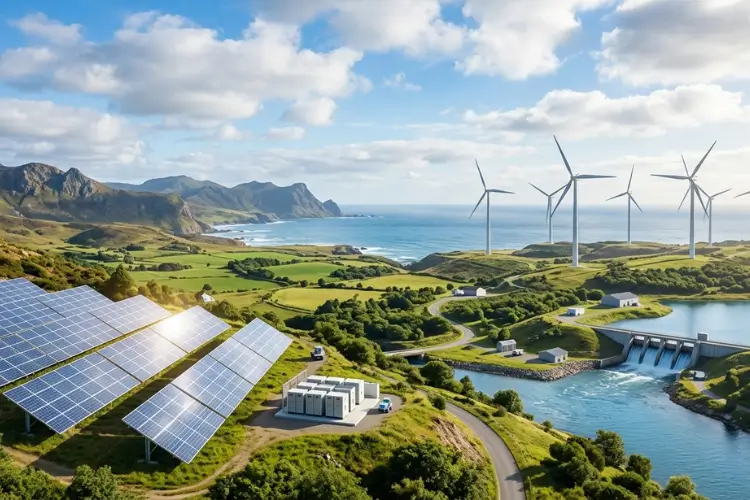
There are 8 primary renewable energy sources solar, wind, hydropower, geothermal, biomass, tidal/wave, green hydrogen, and ambient heat plus 12 real-world technologies built on top of them, from rooftop solar to offshore wind. Solar is the cheapest and fastest-growing. Hydropower is still the biggest. And in 2026, the story everyone’s missing is how much of this growth is being pulled forward by AI data centers, not climate policy.
I’ve spent the last few weeks buried in EIA reports, Lazard’s cost data, and IEA’s 2026 electricity outlook. So you don’t have to.
Here’s everything I found.
What Actually Counts as “Renewable Energy”?
Renewable energy is power generated from a resource that replenishes itself faster than we use it up.
Sunlight. Wind. Flowing water. Heat from inside the earth. None of those run out on a human timescale.
Compare that to fossil fuels, which took millions of years to form and can’t be remade. That’s the whole distinction, really.
By the way: nuclear energy is not renewable, even though it’s low-carbon. Uranium is a mined, finite resource. I’ll come back to why that confuses people later on.
So, why does the number of “sources” keep changing depending on where you look?
Because most lists mix two different things: the 8 primary sources nature actually gives us, and the 12 or so technologies we’ve built to capture them. This article covers both: 20 total, clearly separated, so you’re not left wondering why “rooftop solar” and “solar energy” are somehow counted as two different things.
The 8 Primary Renewable Energy Sources
These are the fundamentals. Everything else on this list is a variation of one of these eight.
1. Solar Energy
Solar is the fastest-growing energy source on the planet, full stop. Not just among renewables.
Costs have dropped more than 80% over the past decade, and 2026 is the year solar is expected to overtake both wind and nuclear in total US generation. Utility-scale solar now runs as low as $30 to $78 per megawatt-hour, which is competitive with, and often cheaper than, building a new gas plant.
Pros:
- Cheapest to build
- Scales from a single rooftop to a thousand-acre farm
- No moving parts to maintain
Cons:
- Doesn’t generate at night
- Output dips on cloudy days without storage
Best for: Homeowners, utilities, and pretty much anywhere with a roof or open land.
2. Wind Energy
Wind is the second pillar of the renewable grid, and it currently supplies close to half of all US renewable electricity.
The economics are strong: onshore wind costs as little as $30/MWh, genuinely one of the cheapest ways to generate power in America right now.
Pros:
- Very low cost
- Works day and night, unlike solar
Cons:
- Output is variable and depends on wind speed
- Some people object to turbines on the landscape
Best for: Open plains (onshore) and coastal grids (offshore).
3. Hydropower
Here’s the truth nobody tells you: hydropower, not solar or wind, is still the world’s single largest source of renewable electricity.
It supplies roughly 14% of global power and provides critical flexibility to grids in more than 150 countries. It’s the quiet workhorse of the renewable world.
Pros:
- Reliable and dispatchable (you can turn it up or down on demand)
- Decades-long asset life
Cons:
- Requires the right geography
- Big dams carry real ecological and community costs
Best for: Regions with major rivers and existing dam infrastructure.
4. Geothermal Energy
Geothermal taps heat from inside the earth, and yes, it’s hotter down there than you’d think.
Costs run $66–$109/MWh, pricier than solar or wind, but geothermal has something they don’t: it runs 24/7, regardless of weather. That makes it one of the only renewable sources that can genuinely replace fossil fuel baseload power.
Pros:
- Constant output
- Small physical footprint
- Very low emissions
Cons:
- Only works in specific geological locations (for now, more on that below)
- Higher upfront cost
Best for: Baseload power in geologically active regions like the western US and Iceland.
5. Biomass & Bioenergy
Biomass burns organic material (wood, crop waste, even algae) to generate power or produce fuel.
The simple fix? Think of it as recycling energy that’s already in the carbon cycle, instead of digging up new carbon from underground.
Pros:
- Uses waste that would otherwise rot or get discarded
- Works with existing power plant infrastructure
Cons:
- Still produces emissions when burned
- Land-use and food-vs-fuel tradeoffs are real
Best for: Industrial sites and regions with heavy agricultural or forestry waste streams.
6. Tidal & Wave (Ocean) Energy
Ocean energy is the smallest of the eight, but also the most predictable.
Tides don’t depend on weather. They run on gravity, which means tidal power is one of the few renewable sources you can forecast years in advance.
Pros:
- Highly predictable
- High energy density
Cons:
- Expensive
- Requires specific coastlines
- Still an emerging technology at scale
Best for: Coastal nations with strong tidal ranges (think the UK, parts of Canada, South Korea).
7. Green Hydrogen
Green hydrogen isn’t really a “source.” It’s a carrier. You use renewable electricity (usually wind or solar) to split water into hydrogen and oxygen, then use that hydrogen as a clean fuel later.
Because: some sectors, like heavy trucking, steel, and aviation, are genuinely hard to electrify directly. Hydrogen is the workaround.
Pros:
- Stores renewable energy for later use
- Decarbonizes sectors batteries can’t reach
Cons:
- Currently expensive to produce
- Inefficient (you lose energy converting electricity to hydrogen and back)
Best for: Heavy industry and long-haul transport, not home energy.
8. Ambient Heat (Heat Pumps)
Heat pumps pull existing warmth from the air, ground, or water and move it where you need it, instead of burning fuel to create new heat.
It’s a subtle shift in thinking. You’re not generating energy, you’re relocating it, and that turns out to be far more efficient.
Pros:
- Can cut heating costs dramatically
- Works for both heating and cooling
Cons:
- Higher upfront installation cost than a furnace
- Efficiency drops in extreme cold (though modern cold-climate units have mostly solved this)
Best for: Homeowners in moderate-to-cold climates looking to electrify heating.
12 Renewable Energy Technologies & Subtypes Worth Knowing
These aren’t new sources. They’re how we actually capture the eight above. This is where the “20” really comes from, and honestly, this is the part most lists skip.
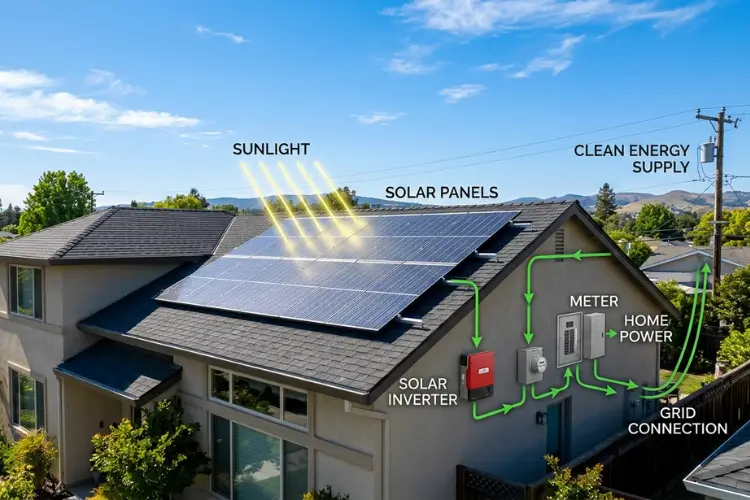
- Rooftop Solar PV: Panels on your home, feeding your own usage first and the grid second.
- Utility-Scale Solar Farms: Hundreds of acres of panels feeding directly into the grid at industrial scale.
- Concentrated Solar Power (CSP): Mirrors focus sunlight to heat a fluid that drives a turbine, rather than converting light directly to electricity.
- Onshore Wind: Turbines on land; the cheapest wind option available today.
- Offshore Wind: Turbines in open water, where wind is stronger and steadier, at a higher build cost.
- Pumped-Storage Hydro: Water pumped uphill when power is cheap, released downhill through turbines when it’s not. Essentially a giant battery.
- Run-of-River Hydro: Generates power from a river’s natural flow, no massive dam or reservoir required.
- Enhanced Geothermal Systems (EGS): Engineered geothermal that works in places without natural hot springs, opening up geothermal far beyond its traditional map.
- Biogas / Anaerobic Digestion: Microbes break down organic waste and produce methane gas you can burn for power.
- Biofuels (Ethanol, Biodiesel, SAF): Liquid fuels made from crops, waste oils, or algae; SAF (sustainable aviation fuel) is the one to watch.
- Tidal Stream Generators: Underwater turbines spun by moving tidal currents, like wind turbines submerged in the sea.
- Wave Energy Converters: Devices that capture the up-and-down motion of ocean waves and turn it into electricity.
Renewable Energy Cost Comparison (2026 Data)
So which one actually wins on price? Here’s the honest breakdown, using Lazard’s latest unsubsidized cost estimates.
| Source | Cost ($/MWh) | US Growth Rate | Reliability | Best Use Case |
| Onshore Wind | $30–86 | Fast | Moderate (variable) | Grid-scale power |
| Solar (Utility PV) | Under $40–78 | Fastest | Moderate (variable) | Homes & utilities |
| Hydropower | Varies by site | Slow (mature) | High | Baseload + flexibility |
| Geothermal | $66–109 | Slow but rising | Very high (24/7) | Baseload power |
| Offshore Wind | $70–157 | Fast | Moderate-high | Coastal grids |
| Biomass | $60–110 (est.) | Moderate | High | Industrial power |
Compare that to fossil fuels and nuclear: new-build gas runs $50–110/MWh, coal $70–170/MWh, and nuclear $140–220/MWh. Onshore wind and utility solar are now cheaper than both, even before subsidies enter the picture.
Which Renewable Energy Source Is Best? (By Use Case)
Cheapest per kWh? Onshore wind and utility-scale solar, neck and neck.
Fastest-growing in the US? Solar, by a wide margin, projected to overtake wind and nuclear generation this year.
Most reliable, baseload-capable? Geothermal and hydropower. They don’t care if the sun is out or the wind is blowing.
Best for homeowners? Rooftop solar, paired with a heat pump if you’re also trying to cut heating costs.
Best for the grid overall? Realistically, none of them alone. The grid of 2026 runs on a mix: solar and wind for volume, hydro and geothermal for stability, batteries stitching the gaps together.
Renewable vs. Non-Renewable Energy: What’s the Real Difference?
| Renewable | Non-Renewable | |
| Examples | Solar, wind, hydro, geothermal | Coal, oil, natural gas, nuclear |
| Replenishment | Naturally and continuously | Finite; takes millions of years or mined material |
| Emissions | Little to none once running | High (fossil) or none (nuclear) |
| Cost trend | Falling fast | Rising or flat |
Is nuclear renewable? No, and this trips a lot of people up. Nuclear is low-carbon, which makes it climate-friendly. But it runs on uranium, a mined and finite resource, so it doesn’t meet the technical definition of renewable. Think of it as clean, not renewable. The two aren’t the same thing.
Pros and Cons of Renewable Energy (Honest Take)
Let’s not pretend this is all upside. It isn’t.
The upside:
- Costs have collapsed: solar and wind now beat fossil fuels on price in most of the US.
- Emissions drop close to zero once the infrastructure is built.
- Energy independence improves; you’re not importing fuel.
The real downside:
- Solar and wind are intermittent. No sun, no wind, no power, unless you’ve built storage or backup into the system.
- Some sources (geothermal, hydro, tidal) only work in specific locations.
- Upfront capital costs are real, even if long-term costs are lower.
Here’s the truth nobody tells you: intermittency is the actual engineering problem of the next decade, not cost. Cost is basically solved. Reliability isn’t, yet.
The State of Renewable Energy in the US in 2026
Renewables made up nearly 26% of total US electricity generation in 2025, and climbed to roughly 30% for the first several months of 2026, per EIA’s Electric Power Monthly.
But the bigger story right now isn’t the percentage. It’s that solar, wind, and battery storage are projected to add over 60% more new generating capacity in 2026 than they did in 2025, according to EIA.
The answer? AI data centers.
Electricity demand from data centers has surged so fast that it’s pulling nuclear, solar, wind, and battery storage all forward at once. Amazon, Meta, Google, and Microsoft have all signed multi-gigawatt nuclear or SMR deals since 2025, including Amazon’s $50 billion partnership with X-energy and Microsoft’s agreement to restart Three Mile Island.
Solar, wind, and battery storage are projected to supply almost all of the net new generating capacity added in the US this year.
Texas and Iowa lead on wind. California leads on solar. And globally, solar alone supplied 83% of the growth in electricity demand in the first half of 2025, meaning the world’s rising energy appetite is being met almost entirely by the sun.
Which Renewable Energy Source Should You Care About?
If you’re a homeowner, it’s rooftop solar, maybe paired with a heat pump.
If you’re watching the grid overall, it’s the mix: solar for growth, wind for cost, hydro and geothermal for the stability the other two can’t offer on their own.
So, where do you start? Honestly, wherever your situation actually points you: your roof, your region, your budget. Not whichever source is trending on your feed.
That’s the difference between clean energy as a headline and clean energy as something that actually works for you.