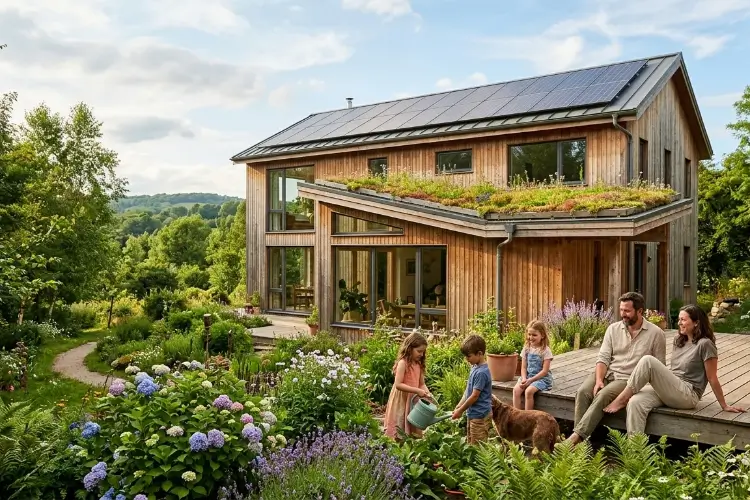
A green home is a house built or renovated to use less energy, less water, and safer materials than a standard home, while producing less waste and healthier indoor air. It usually combines efficient systems, sustainable materials, and smart design, and it may carry a certification like LEED, ENERGY STAR, or Passive House.
Here’s the quick version:
- A green home is defined by what it does, not by a single feature or product
- The four pillars are energy, water, materials, and indoor air quality
- Certification is optional proof, not a requirement
- Going green usually costs more upfront and less over time
- You can build green from scratch or get there through smart retrofits
So where do you start? Let’s break down what actually makes a home “green,” what it costs, and how you’d build or retrofit one yourself.
What Makes a Home “Green,” Exactly?
Here’s the truth nobody tells you: there’s no single government checklist that officially defines a green home.
No federal agency hands out a “green” stamp the way it does with organic food. Instead, the term describes a home built around a set of intentional choices. Energy use. Water use. Material safety. Air quality. Site selection.
A home doesn’t need every single feature to earn the label. But it does need to show real intention across most of these categories. A house with one solar panel and nothing else isn’t a green home. A house designed from the ground up to sip energy, conserve water, and keep toxins out of the air? That’s the real thing.
The Core Pillars of a Green Home
Think of these as the four load-bearing walls of the concept:
- Energy efficiency. Tight building envelopes, high-performance windows, heat pumps, and often renewable power like solar.
- Water conservation. Low-flow fixtures, efficient irrigation, sometimes rainwater or greywater systems.
- Sustainable materials. Reclaimed wood, recycled metal, low-VOC paint, and responsibly sourced lumber.
- Indoor air quality. Proper ventilation, air filtration, and materials that don’t off-gas toxins into your living room.
Most green homes also pay attention to a fifth factor: site and design. Where the house sits, how it catches sunlight, how it handles shade in summer. That’s passive design, and it can cut your energy needs before a single solar panel goes up.
Green Home vs. Energy-Efficient Home vs. Net-Zero Home
This is where most articles get sloppy. Let’s fix that.
An energy-efficient home focuses narrowly on using less power. Great insulation, efficient HVAC, maybe better windows. That’s it. It doesn’t say anything about water, materials, or air quality.
A green home is the umbrella term. It includes energy efficiency but adds water, materials, and health into the picture.
A net-zero home is a specific, measurable goal: the home produces as much energy as it consumes over a year, usually through solar. Every net-zero home is green. Not every green home is net-zero.
The simple fix? If someone tells you their home is “green” because it has good insulation, ask about the other three pillars before you believe the full claim.
The Building Blocks of a Green Home
Let’s get specific. Here’s what actually shows up inside a green home, room by room and system by system.
Energy Efficiency and Renewable Power
This is usually where green building starts, and for good reason. Heating and cooling account for roughly a third of the average American home’s electric bill.
A green home tackles this with a tight building envelope (meaning minimal air leaks), high-performance insulation, and efficient windows. Then it often layers on renewable power, most commonly rooftop solar, sometimes geothermal, drawing from the same Renewable Energy Sources that are reshaping how homes get their power.
By the way: the cheapest energy is the energy you never use in the first place. Every builder who’s worked on a green project will tell you the same thing. Efficiency comes before generation, not after.
Water Conservation Systems
Water gets less attention than energy, but it matters just as much in drought-prone regions.
Green homes typically include low-flow faucets, showerheads, and toilets. Many add drought-tolerant landscaping and efficient drip irrigation instead of traditional sprinklers. Some go further with rainwater collection or greywater systems that reuse water from sinks and showers for irrigation.
Sustainable and Low-Toxicity Materials
Materials matter twice over. Once for the planet, once for your lungs.
Reclaimed wood and recycled metal reduce the environmental cost of new extraction. Low-VOC paints and finishes reduce the chemical fumes that off-gas into your home for months, sometimes years, after a standard renovation. If you’re planning a build or remodel, it’s worth researching sustainable building materials early, since material choices are one of the hardest things to change after construction starts.
If you’ve ever walked into a freshly painted room and felt that headache coming on? That’s VOCs. A green home minimizes that.
Indoor Air Quality
Here’s a stat that surprises most people: indoor air can carry pollutant concentrations two to five times higher than outdoor air, according to EPA research. We seal our homes tight for efficiency, and then trap pollutants inside with us.
Green homes solve this with mechanical ventilation systems, proper filtration, and materials that don’t emit toxins in the first place. It’s not just an environmental feature. It’s a health feature.
Site Selection and Passive Design
The best green homes start working before the electricity even turns on.
Passive solar design orients a house to catch winter sun for warmth and block summer sun for cooling. Tree placement, window positioning, and roof overhangs all play a role. If you’re starting from scratch, browsing eco home design ideas before you finalize a floor plan can save you thousands in energy costs down the line. Done well, this alone can meaningfully cut heating and cooling demand before any mechanical system kicks in.
Green Home Certifications, Compared
So does a green home need a certification? No. But certifications exist because “green” can be vague, and a third-party label gives buyers and homeowners something concrete to trust.
Here’s how the major programs stack up:
| Certification | Administered By | Focus Area | Typical Cost | Best For |
| LEED for Homes | U.S. Green Building Council | Whole-home sustainability: energy, water, materials, health | Varies by project; soft costs plus rater/provider fees | Buyers and builders who want the most recognized global label |
| ENERGY STAR | EPA / DOE | Energy efficiency specifically | Lower cost, narrower scope | Homeowners focused mainly on utility bill savings |
| Passive House (PHIUS) | Passive House Institute US | Extreme energy efficiency through building envelope design | Higher design rigor, moderate certification cost | New construction aiming for near-zero heating and cooling needs |
| National Green Building Standard (NGBS) | Home Innovation Research Labs | Broad green building, similar scope to LEED | Tiered by certification level | Builders working in regions where NGBS is more common than LEED |
| BREEAM | BRE Group | Whole-building sustainability | Varies widely by project | Primarily UK and international projects |
Is Certification Worth It for a Single-Family Home?
Here’s the honest answer: it depends on your goal.
If you’re building to sell, certification can genuinely help. LEED-certified homes have sold faster and for more money than comparable non-certified homes in markets like Austin and Washington, D.C. Certified homes can also qualify for insurance discounts and tax incentives in some areas.
If you’re building to live in long-term and you’re not planning to market the “certified” label, you can hit most of the same benefits by following certification standards informally, without paying for the paperwork and third-party inspections.
What Does a Green Home Actually Cost?
Let’s talk numbers, because this is where a lot of people get scared off before they even start.
Quick stats worth knowing:
- LEED-certified homes use 20-30% less energy and water on average, with some projects reporting savings up to 60%
- The average U.S. monthly electric bill runs around $117, with heating and cooling responsible for about a third of that
- With proper planning, LEED homes can be built for close to the same cost as a standard home
- Some studies show buyers willing to pay tens of thousands of dollars more for a genuinely green home
Upfront Cost vs. Long-Term Savings
Here’s the truth nobody tells you upfront: yes, green building often costs more at the start. Better materials, better systems, and certification fees all add up.
But that’s only half the story. Because:
Lower utility bills. Fewer health-related costs from poor air quality. Longer-lasting materials that need less replacement. Potential insurance discounts and tax incentives. Faster resale and stronger resale value in many markets.
The math doesn’t work the same for every project. A modest energy retrofit might pay for itself in a few years. A full LEED-certified new build might take longer to break even but delivers value the whole time you own the home.
Real Numbers: Utility Bill and Resale Data
Here’s a realistic example, not a cited case study, just to show what’s possible: a home that upgrades its insulation and switches to a heat pump system could see its heating and cooling costs drop by 20-30% a year. On a $180 monthly bill, that’s roughly $35 to $55 back in your pocket every single month.
ENERGY STAR-qualified heating and cooling upgrades consistently deliver that 20-30% range in annual savings, and some certified green homes report total water and energy savings as high as 60%.
Why Build a Green Home
You don’t need to be an environmentalist to want a green home. The reasons stack up regardless of what motivates you most, and new green tech innovations keep making it cheaper and easier to get there every year.
Financial Reasons
Lower monthly bills. Higher resale value in many markets. Access to tax credits and utility rebates. Some insurance companies even offer discounts for certified green homes.
Health Reasons
Better indoor air quality means fewer allergy and respiratory issues for the people living inside. This isn’t a minor side benefit. It’s one of the most cited reasons homeowners give when asked why they went green in the first place.
Environmental Reasons
Less energy use means fewer greenhouse gas emissions. Less water use means less strain on local supply, especially in drought-prone regions. Sustainable materials reduce the demand for new extraction and manufacturing.
Resilience and Long-Term Value
Green homes are increasingly designed with resilience in mind: better insulation for extreme weather, backup power through solar and battery systems, and construction that holds up longer. Pairing that backup power with the kind of setup covered in what is a smart grid lets a home draw, store, and share electricity more intelligently, which adds another layer of resilience during outages. As weather patterns get less predictable, that resilience becomes its own kind of savings account.
How to Start: A Step-by-Step Path to Building or Retrofitting Green
You don’t have to do everything at once. Here’s a realistic order of operations.
- Start with an energy audit. Whether you’re building new or retrofitting, you need to know where energy is currently being lost before you spend money fixing it.
- Prioritize the building envelope. Insulation, air sealing, and windows come before any renewable energy investment. Efficiency first, generation second.
- Choose your systems. Heat pumps for heating and cooling, ENERGY STAR-rated appliances, and efficient water heating make the biggest dent in ongoing costs.
- Address water use. Low-flow fixtures and smart irrigation are inexpensive relative to their long-term savings.
- Choose materials carefully. Look for low-VOC finishes and sustainably sourced or reclaimed materials wherever your budget allows. If you’re redoing floors, comparing eco flooring options upfront can save you from ripping out the wrong material later.
- Decide on certification. If resale value or marketability matters to you, talk to a Green Rater or Energy Rater early, since certification requirements need to be built into the plan, not bolted on afterward.
- Add renewable generation last. Understanding how solar energy works before you invest helps you size a system correctly. Solar and other renewables work best, and cost less, once your home actually needs less energy to run.
Common Green Home Myths, Debunked
“Green homes are only for new construction.” Not true. Most of the biggest efficiency wins, insulation, air sealing, heat pumps, come from retrofitting existing homes.
“Green homes cost way more to build.” Cost premiums exist, but they’re often smaller than people assume, and they shrink further when you factor in long-term savings and resale value.
“You need certification to have a real green home.” Certification is proof, not a requirement. A home can be genuinely green without a plaque on the wall.
“Green homes look different from regular homes.” They don’t have to. Green building is about systems and materials, not aesthetics. A green home can look exactly like the house next door.
“Solar panels alone make a home green.” Solar is generation. Green building starts with reducing how much energy you need in the first place.
Start Where You Are
A green home isn’t defined by a single feature. It’s the combination of energy efficiency, water conservation, safe materials, and healthy indoor air working together.
You don’t need a certification to get there, and you don’t need to build from scratch. Whether you’re planning new construction or eyeing your first retrofit, the path is the same: start with efficiency, choose your materials carefully, and add renewables once your home actually needs less power to run.
The cleanest, cheapest energy is still the energy you never use in the first place.