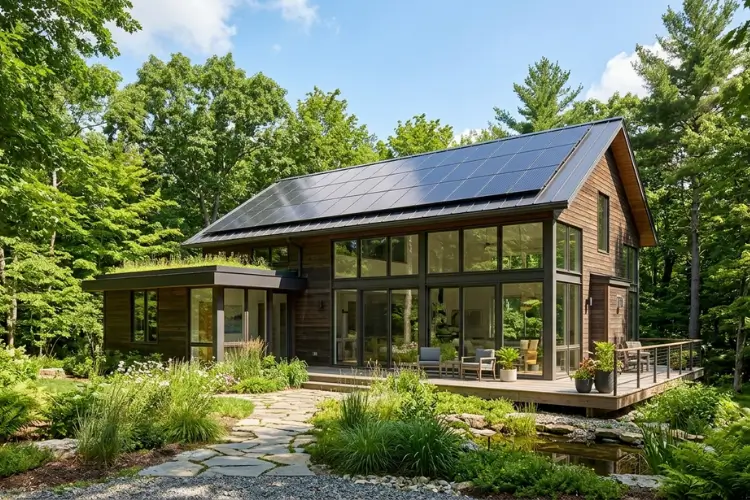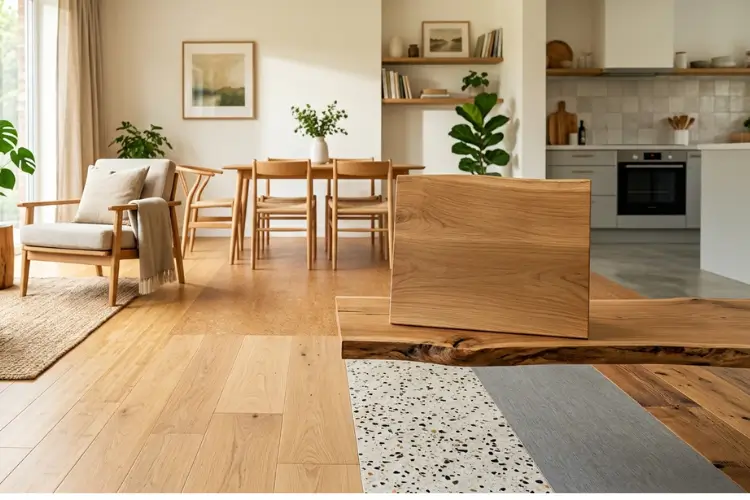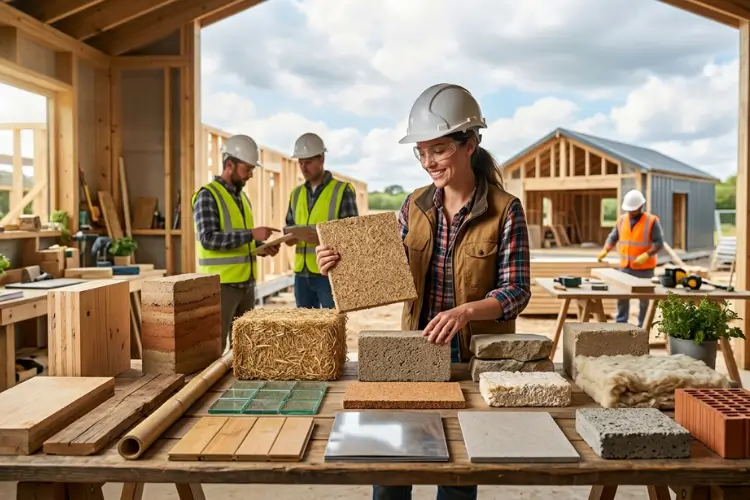
Quick answer: Bamboo, hempcrete, and reclaimed wood are the most accessible sustainable building materials for 2026, while mass timber and low-carbon concrete are leading the shift in larger projects. Costs vary widely. Some options like straw bale are cheaper than conventional materials, while others carry a premium you pay back through energy savings.
So you’re trying to build or renovate with the planet in mind. Good. But the second you start researching, you hit a wall of vague claims: “eco-friendly,” “green,” “natural.” None of that tells you what you’re actually paying for, or whether it’s worth it.
Here’s the thing: I’ve spent years around renovation projects that tried to do this right. Some worked beautifully, some taught me expensive lessons. This list skips the marketing language and gets into what these materials actually cost, how they perform, and where they make sense.
By the way: the stakes here are bigger than one house. Buildings and construction together account for roughly a third of global energy-related CO2 emissions. Every material choice you make is a small vote on that number.
What Makes a Building Material Actually “Sustainable”?
A sustainable building material is one that does less environmental damage across its whole life, not just at the moment it’s installed.
That means looking at four things:
- Where it comes from: Is it renewable, recycled, or reclaimed? Or is it mined and processed from scratch?
- How much energy it takes to make: This is called embodied carbon: the emissions baked into a material before it ever reaches your site.
- How long it lasts: A material that needs replacing every ten years isn’t sustainable no matter how “natural” it sounds.
- What happens when it’s done: Can it be recycled, composted, or reused? Or does it end up in a landfill?
Researchers call the full picture a life cycle assessment (LCA). It’s the difference between a material that looks green in a photo and one that’s actually green on paper.
How We Chose These 15 Materials
We ranked these by three things: real environmental impact, availability (you should actually be able to buy this), and cost transparency.
We skipped anything that’s still lab-stage or too niche to source in most of the US. Everything on this list, you can specify on a project today.
The 15 Best Sustainable Building Materials for 2026
Here they are, ranked from the most accessible to the most emerging.
1. Bamboo
Bamboo is a fast-growing grass, not a tree, and that’s the whole story of why it’s so sustainable.
It reaches structural maturity in three to five years. Compare that to the decades a hardwood tree needs, and you start to see why bamboo shows up on almost every list like this one.
Pros: Extremely fast-renewing, strong-to-weight ratio rivals steel, low-waste harvesting (the whole stem gets used).
Cons: Needs chemical treatment to resist pests and moisture in humid climates; quality varies a lot by supplier.
Best for: Flooring, structural framing in engineered form, scaffolding, furniture.
2. Hempcrete
Hempcrete is a bio-composite insulation material made from hemp fibers, lime, and water, used to fill timber-framed walls.
The simple fix it offers? It actually absorbs CO2 as it cures, which most building materials can’t claim.
When I’ve seen hempcrete used on a retrofit, the tradeoff nobody mentions upfront is this: it’s not load-bearing. You still need a timber or steel frame doing the structural work. Hempcrete is the insulation and wall-fill, not the skeleton.
Pros: Carbon-negative curing process, excellent insulation and moisture regulation, naturally fire- and pest-resistant.
Cons: Not structural on its own, longer cure time than conventional insulation, fewer contractors know how to install it.
Best for: Wall infill in timber-framed homes, retrofits prioritizing indoor air quality.
3. Reclaimed Wood
Reclaimed wood is salvaged timber pulled from old barns, factories, and demolished buildings, then re-milled for new use.
This one’s simple: it’s already been grown, cut, and dried. Using it again avoids the embodied carbon of a brand-new tree, start to finish. It’s the same logic behind any zero waste swap: the most sustainable material is often the one that already exists.
Pros: Zero new harvesting, often denser and more stable than new-growth lumber, brings genuine character you can’t fake.
Cons: Supply is inconsistent, needs inspection for hidden nails or rot, can cost more than new lumber depending on demand.
Best for: Flooring, exposed beams, accent walls, furniture.
4. Recycled Steel
Recycled steel is produced from scrap metal instead of freshly mined ore, and it can be recycled endlessly without losing strength.
That “endlessly” part matters. Unlike a lot of materials on this list, steel doesn’t degrade in quality every time it’s recycled.
Pros: Infinitely recyclable, high strength-to-weight ratio, resistant to fire, pests, and extreme weather.
Cons: Production is still energy-intensive even when recycled, upfront cost can exceed wood framing.
Best for: Structural framing, roofing, projects in high-wind or seismic zones.
5. Mass Timber (CLT and Glulam)
Mass timber refers to engineered wood panels, cross-laminated timber (CLT) and glue-laminated timber (glulam), strong enough to replace steel and concrete in mid-rise buildings.
Here’s the truth nobody tells you about timber: growing trees actually pull carbon out of the atmosphere, and mass timber locks that carbon into the building for decades instead of releasing it. If you want to see that principle taken to the extreme, some of the world’s oldest living trees have been quietly storing carbon for thousands of years.
Pros: Stores carbon rather than emitting it, lighter than concrete (smaller foundations, lower transport emissions), fast on-site assembly.
Cons: Requires fire-engineering expertise, still catching up in local building codes in some regions, sourcing must be certified (FSC) to actually be sustainable.
Best for: Mid-rise residential and commercial buildings, structural framing.
6. Rammed Earth
Rammed earth is an ancient technique that compacts soil, clay, and sand into dense, load-bearing walls.
It’s not new. It’s one of the oldest building methods on earth, and it’s making a comeback because it barely needs processing at all.
Pros: Minimal embodied energy, excellent thermal mass (keeps interiors stable in hot climates), locally sourced almost everywhere.
Cons: Labor-intensive to build, performs poorly in very wet or freeze-thaw climates without added protection, thick walls eat into floor space.
Best for: Hot, dry climates; passive solar design.
7. Cork
Cork is harvested from the bark of cork oak trees. Here’s the detail that surprises people: the tree isn’t cut down.
The bark regrows and gets harvested again roughly every nine years, for the tree’s entire lifespan.
Pros: Renewable without felling the tree, naturally insulating, water- and fire-resistant, biodegradable.
Cons: Higher cost than standard flooring or insulation, softer surface can dent under heavy furniture.
Best for: Flooring, wall insulation, acoustic paneling.
8. Low-Carbon and Recycled Concrete
Low-carbon concrete swaps out some of the high-emission cement (called clinker) for byproducts like fly ash and slag, or uses crushed, reclaimed concrete as aggregate instead of mining new rock.
Concrete production alone accounts for roughly 8% of global CO2 emissions. That’s why even a partial fix here has an outsized impact.
Pros: Cuts emissions without abandoning a familiar, code-friendly material, reduces landfill waste from demolition.
Cons: Performance can vary by mix, not every supplier stocks low-carbon blends yet.
Best for: Foundations, large-scale infrastructure, any project where concrete is non-negotiable.
9. Straw Bale
Straw bale construction stacks compressed agricultural waste (straw left over from wheat, rice, or barley harvests) into thick, insulating walls, usually finished with plaster.
The simple fix here is cost. Straw bales run $2 to $5 each, and a full straw bale wall system typically costs 50 to 70% less than a conventional insulated wall.
Pros: Extremely cheap, uses agricultural waste, excellent insulation value.
Cons: Needs a proper plaster finish for fire and moisture protection, not suitable for very humid climates without careful detailing.
Best for: Budget-conscious builds, DIY-friendly projects, dry-to-moderate climates.
10. Sheep’s Wool Insulation
Sheep’s wool insulation uses raw or treated wool batts as an alternative to fiberglass or spray foam.
Wool naturally regulates moisture, absorbing and releasing humidity without losing its insulating power, something synthetic insulation can’t do.
Pros: Renewable, biodegradable, naturally fire-resistant, safe to install without heavy protective gear.
Cons: More expensive than fiberglass, less widely stocked outside specialty suppliers.
Best for: Wall and attic insulation, especially for owners prioritizing indoor air quality.
11. Recycled Plastic Lumber
Recycled plastic lumber turns plastic waste (bags, bottles, and scrap) into UV-stabilized boards that meet residential building codes for decking and fencing.
It won’t rot, splinter, or need chemical treatment. The tradeoff? It retains heat, so it can get warm underfoot on a hot day.
Pros: Diverts plastic waste from landfills and oceans, essentially maintenance-free, doesn’t leach chemicals.
Cons: Heat retention in direct sun, not structural, limited color/texture range compared to real wood.
Best for: Decking, fencing, outdoor furniture.
12. Ferrock
Ferrock is a relatively new material made from recycled steel dust and silica, and it does something almost no other building material does: it absorbs CO2 as it hardens, making it carbon-negative. It’s one of a growing wave of green tech innovations turning industrial waste into something structural.
It’s also more durable than standard concrete: resistant to cracking and up to five times stronger in some tests.
Pros: Carbon-negative curing, made from industrial waste, strong and crack-resistant.
Cons: Still emerging, with limited suppliers and higher cost than standard concrete, not yet common in mainstream building codes.
Best for: Early adopters, small-scale structural or landscaping applications.
13. Mycelium (Bio-Based) Insulation
Mycelium insulation is grown, not manufactured. It’s the root structure of fungi, cultivated around agricultural waste until it forms a lightweight, insulating block.
The simple fix? You grow it into the exact shape you need, then it stops growing once dried. No factory, no fossil-fuel-heavy process.
Pros: Fully compostable, grown from waste material, low embodied energy.
Cons: Still a niche product, limited long-term performance data, not widely available at scale yet.
Best for: Non-structural insulation panels, experimental and small-scale builds.
14. Recycled Glass
Recycled glass gets crushed into aggregate for use in concrete, tiles, and countertops, or melted down into new glass products entirely.
Glass can be recycled endlessly without losing quality, the same as steel. That’s rare, and it’s why it’s such a reliable sustainable pick.
Pros: Infinitely recyclable, diverts glass from landfill, adds unique aesthetic texture (think terrazzo).
Cons: Processing still takes real energy, not structural on its own.
Best for: Countertops, tile, decorative concrete aggregate.
15. Structural Insulated Panels (SIPs) with Bio-Based Cores
SIPs are prefabricated wall and roof panels, typically a foam or bio-based core sandwiched between two rigid boards.
The newer, more sustainable versions swap petroleum-based foam cores for bio-based alternatives, cutting embodied carbon while keeping the speed and airtightness that made SIPs popular in the first place.
Pros: Fast on-site assembly, excellent airtightness and insulation, less job-site waste than stick framing.
Cons: Bio-based core versions cost more and are less widely available than standard foam-core SIPs.
Best for: Fast-track builds, energy-efficient new construction.
Sustainable Building Materials Comparison Table
| Material | Best For | Approx. Cost | Embodied Carbon | Durability |
| Bamboo | Flooring, framing | Low–Medium | Low | Medium–High |
| Hempcrete | Wall infill | Medium | Negative | High |
| Reclaimed Wood | Flooring, beams | Medium–High | Very Low | High |
| Recycled Steel | Framing | Medium–High | Medium | Very High |
| Mass Timber | Mid-rise structure | Medium–High | Low (carbon-storing) | High |
| Rammed Earth | Walls (dry climates) | Medium | Very Low | High |
| Cork | Flooring, insulation | Medium–High | Low | Medium |
| Low-Carbon Concrete | Foundations | Medium | Medium | Very High |
| Straw Bale | Insulation, walls | Low | Very Low | Medium |
| Sheep’s Wool | Insulation | Medium–High | Low | High |
| Recycled Plastic Lumber | Decking, fencing | Medium | Low | Very High |
| Ferrock | Structural, landscaping | High | Negative | Very High |
| Mycelium Insulation | Non-structural insulation | Medium | Very Low | Low–Medium |
| Recycled Glass | Countertops, tile | Medium | Low | High |
| Bio-Based SIPs | Prefab walls/roofs | High | Low–Medium | High |
The takeaway? There’s no single “best” material. There’s a best material for your project. Budget builds lean toward straw bale and reclaimed wood. Structural priorities lean toward mass timber and recycled steel. Insulation-first projects lean toward hempcrete, wool, or mycelium.
Certifications to Look For
Not everything labeled “eco-friendly” has a certification behind it. Here’s what actually verifies the claim:
- FSC (Forest Stewardship Council): Confirms wood was harvested responsibly, with forest regeneration built in.
- LEED (Leadership in Energy and Environmental Design): A whole-building certification, not a single-material one, but it drives which materials get specified.
- Cradle to Cradle: Rates a product’s full life cycle, including how easily it can be recycled or safely disposed of.
- EPDs (Environmental Product Declarations): A standardized, third-party-verified report of a material’s environmental impact. It’s the closest thing to a nutrition label for building materials.
- BREEAM: The UK-originated equivalent of LEED, increasingly used internationally.
The simple fix? If a supplier can’t point you to one of these, treat “sustainable” as a marketing word, not a fact.
Are Sustainable Building Materials More Expensive?
Sometimes. Not always. Here’s the honest breakdown.
Cheaper than conventional materials:
- Straw bale (50–70% less than conventional insulated walls)
- Reclaimed wood (when locally available)
- Rammed earth (mostly labor cost, minimal material cost)
Comparable or slightly higher upfront, but payback through savings:
- Hempcrete and sheep’s wool (higher install cost, lower long-term energy bills)
- Mass timber (higher material cost, offset by faster construction and smaller foundations)
Genuinely more expensive right now:
- Ferrock and mycelium insulation (still scaling up production)
- Bio-based SIPs
Because: sustainable materials are still a smaller market than conventional ones, and smaller markets mean higher per-unit costs, for now. That gap is closing every year as adoption grows.
How to Start Using Sustainable Materials in Your Next Project
- Get an energy audit first. Know where your building actually loses energy before you pick materials to fix it. It’s also the point where pairing better materials with renewable energy sources starts to make real financial sense.
- Pick your priority: structure, insulation, or finishes. Trying to swap everything at once is how budgets blow up.
- Ask every supplier for certification, not just a claim. FSC, EPD, or Cradle to Cradle. If they can’t show you the paperwork, keep asking.
- Talk to a contractor who’s actually installed the material. Hempcrete, rammed earth, and straw bale all require specific know-how, and inexperienced installation is where most “it didn’t work” stories come from.
- Compare full life cycle cost, not just sticker price. A straw bale wall and a hempcrete wall cost differently upfront, differently to insure, and differently to heat for the next thirty years.
- Start with one high-impact swap. Insulation or framing usually moves the needle more than finishes do.
Sustainability Isn’t One Material, It’s a Set of Tradeoffs
If you take one thing from this list, take this: sustainability isn’t one material, it’s a set of tradeoffs you get to choose.
Bamboo and reclaimed wood are the easiest entry points. Hempcrete and mass timber are where the industry is clearly heading. Ferrock and mycelium are the ones to watch.
You don’t have to rebuild your entire project around this list. Start with one swap. Insulation is usually the highest-impact place to begin, and you can build from there. If this kind of thinking has you rethinking more than just your walls, our beginner’s guide to zero waste living is a natural next step.
Because the goal was never a perfect building. It’s a better one.