Quick answer: Zero waste home decor means styling your space with secondhand, repurposed, or naturally biodegradable materials instead of newly manufactured goods, so less of it ends up in a landfill. Below are 15 ways to do it, what they actually cost, and the real waste numbers behind why it matters.
I didn’t start decorating this way because I was trying to be trendy.
I started because I looked around my first apartment and realized almost nothing in it was mine, in the sense that mattered. It was all just… purchased. Picked off a shelf because it matched a color scheme I saw on Pinterest.
So where do you start if you want your home to actually mean something, without adding to the landfill?
You start small. And you start with what you already have.
What “Zero Waste Home Decor” Actually Means
Zero waste home decor is a small piece of the broader zero waste lifestyle, but it’s not what most people think.
It’s not about buying “eco” labeled products. Because:
A new item marketed as sustainable is still a new item. It still took resources to make. It still ends up as waste eventually.
The real definition is this: decorating with what already exists, what can be reused, or what will biodegrade naturally when you’re done with it. That’s it.
Here’s the truth nobody tells you: the most zero waste piece of decor in your house is probably already in it.
The 5 R’s Framework for Decorating Without Waste
Before the list, you need the filter. Every idea below runs through this:
- Refuse what you don’t need. Skip the impulse buy.
- Reduce how much you bring in, period.
- Reuse what you or someone else already owns.
- Repurpose it into something new when its original job is done.
- Recycle only as the last resort, when nothing else works.
Keep this list next to the one below. It’s the difference between “zero waste decor” and just… buying different stuff.
15 Zero Waste Home Decor Ideas
Here are 15 ways to decorate your home without adding to the landfill, starting with the one that matters most.
1. Shop Secondhand and Vintage First
This is the idea. Everything else is a variation on it.
Before you buy anything new, check thrift stores, estate sales, and local Facebook Marketplace listings. You’re not just saving money. You’re keeping a piece of furniture out of the 80% of furniture and furnishings that gets landfilled every year in the US.
By the way: vintage pieces are usually better made than what’s sold new today. That’s not nostalgia talking. Older furniture was often built with solid wood joinery instead of particleboard and glue.
Found a solid wood piece? This guide on how to clean wood furniture will help you care for it.
2. Upcycle Furniture You Already Own
Don’t replace it. Transform it.
A tired dresser doesn’t need to go to the curb. A fresh coat of low-VOC paint, new hardware, or a simple refinish can make it look brand new, for the cost of a paintbrush and an afternoon.
When I refinished my grandmother’s old side table, it took me one weekend and about $15 in materials. It’s now the piece everyone asks about.
3. Dried and Pressed Botanicals Instead of Fresh-Cut Flowers
Fresh flowers are beautiful. They’re also compostable trash within a week.
Dried flowers, pressed botanicals in simple frames, or preserved eucalyptus branches give you the same visual softness, and they last for years instead of days.
The simple fix? Hang flowers upside down in a dark, dry room for two to three weeks. That’s the entire process.
4. Repurposed Glass Jars as Vases and Candle Holders
That pasta sauce jar isn’t trash. It’s a vase.
Peel off the label, give it a rinse, and you’ve got a candle holder, a vase, or a bathroom organizer that cost you nothing and diverted actual packaging waste.
Already have empty candle jars? Here are more ways to reuse old candle jars.
5. Fabric Scrap Wall Hangings and Bunting
Old clothes and fabric scraps are one of the biggest overlooked waste streams in a home.
Textiles make up close to 6% of all municipal solid waste generated in the US each year, and most of it still ends up landfilled instead of reused. A woven wall hanging or simple bunting made from old t-shirts or worn linens turns that fabric into decor instead of trash.
6. Reclaimed Wood Shelving and Accents
Reclaimed wood isn’t just an aesthetic choice. It’s one of the more genuinely sustainable building materials, because it requires no new timber harvesting.
Look for salvage yards, deconstruction warehouses, or even curbside pallets before buying new lumber for shelving or accent walls.
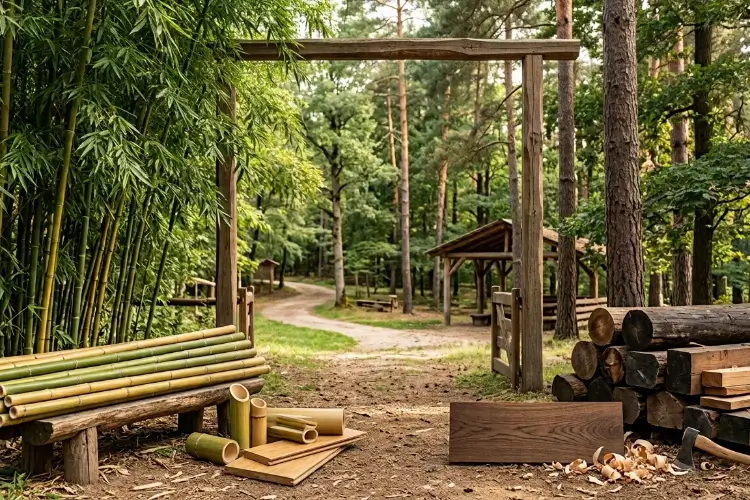
7. Cork and Bamboo Accessories
Cork and bamboo are two of the fastest-renewing materials you can bring into a home.
Cork trees aren’t cut down to harvest cork, the bark regrows. Bamboo is one of the fastest-growing plants on earth. Both make durable, biodegradable coasters, trays, and small furniture pieces. If you’re weighing bamboo against wood, here’s how bamboo compares to timber.
8. Houseplants Propagated From Cuttings
Skip the nursery run. Ask a friend for a cutting instead.
Pothos, spider plants, and succulents propagate easily in water or soil. You get greenery, cleaner air, and zero new packaging or plastic pots.
9. Beeswax Wraps and Cloth Instead of Disposable Decor Textiles
This one’s less “decor” and more “decor habit.” But it counts.
Swap disposable paper table runners, single-use napkins, or plastic tablecloths for cloth versions and beeswax-wrapped serving pieces. They look better anyway.
Looking for more everyday upgrades like this? Browse these zero waste swaps.
10. Old Book Pages and Maps as Framed Art
Have a stack of damaged books nobody’s going to read again? A torn map from a trip years ago?
Frame a single page. Instant, personal, free art. Nobody needs to know it’s not from a gallery.
Because: the story behind it is worth more than anything you’d buy to fill that same wall space.
11. Travel Keepsakes and Local-Artisan Pieces
Skip the souvenir shop shirts and shot glasses. Look for actual handmade objects from the places you visit instead.
A small ceramic bowl from a local potter, a carved item from an artisan stall, these become the pieces that actually tell your story, instead of gathering dust in a drawer.
12. Organic, Undyed Natural Fiber Textiles
When you do need new textiles, throw pillows, curtains, throws, look for organic cotton, linen, or wool in undyed or naturally dyed colors.
Synthetic dyes and blended synthetic fibers are harder to biodegrade and harder to recycle. Natural, undyed fiber breaks down the way it’s supposed to at end of life.
13. Multi-Functional, Built-to-Last Furniture
Buy less by buying smarter.
A storage ottoman that’s also seating. A sofa bed that’s also a guest room. Every multi-functional piece is one fewer piece you need to buy, store, or eventually throw away.
Planning a bigger refresh? These eco home design ideas are a good next step.
14. T-Shirt Yarn Baskets and Storage
Old t-shirts, cut into strips, become surprisingly sturdy yarn for woven baskets and storage bins.
It’s a genuinely simple beginner craft project, and it solves two problems at once: fabric waste, and the need for more storage.
15. Seasonal Decor From What’s Already Outside
Before you buy fall or holiday decor, look outside first.
Pumpkins, gourds, pinecones, dried leaves, and evergreen branches make free, biodegradable seasonal decor that composts when the season’s over, instead of sitting in a landfill in plastic form for centuries.
Zero Waste Decor by Budget
Not every option costs the same, or saves the same amount of waste. Here’s the honest breakdown.
| Option | Approx. Cost | Waste Diverted | Best For |
| Buy new (even “eco” labeled) | $-$$ | Low | When nothing secondhand fits your specific need |
| Secondhand / thrifted | $-$$ | High | Furniture, frames, glassware, most decor categories |
| DIY / upcycled | $ | High | Anyone with a little time and an existing piece to transform |
| Foraged / natural | Free | Highest | Seasonal decor, botanicals, greenery |
Here’s the truth nobody tells you: the cheapest option and the lowest-waste option are usually the same option. That’s not a coincidence. It’s the whole point.
Before You Buy: A 4-Step Zero Waste Decorating Checklist
Run every potential purchase through this before you check out.
- Ask if you already own something that could work. Move it, repaint it, or restyle it before buying new.
- Check secondhand first. Thrift stores, estate sales, and local marketplace apps, in that order.
- Choose natural, biodegradable materials when buying new is unavoidable. Reclaimed wood, cork, organic cotton, and undyed natural fiber over synthetic blends.
- Ask what happens to it at the end of its life. If the honest answer is “landfill,” that’s your sign to look for a different option.
The Real Impact: Waste and Emissions Data Behind These Swaps
This isn’t just a feel-good exercise. The numbers back it up.
Furniture and furnishings made up 12.1 million tons of US municipal solid waste in 2018, roughly 4.1% of all waste generated that year. Of that, 80.1% was landfilled. Buying secondhand or upcycling instead of buying new is a direct, measurable way to keep your own decor out of that statistic.
Textiles accounted for about 17 million tons of waste in the same year, 5.8% of total municipal solid waste. Landfills received 11.3 million tons of that textile waste, and only 14.7% of all textiles got recycled. A single fabric wall hanging or t-shirt yarn basket won’t fix that number on its own. But it’s one less item feeding it.
Pick One Idea and Try It This Week
None of this requires you to overhaul your entire home overnight.
Pick one idea. Try it this week. See how it feels to have a piece of your home that actually has a story, instead of a barcode.
If you’re brand new to all of this, this beginner guide to zero waste is the easiest place to start.
That’s the whole shift. It’s smaller than it sounds, and it adds up faster than you’d think.