Zero waste shopping means buying what you need without the packaging, by shopping in bulk, reusing containers, and choosing package-free alternatives whenever you can. It sounds simple. It also sounds intimidating the first time you try it.
Here’s the short version, before we get into the how:
- Zero waste shopping is not about buying nothing. It’s about buying without the waste.
- The 5 Rs (refuse, reduce, reuse, recycle, rot) are the framework that makes every decision easier, not harder.
- You don’t need a perfect zero waste store nearby to start. Most people begin with a farmers market, a reusable bag, and one small swap.
- It’s usually cheaper, not more expensive, once you’re buying only what you actually need.
Let’s get into it.
What Zero Waste Shopping Actually Means
Zero waste shopping is a set of purchasing habits focused on eliminating unnecessary packaging. Instead of grabbing a plastic-wrapped item off the shelf, you buy the same product in bulk, bring your own container, or choose a version that comes without packaging at all.
It’s rooted in a real definition, one set by the Zero Waste International Alliance, built around conserving resources and avoiding discharges to land, water, and air that threaten the environment or human health. It’s not a trend. It’s a practical response to how much packaging we’ve all quietly accepted as normal. Think of it as one piece of a wider zero waste lifestyle.
So where do you start? Not with a perfect kitchen makeover or a pile of zero waste kitchen tips. With your next shopping trip.
Why Zero Waste Shopping Matters
Here’s the truth nobody tells you: your grocery bag is probably the biggest source of trash in your house, and most of it isn’t even food.
By the numbers:
- Containers and packaging made up more than a quarter of the trash Americans generated in 2018, over 82 million tons, according to the EPA.
- That same year, the average American generated about 4.9 pounds of municipal solid waste every single day.
- Plastic is one of the hardest packaging materials to keep out of landfills. The EPA reports that over 69 percent of plastic containers and packaging generated in 2018 was landfilled.
- Global plastic waste is projected to nearly triple by 2060, from 353 million tonnes in 2019 to about 1 billion tonnes, if nothing changes, according to the OECD.
That last number is the one that stops me every time. Nearly triple. Not a small increase. A near-tripling, on a problem we already can’t keep up with.
What this looks like in your own kitchen
You don’t need the national numbers to feel this. Pull your recycling bin out right now and look at it.
Most of what’s in there isn’t the product. It’s the box the product came in, the plastic clamshell around it, the bag inside the box. Zero waste shopping targets that layer directly, the packaging, not the product itself.
The 5 Rs: The Framework Behind Every Zero Waste Decision
This framework was popularized by Bea Johnson in her book Zero Waste Home. It’s five words, in a specific order, and the order matters more than people realize.
Refuse: Say no before you even get to the checkout. Refuse the free tote bag, the sample cup, the straw you didn’t ask for. Every refusal is one less thing that needs to be reduced, reused, or recycled later.
Reduce: Cut back on what you actually need. Not everything, just the excess. A smaller pantry, a shorter shopping list, fewer duplicate products doing the same job.
Reuse: Choose reusable over disposable, every time it’s an option. A refillable water bottle instead of a case of plastic ones. A cloth bag instead of a paper one you’ll use once.
Recycle: Only after refuse, reduce, and reuse have done their job. Recycling is the safety net, not the strategy. It’s the last stop, not the first.
Rot: Compost what’s left. Food scraps, coffee grounds, yard waste. This one closes the loop instead of sending organic material to a landfill where it can’t properly break down. Even better, try these creative ways to reuse food waste first.
Here’s the simple fix most people miss: they jump straight to recycling and skip the first three Rs entirely. Recycling feels virtuous, but it sits fourth on the list for a reason. Refusing and reducing prevent the waste before it exists.
How to Start Zero Waste Shopping: Your First Trip
You don’t need to overhaul your life this weekend. You need one trip, done right, and the rest builds from there. Want the bigger picture first? Start with this zero waste beginner guide.
Step 1: Build your zero waste shopping kit
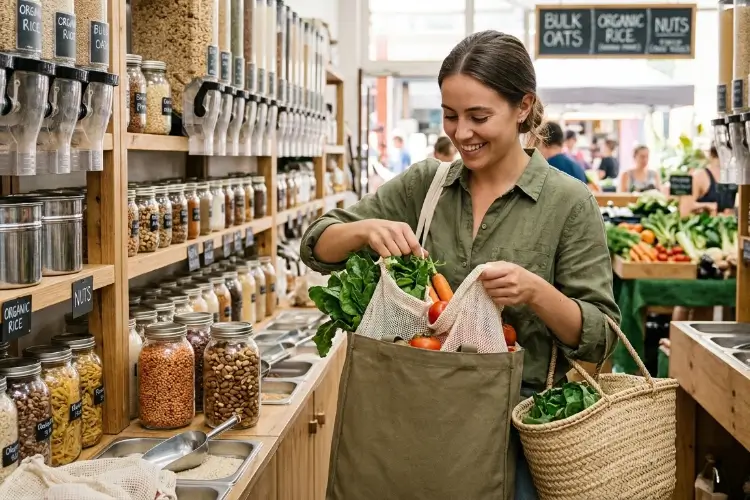
Grab a few reusable produce bags, a couple of glass jars with lids, and one or two sturdy tote bags. That’s the whole kit to start. Not sure which bags to pick? Browse these eco friendly alternatives to plastic bags.
Tip: Keep your kit by the front door or in the trunk of your car. The kit you forget at home doesn’t help you.
Step 2: Find your bulk and refill options
Look up bulk bins at your regular grocery store, a nearby co-op, or a dedicated zero waste shop. Many areas have at least one, even if it’s not called “zero waste” on the sign.
Tip: A quick web search for “bulk store near me” or “refillery near me” usually turns up more options than you’d expect.
Step 3: Learn the tare weight system
This is the part that trips people up, and it’s genuinely simple once you know it. You weigh your empty container before you fill it. That’s called the tare weight. The cashier subtracts it at checkout, so you’re only charged for the product, not the jar.
Tip: Write the tare weight on a piece of masking tape stuck to the jar, or just snap a photo of the number on your phone.
Step 4: Shop the farmers market first
Farmers markets are the easiest possible entry point. Produce is usually loose already, and many vendors are happy to skip the plastic clamshell if you just ask.
Tip: If there’s a rubber band or twist tie on your produce, hand it back. Many farmers reuse them.
Step 5: Handle the items you can’t buy package-free
Some things won’t have a zero waste option in your area yet, and that’s fine. Buy the best available version (glass over plastic, cardboard over film) and don’t let the one imperfect item derail the whole trip.
Tip: Progress, not perfection, is the actual goal. Nobody does this with zero exceptions.
The Zero Waste Shopping List
Here’s a starting list broken down by category. Adjust it to what’s actually available where you live. Want more ideas? Browse these zero waste swaps.
Pantry and bulk staples
- Rice, oats, flour, and grains from bulk bins
- Dried beans and lentils
- Nuts, seeds, and dried fruit
- Spices in reusable jars
Produce
- Loose fruits and vegetables, no bag needed for most items
- Herbs bundled without plastic wrap when possible
- Eggs in a returnable carton from a farmers market vendor
Meat, dairy, and deli
- Meat and cheese from the counter, in your own container
- Milk in a returnable glass bottle where available
- Bread from a bakery counter, wrapped in your own reusable bag
Household and cleaning
- Refillable cleaning concentrates
- Bar soap instead of bottled
- Reusable cloths instead of paper towels
Personal care
- Shampoo and conditioner bars
- Bamboo toothbrush
- Refillable deodorant or lotion containers
Where to Shop Zero Waste
You’ve got two real paths here: in-person and online. Most people end up using both.
In-person: bulk stores, co-ops, and farmers markets
This is the cheapest and most direct route, because you control the packaging from the moment you fill your own container. It also builds the habit fastest, since you’re doing the whole process by hand every time.
Online: zero waste and package-free shops
Stores like Package Free Shop and Precycle (and dozens of smaller zero waste shops that ship nationally) are built specifically to sell products without the packaging bloat of conventional retail. This is your best option for specialty items you can’t find locally, like zero waste bathroom swaps.
What to do if you don’t have a bulk store near you
Bulk and zero waste stores aren’t evenly distributed. Rural areas and smaller towns often don’t have one at all, and that’s a real barrier, not a failure on your part.
If that’s you: lean harder on the farmers market, buy the largest package size available instead of the smallest (less packaging per unit), and use online zero waste stores for the items that matter most to you. You don’t need a perfect local option to make real progress.
| Best for | Packaging control | Convenience | |
| In-person bulk stores | Pantry staples, produce, cost savings | Highest, you control the container | Requires planning and travel |
| Farmers markets | Produce, eggs, bread | High, loose goods by default | Seasonal and limited hours |
| Online zero waste shops | Specialty and personal care items | Moderate, shipping still uses some packaging | Highest, delivered to your door |
Zero Waste Shopping vs. Regular Shopping: Cost, Time, and Impact Compared
Here’s the question everyone actually wants answered: is this going to cost me more?
The honest answer: it depends on the store and what you buy. I’m not going to hand you a made-up number, because prices vary too much by region and shop.
Here’s what tends to hold up:
- Bulk staples like grains, beans, and nuts are often priced comparably to packaged versions, and sometimes lower per unit.
- Specialty items, like refillable personal care products, can cost more.
- Buying only the amount you need cuts food waste, which saves money on its own.
Want your real numbers? Price out five staples you buy every week at your regular store and at a bulk store. It takes ten minutes, and it’s the only comparison that matters for your budget.
| Zero waste shopping | Regular shopping | |
| Cost on staples | Often comparable, sometimes lower per unit | Baseline |
| Cost on specialty items | Can be higher | Baseline |
| Extra prep | Packing your kit, weighing containers at first | None |
| Packaging waste | Near zero for bulk items | Significant, most items pre-packaged |
| Best for | Repeat staples you buy often | One-off or specialty items |
The extra prep is the real cost, not the money. After a few trips, packing your kit becomes routine.
Common Zero Waste Shopping Mistakes Beginners Make
- Buying a brand new zero waste kit instead of using what you have. You don’t need matching glass jars from a store. An old pasta sauce jar works exactly the same.
- Trying to go 100% zero waste on day one. This burns people out fast. Start with produce and bulk pantry items, then expand from there.
- Forgetting the kit at home. It happens to everyone at least once. Keep a backup set in your car if you drive to the store.
- Assuming every store will tare your container. Some staff won’t be familiar with the process. Ask at customer service before you fill up, not after.
- Skipping straight to recycling instead of refusing first. Recycling feels good, but refusing and reducing prevent the waste before it exists at all.
Your Next Step
You don’t need a perfect kitchen, a nearby zero waste store, or a Pinterest-worthy pantry to start. You need one trip.
Pick one category from the shopping list above. Bring one bag. See how it goes.
That’s how every zero waste shopper actually started, one small trip at a time, not a total lifestyle overhaul on a Tuesday afternoon.