You’ve seen it. A big bird circling over the highway, or a streak of gray cutting through your backyard trees toward the feeder. Your first thought is probably: hawk. Your second thought is probably: but what kind?
Here’s the good news. You don’t need a biology degree to answer that. You just need to know what to look for.
The short version: hawks split into a handful of main groups, buteos, accipiters, harriers, and a few outliers, and each group has its own body shape, flight style, and favorite hunting ground. Learn the group first. The species will follow.
This guide walks through the hawks you’re most likely to actually see, in North America and beyond, plus a fast way to tell them apart in the field.
What Actually Makes a Hawk a Hawk?
A hawk is a medium to large bird of prey in the family Accipitridae, the same family that includes eagles, kites, and harriers. Worldwide, that family holds somewhere around 250 species. Only a fraction of those get called “hawks” specifically, and even that word means different things depending on where you’re standing.
In the US, “hawk” covers two very different body types: the broad-winged soarers (buteos) and the short-winged forest hunters (accipiters). In the UK and much of the rest of the world, some of those same soaring birds get called “buzzards” instead. Confusing? A little. But once you see the pattern, it clicks fast.
Hawk vs. Falcon vs. Eagle vs. Buzzard
People use these words like they’re interchangeable. They’re not.
| Bird | Wing shape | Hunting style | Quick tell |
| Hawk | Broad and rounded, or short and rounded | Soars or ambushes from cover | Rounded wingtips, broad tail |
| Falcon | Long, narrow, pointed | High-speed diving stoop | Pointed wingtips, slim build |
| Eagle | Very broad, very long | Soars, often scavenges too | Much bigger, flat “plank” wings |
| Buzzard (UK/Europe) | Broad, rounded | Soars | Same body type as a US buteo, just a different name |
Here’s the truth nobody tells you: a “buzzard” in London and a “hawk” in Ohio are frequently the same basic bird shape. The word changed. The biology didn’t.
The 4 Main Groups of Hawks (Your Cheat Sheet)
Before you learn sixteen species, learn four groups. This is the shortcut that actually works.
Buteos, the soaring hawks
Buteos are the hawks you see circling high over open fields, barely flapping. Broad wings, short wide tails, built for riding thermal air currents rather than chasing prey through trees.
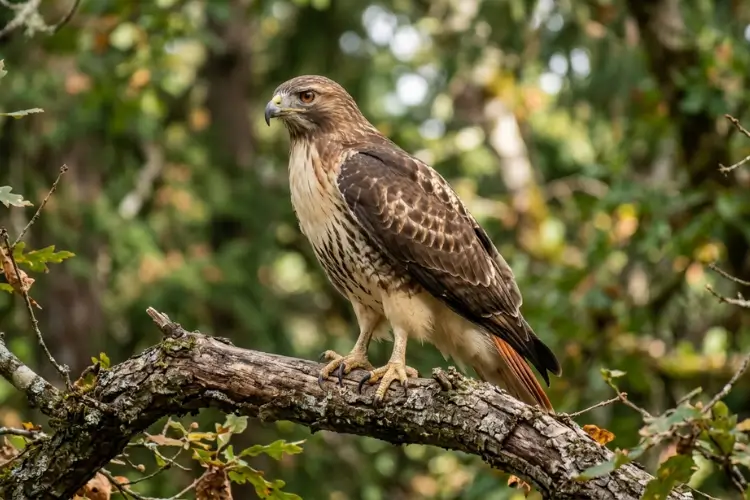
Why it matters: if you see a hawk soaring in slow, lazy circles over a field or highway, it’s almost certainly a buteo. Red-tailed Hawks are the poster child for this group.
Accipiters, the forest hunters
Accipiters are built for speed through clutter, not distance in open sky. Short rounded wings, long tails, and an ambush style: sit still, then burst.
So where do you see them? Usually near bird feeders. That’s not a coincidence. Songbirds cluster at feeders, and accipiters know it.
Harriers, the low fliers
Only one harrier shows up regularly in North America, the Northern Harrier, but it’s distinctive enough to deserve its own category. Harriers fly low over open marsh and grassland, wings held in a shallow V, hunting more by sound than sight.
The simple fix for spotting one? Look low, not high. Harriers rarely soar the way buteos do.
Kites and other hawk-family outliers
Kites are the lightweight, buoyant flyers of the hawk world, more likely to hover or drift than power through the air. In North America they’re regional specialists (Mississippi Kite, Swallow-tailed Kite). Globally, kites and hawk-family relatives fill niches buteos and accipiters don’t, from scavenging to snake-hunting.
12 Common Hawks in North America
These are the species you’re most likely to actually encounter, ordered roughly by how often you’ll see them.
1. Red-tailed Hawk
The most common hawk in North America, and probably the one you’ve already seen without knowing it. Look for a rust-red tail on adults, a heavy body, and that unmistakable slow, circling soar over open country, farmland, and highway medians. Weight runs 1.5 to 3.5 pounds, with females noticeably larger than males, which is true across most hawk species.
2. Cooper’s Hawk
A midsized accipiter that’s become a regular at backyard feeders, not for the seed, for the birds eating the seed. Blue-gray back, reddish barring on the chest, a piercing red eye as an adult. Increasingly common in suburbs.
3. Sharp-shinned Hawk
Cooper’s smaller cousin, and the two get confused constantly, including by experienced birders. Sharp-shinned is roughly the size of a Blue Jay, about six inches shorter than a Cooper’s on average. Both hunt by ambush, both specialize in small birds.
4. Red-shouldered Hawk
A forest-edge buteo with a sharp, insistent “keer” call you’ll often hear before you see the bird. Look for a pale crescent near the wingtips in flight.
5. Swainson’s Hawk
A larger buteo of open prairie and farmland, dark brown back, white throat. Notable for one of the longest migrations of any American raptor, some individuals travel all the way to South America for the winter.
6. Broad-winged Hawk
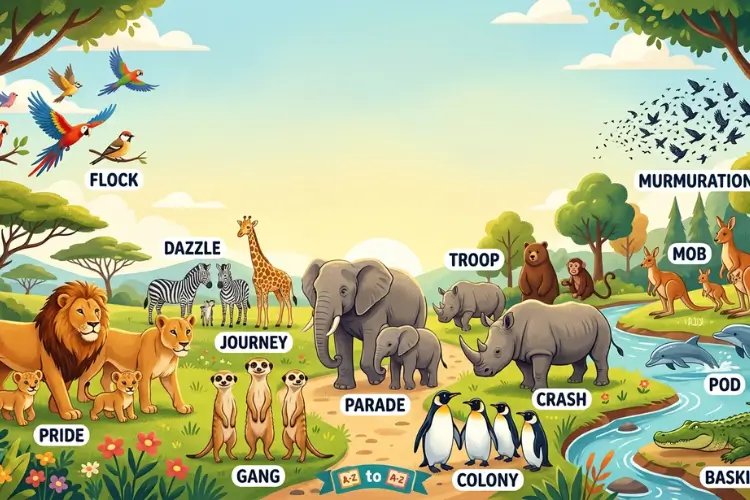
Small and compact for a buteo, short pointed wings, common in spring and summer and famous for migrating in massive flocks called “kettles,” sometimes thousands of birds spiraling together on a single thermal. Hawks aren’t the only ones with a quirky collective noun either, plenty of animal group names are just as fun to learn.
7. Rough-legged Hawk
A large buteo that breeds in the Arctic and heads south for winter. Feathered legs (hence the name), a broad black band on an otherwise pale tail, and a habit of hovering in place while scanning for rodents, unusual behavior for a buteo.
8. Ferruginous Hawk
The largest hawk in North America, found in open deserts and prairies of the West. Comes in a light morph (white underneath, rusty back) and a much rarer dark morph, which can make identification genuinely tricky.
9. Northern Harrier
Covered above as its own group, but worth naming here too. Formerly called the “marsh hawk,” and the only harrier you’ll regularly find on this continent.
10. Northern Goshawk
The largest and most aggressive accipiter, uncommon, found mostly in mature forest, and known to defend its nest territory against anything that gets too close, including people. It’s drawn to the same undisturbed, old-growth stands that shelter some of the world’s oldest living trees, which is part of why untouched forest matters so much for this species.
11. Harris’s Hawk
A striking dark hawk of the southern US and Mexico, notable for something almost no other raptor does: cooperative pack hunting. Harris’s Hawks sometimes hunt in family groups, flushing prey the way wolves do.
12. Osprey
Technically its own family, not a true hawk in the strict taxonomic sense, but “hawk” enough in common usage that it belongs on this list. Feeds almost exclusively on fish, hovers over water before a dramatic feet-first dive, and is sometimes called the “Fish Hawk” for exactly that reason.
Hawks Outside North America
Here’s where most hawk guides stop, and where yours doesn’t have to. If you’re birding outside the US, these are your main players.
UK and Europe
The Eurasian Sparrowhawk is the accipiter of Europe, small, fast, forest-and-garden based, functionally the continent’s answer to the Sharp-shinned Hawk. The Common Buzzard is Europe’s most widespread buteo-type raptor, soaring over farmland and woodland edges, and it’s the bird British birders mean when they say “buzzard,” not the vulture Americans picture with that word.
Australia
Australia has its own accipiters, the Brown Goshawk and Grey Goshawk, both forest hunters built on the same short-wing, long-tail template as their Northern Hemisphere relatives. Convergent evolution at work: different continent, same body plan, same job.
Africa
The African Harrier-Hawk is one of the odder members of the family, with double-jointed legs that let it reach directly into tree holes and crevices for eggs and nestlings. The Gabar Goshawk is a small, widespread accipiter found across sub-Saharan savanna and woodland.
South America
The Roadside Hawk lives up to its name, a small, adaptable buteo genuinely common along roads, forest edges, and cleared land across Central and South America. The Savanna Hawk is a larger, long-legged species of open wetland and grassland, often seen walking on the ground hunting insects and small reptiles, unusual behavior for a hawk.
How to Tell Hawks Apart in the Field
Here’s the truth nobody tells you: most people try to identify hawks by color first. That’s the hardest way to do it. Plumage varies by age, morph, and lighting. Shape and behavior don’t lie nearly as often.
- Check the wing shape first. Broad and rounded means buteo. Short and rounded with a long tail means accipiter. Long and pointed means you’re probably not even looking at a hawk, that’s falcon territory.
- Watch how it flies, not just what it looks like. Slow circling in open sky is a buteo. Flap-flap-glide through trees is an accipiter. Low flight in a shallow V over a field is a harrier.
- Note where it’s hunting. Open field or highway edge, think buteo. Near a bird feeder or dense woodland, think accipiter. Marsh or grassland at low altitude, think harrier.
- Use size as a tiebreaker, not a first clue. Size is deceptive from a distance and against open sky. Save it for narrowing down between two similar species, like Cooper’s versus Sharp-shinned, not for identifying the group.
Where to Find Hawks Near You
Different hawks want different real estate. Match the habitat, and you’ll find the bird.
| Hawk type | Best habitat | Best time |
| Buteos (Red-tailed, Swainson’s) | Open fields, farmland, highway corridors | Daytime, especially clear thermal-friendly weather |
| Accipiters (Cooper’s, Sharp-shinned) | Backyards with feeders, forest edges | Fall migration and winter, when they follow songbirds |
| Harriers | Marshes, prairie, open grassland | Low light, dawn and dusk |
| Osprey | Rivers, lakes, coastlines | Spring through fall, near open water |
Fall migration is genuinely the best time to see the widest variety of hawks in one outing. Broad-winged Hawks in particular gather in huge kettles during September migration, and a single good vantage point (a ridge line, a coastal peninsula) can produce dozens of species-worth of sightings in an afternoon.
What Do Hawks Eat, and Are They Dangerous to Pets?
Mostly small mammals. Rodents, voles, rabbits, squirrels, depending on species and region, with some hawks also taking birds, reptiles, insects, and even carrion.
As for pets, here’s the honest answer: small dogs and cats are not a hawk’s preferred prey, but a hawk that’s hungry and opportunistic won’t necessarily pass up an easy meal that’s the wrong size. Cats under roughly 8 pounds and very small dogs left unattended outdoors do carry some real risk, particularly from larger species like Red-tailed Hawks. It’s not common. It’s not zero, either.
Quick Reference: Hawk Comparison Table
| Species | Group | Size | Range | Habitat |
| Red-tailed Hawk | Buteo | 1.5-3.5 lbs | Across North America | Open country, farmland, highways |
| Cooper’s Hawk | Accipiter | 0.5-1.5 lbs | Across the US | Suburbs, forest edges, feeders |
| Sharp-shinned Hawk | Accipiter | 3-8 oz | Across North America | Dense forest, feeders in winter |
| Red-shouldered Hawk | Buteo | 1-1.9 lbs | Eastern US, West Coast | Wooded lowlands, swamps |
| Swainson’s Hawk | Buteo | 1.5-2.5 lbs | Western North America | Open prairie, farmland |
| Broad-winged Hawk | Buteo | 0.75-1.25 lbs | Eastern North America | Forest canopy |
| Rough-legged Hawk | Buteo | 1.5-2.9 lbs | Arctic breeder, winters in US | Open fields in winter |
| Ferruginous Hawk | Buteo | 2-4.5 lbs | Western US | Desert, prairie |
| Northern Harrier | Harrier | 0.75-1.5 lbs | Across North America | Marsh, grassland |
| Northern Goshawk | Accipiter | 1.5-3 lbs | Northern forests | Mature woodland |
| Harris’s Hawk | Buteo-relative | 1.5-2 lbs | Southern US, Mexico | Desert, scrubland |
| Osprey | Osprey family | 3-4.5 lbs | Rivers, lakes, coasts worldwide | Near open water |
So where do you start? Pick one group, buteos or accipiters, and spend a week just watching for that shape. Once your eye locks onto the difference between a soaring circle and a flap-flap-glide, the rest of the list gets a lot easier. That’s genuinely how most birders learn this, one shape at a time, not one species at a time.
Sizes and ranges are approximate and vary by individual, sex, and season. For confirmed identification, cross-reference with a current field guide or a resource like the Cornell Lab of Ornithology’s All About Birds.[1]
If this stirred up your curiosity about the rest of the animal kingdom, these surprising animal facts are worth the rabbit hole too.