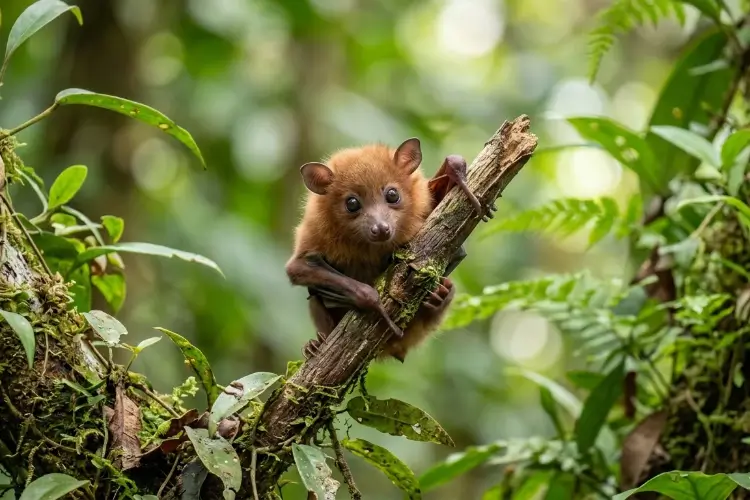
Say the word “bat” and most people picture something scary. Fangs. Darkness. Maybe a cave full of shrieking wings.
Here’s the truth nobody tells you: most bats look nothing like that.
A lot of them look like tiny dogs. Or cotton balls. Or something Pixar would invent for a sidekick character. When I started actually looking into bat species instead of just reacting to the idea of them, I couldn’t believe how wrong my mental picture had been.
So where do you start if you want to see the other side of bats? Right here. I pulled together 21 of the cutest bat species on the planet, out of more than 1,400 known species worldwide. These are the ones with the big eyes, the fluffy coats, the puppy-dog faces. Real animals. Real photos. Real reasons to rethink what a bat is.
What Makes a Bat “Cute”? (Quick Answer)
A bat reads as “cute” when it has the same traits that make any animal cute to us: a rounded face, big eyes, visible fur, and a small body.
It’s the same wiring that makes us go soft over kittens and puppies. Bats just don’t usually get the chance to trigger it, because most of us never see one up close.
Quick facts before we dive in:
- Over 1,400 bat species exist worldwide.
- The smallest, Kitti’s hog-nosed bat, weighs less than a penny.
- Bats are the only mammals capable of true, sustained flight.
- The Mexican free-tailed bat colony at Bracken Cave, Texas, eats an estimated 100+ tons of insects every summer night.
- One species on this list, the Honduran white bat, is currently Near Threatened.
The 21 Cutest Bat Species (At a Glance)
Skimming? Here’s the whole list in one table.
| Species | Region | Approx. Size | Standout Feature |
| Honduran White Bat | Central America | Under 2 in. body | Bright white fur, yellow face |
| Kitti’s Hog-Nosed Bat | Thailand, Myanmar | About 2 g, lighter than a penny | World’s smallest bat |
| Spotted Bat | Western North America | Small | Black fur, three white spots |
| Peter’s Dwarf Epauletted Fruit Bat | Central Africa | ~2.6–4.1 in. | White “epaulette” shoulder tufts |
| Hoary Bat | Iceland to Hawaii | Small | Frosted, silver-tipped fur |
| Common Pipistrelle | Europe, North Africa, Asia | ~1.1–1.3 in. | Tiny size, huge appetite for insects |
| Northern Ghost Bat | Central & South America | Small | Rare all-white fur |
| Heart-Nosed Bat | East Africa | ~2.8–3 in. | Heart-shaped nose leaf |
| Brown Long-Eared Bat | Europe | Small | Ears almost as long as its body |
| Smoky Bat | Peru, Ecuador, Chile | ~1.5–2.3 in. | Tiny enough to hide in cracks |
| Mariana Fruit Bat | Guam, Northern Mariana Islands | Medium | Puppy-like face |
| Spectacled Flying Fox | Northern Australia | Large, colony-dwelling | Pale “spectacle” eye rings |
| Grey-Headed Flying Fox | Eastern Australia | Up to 3.2 ft wingspan | Possum-like face |
| Pied (Badger) Bat | Sub-Saharan Africa | Small | Panda-style black and white markings |
| Big Brown Bat | North America | Large for a North American bat | Common, fast flier |
| Little Brown Bat | North America | Small | Classic “little brown bat” charm |
| Egyptian Fruit Bat | Egypt, Middle East | Small | Big brown puppy-dog eyes |
| California Leaf-Nosed Bat | US Southwest, Mexico | Small | Oversized ears, funny nose flap |
| Canyon Bat | Western North America | One of the smallest in North America | One of the smallest bats in the US |
| Sulawesi Flying Fox | Sulawesi, Indonesia | Flying fox | Dog-like face |
| Eastern Red Bat | Eastern North America | ~4 in. | Rust-red fur, solitary lifestyle |
Now let’s actually meet them.
The 21 Cutest Bat Species
These are the 21 cutest bat species on Earth, starting with the fluffiest one of all.
1. Honduran White Bat (Ectophylla alba)
If there’s a single “world’s cutest bat” contender, it’s this one.
The Honduran white bat is pure white, fluffy, and about the size of a cotton ball. Its nose, ears, and lips are bright yellow. It looks almost cartoonish in real life.
Here’s the part that made me love this bat even more: it builds its own house. It bites through the veins of a heliconia leaf so the sides fold down like a tent, then a whole cluster of bats roosts underneath. As many as 15 of them can pack into one little leaf shelter.
They live in the rainforests of Honduras, Nicaragua, Costa Rica, and Panama, and they feed almost exclusively on one species of fig. That narrow diet is part of why the species is currently considered Near Threatened.
2. Kitti’s Hog-Nosed Bat (Craseonycteris thonglongyai)
Also called the bumblebee bat, and for good reason.
This species is the smallest known bat and one of the smallest mammals on Earth. It weighs about 2 grams, less than a US penny. Despite that, it’s an agile flier that can hover in place.
It has a round, pig-like snout and tiny eyes, which somehow makes it more endearing rather than less. You’ll only find it roosting in limestone caves in Thailand and Myanmar.
3. Spotted Bat (Euderma maculatum)
Picture a bat with elephant-sized ears and a dalmatian’s coat. That’s the spotted bat.
Its jet-black fur is broken up by three bright white spots on its back, and its pink ears are almost comically oversized for its body. It lives across desert and mountain regions of western North America.
It was once thought to be rare. It’s actually fairly common, it’s just really good at hiding in cliff crevices where nobody sees it.
4. Peter’s Dwarf Epauletted Fruit Bat (Micropteropus pusillus)
This one has a fluffy coat, big brown eyes, and a genuinely sweet face.
Males grow white tufts of fur on their shoulders that look almost exactly like military epaulettes, which is where the name comes from. They use them to attract females.
You’ll find this bat across parts of Central Africa, especially Ethiopia, where it feeds on fruit and nectar and does its part pollinating the plants it visits.
5. Hoary Bat (Lasiurus cinereus)
The hoary bat has a frosted, silvery coat and a genuinely precious little face.
It’s one of the most widely spread bats in the western hemisphere, showing up anywhere from Iceland to Hawai’i. It’s also a serious long-distance flier, migrating long distances and reaching altitudes up to 8,000 feet.
Because it’s mostly solitary and roosts alone in trees, spotting one is a bit of luck. Consider it a win if you do.
6. Common Pipistrelle (Pipistrellus pipistrellus)
A cute bat with an even cuter name.
The common pipistrelle is barely over an inch long, with reddish-brown fur, wide-set eyes, and short rounded ears. It’s found across the UK, Europe, North Africa, and much of Asia.
Don’t let the size fool you. Its close cousin, the soprano pipistrelle, can eat up to 3,000 insects in a single night. That’s a lot of mosquitoes not biting you.
7. Northern Ghost Bat (Diclidurus albus)
White fur on a bat is rare. Only six bat species have an all-white coat, and the northern ghost bat is one of them.
It’s found across parts of Central and South America, where its pale coat makes it stand out against the dark rainforest canopy at night.
Its name fits. There’s something genuinely ghostly and beautiful about a small, snow-white bat gliding through the dark.
8. Heart-Nosed Bat (Cardioderma cor)
Named for the heart-shaped nose leaf on its face, this East African bat is small, only around 3 inches long, with long blue-gray fur.
Don’t let the sweet face fool you though. This bat is a serious hunter, taking down lizards, frogs, and even small rats despite its size.
Cute and fierce aren’t mutually exclusive. Keep that in mind as we go, because a few more bats on this list prove the same point.
9. Brown Long-Eared Bat (Plecotus auritus)
Europe’s most endearing bat, hands down.
Its ears can be nearly as long as its entire body, which sounds like it shouldn’t work visually but somehow makes this bat even more charming. It’s found across Europe, most commonly in the UK.
Here’s the detail that gets me every time: when it sleeps, it tucks those huge ears under its wings, like it’s covering its own ears to block out noise.
10. Smoky Bat (Amorphochilus schnablii)
Native to Puna Island, northern Peru, Ecuador, and northern Chile, the smoky bat is tiny, weighing about 0.12 ounces and measuring less than 2.3 inches long.
Its small size means it can squeeze into cracks, caves, and abandoned buildings that most other animals can’t access.
It’s not the flashiest bat on this list. But there’s something charming about an animal this small and this quietly good at surviving.
11. Mariana Fruit Bat (Pteropus mariannus)
This is where “cute bat” starts to look a lot like “flying puppy.”
The Mariana fruit bat has a genuinely dog-like face, with brown fur and an expressive snout. It’s a medium-sized flying fox, and the face reads as friendly rather than fierce.
You’ll only find it on Guam and the Commonwealth of the Northern Mariana Islands, usually roosting in coconut groves.
12. Spectacled Flying Fox (Pteropus conspicillatus)
Pale rings around its eyes make this bat look like it’s wearing tiny glasses. That’s genuinely where the name comes from.
Found in the rainforests of northern Australia, this large flying fox lives in colonies of thousands, calmly roosting shoulder to shoulder in trees during the day.
It’s also an important pollinator and seed disperser, which means its cuteness comes with a real ecological job attached. Unfortunately, it’s currently endangered due to habitat loss and predation.
13. Grey-Headed Flying Fox (Pteropus poliocephalus)
One of the largest bats in the southern hemisphere, with a wingspan up to 3.2 feet, and still somehow cuddly-looking thanks to its possum-like face.
Found throughout eastern Australia, this bat loves figs but will also eat nectar and pollen.
Here’s the detail that seals it: pups cling to their mothers for about three weeks before they’re strong enough to fly. After that, moms leave them in little group creches while they forage. Basically bat daycare.
14. Pied Bat (Niumbaha superba)
Also called the badger bat, and the nickname makes sense the second you see one.
Its black and white patterning looks almost exactly like a panda’s markings shrunk down onto a small bat body. It’s native to sub-Saharan Africa and was barely known to science until a researcher caught one in 2013.
It’s rare enough that scientists still don’t know much about its behavior. Sometimes the cutest animals are also the most mysterious.
15. Big Brown Bat (Eptesicus fuscus)
Don’t let the plain name fool you. This is one of the most common, most recognizable bats in North America, and its fluffy brown coat gives it real charm.
It’s also surprisingly fast, reportedly hitting speeds up to 40 mph.
Big brown bats feed on beetles, moths, and flying ants, which makes them a genuinely useful neighbor if you live near one of their roosts.
16. Little Brown Bat (Myotis lucifugus)
The little brown bat is exactly what it sounds like: small, brown, and undeniably cute.
It ranges from coastal Alaska all the way down to caves in Mississippi, which is a huge span for such a tiny animal. It can eat up to half its body weight in insects in a single night.
Unfortunately, this species has been hit hard by white-nose syndrome, a fungal disease spreading through North American bat populations. If you’re ever caving, follow your guide’s decontamination rules. It genuinely helps protect bats like this one.
17. Egyptian Fruit Bat (Rousettus aegyptiacus)
Big brown eyes, a gentle expression, and a face that’s honestly closer to a golden retriever than most people expect from a bat.
Found mainly in Egypt, the Arabian Peninsula, and parts of the Mediterranean, this species forms colonies that can range from 20 to 9,000 individuals.
It’s also one of the few bats that uses both echolocation and regular eyesight to find food, which includes figs, carob, and sycamore fruit.
18. California Leaf-Nosed Bat (Macrotus californicus)
Big ears, a funny little nose flap, and a genuinely goofy expression make this desert-dwelling bat easy to love.
It’s found in the deserts of the US Southwest and Mexico, where it uses incredible echolocation precision to detect insects as small as 0.19 millimeters.
Here’s a fun oddity: it’s one of the only bats that can walk on its hind legs. It just can’t walk forward. Only backward.
19. Canyon Bat (Parastrellus hesperus)
Also known as the western pipistrelle, this is one of the smallest bats in North America, with grey to brownish fur and a genuinely fluffy little face.
You’ll find it in canyons and desert regions near water across the western US.
It’s an early flier, often heading out right around sunset, which makes it one of the easier bats to actually spot if you’re camping in the right area.
20. Sulawesi Flying Fox (Acerodon celebensis)
Found only on the island of Sulawesi in Indonesia, this flying fox has a face that looks strikingly like a dog’s.
It mostly eats coconuts and breadfruit. It lives in large colonies called “camps” (one of the more charming animal group names), where young bats socialize while their mothers head out to forage.
It’s currently listed as vulnerable, partly due to hunting for the local bushmeat trade. Its population decline is a real reminder that cute doesn’t equal safe.
21. Eastern Red Bat (Lasiurus borealis)
Rounding out the list is a bat with genuinely striking rust-red fur, found across eastern North and South America.
It’s mostly solitary outside of mating and migration season, preferring to roost alone and sleep the day away in the forest canopy.
Its babies are the real showstopper though. Newborns hang onto their mother using one foot while gripping a perch with the other, until they’re strong enough to fly solo. Precious doesn’t begin to cover it.
Cute vs. Fierce: How These Bats Actually Survive
Here’s the truth nobody tells you about “cute” animals: cute and dangerous aren’t opposites.
The heart-nosed bat on this list hunts lizards and rats. The spotted bat has enormous ears and a coat like a dalmatian’s. Cuteness, in the animal kingdom, is almost never a sign of weakness.
So are bats actually dangerous to humans?
For the most part, no. Most bats want nothing to do with people. The real risk is rabies, which is serious. The USGS says less than one percent of bats contract it, but the CDC says bats are the most reported rabid animals in the US.
- Only about three bat species out of 1,400+ actually drink blood, and they mostly feed on livestock, not humans.
- Most bats you’d encounter in the US, like the little brown bat or big brown bat, eat insects.
- If a bat touches you or you’re unsure whether you were bitten, seek medical attention immediately. Rabies exposure is not something to wait out.
The simple fix? Admire bats from a distance, never handle one, and let the professionals deal with any bat that’s acting strangely or found on the ground.
Are Bats Good to Have Around?
Short answer: yes. Genuinely, significantly yes.
Here’s what bats actually do for us:
- The Mexican free-tailed bat colony at Bracken Cave, Texas, eats an estimated 100+ tons of insects every summer night.
- Fruit bats and flying foxes pollinate countless plant species and disperse seeds across entire rainforests, one of the many reasons why forests are important.
- Bat guano is one of the most effective organic fertilizers available.
- Bats help keep insect populations, including mosquitoes, in check.
By the way: the next time you’re annoyed by a swarm of mosquitoes at dusk, that’s exactly the moment a colony of little brown bats or Mexican free-tailed bats would be doing you a favor.
Why Bats Deserve Better PR
Bats have had a genuinely rough reputation for a very long time. Darkness, disease, old horror movies. None of it captures what’s actually going on in the bat world.
The truth is these are animals with fluffy coats, oversized ears, tiny faces, and behaviors that range from tent-building to daycare-running to backward-walking. Some of them look like puppies. One of them looks like a cotton ball with a face.
Want more animal unusual facts like these?
So the next time a bat flies past you at dusk, try not to flinch. There’s a decent chance it’s one of the 21 species on this list, quietly doing its job, eating its body weight in mosquitoes, and being far cuter than it ever gets credit for.