A fruit is any seed-bearing structure that grows from a flower.
That’s it. That’s the whole definition.
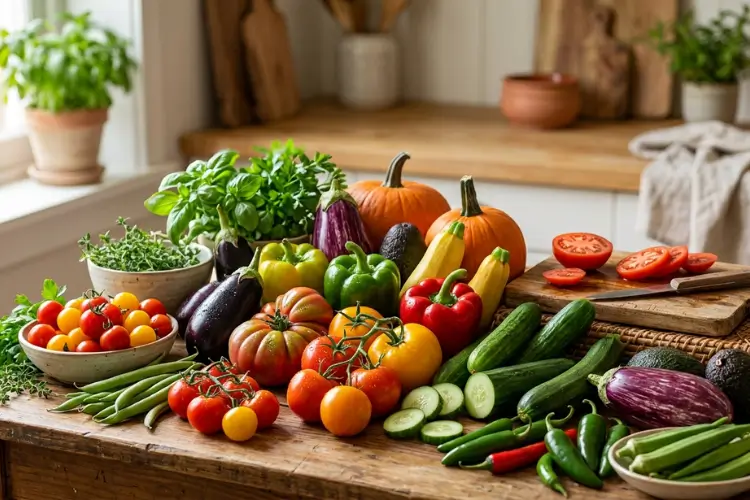
And once you know that, your grocery cart looks different. Tomatoes, cucumbers, peppers, and zucchini all meet it. So does corn. So does the pumpkin sitting on your porch every October.
I didn’t believe this the first time I heard it either. I assumed it was one of those “well, actually” facts that sounds smart but doesn’t hold up. So I looked into it. It holds up. Here are 20 everyday vegetables that are, botanically speaking, fruit.
The Quick List
Short on time? Here’s every item we’re covering, no explanation attached:
- Tomato
- Cucumber
- Avocado
- Bell pepper
- Chili pepper
- Eggplant
- Pumpkin
- Butternut squash
- Acorn squash
- Zucchini
- Corn
- Olive
- Green beans
- Snap peas
- Snow peas
- Okra
- Chayote
- Tomatillo
- Winter squash
- String beans
Now let’s get into why.
Wait, What Actually Makes Something a “Fruit”?
Botanically, a fruit is the mature, ripened ovary of a flowering plant, seeds included.
That definition comes straight from plant science, not from a chef or a grocery store label. According to the New York Botanical Garden’s director of graduate studies, a fruit is essentially the ripened ovary and everything inside it. No mention of sweetness. No mention of dessert.
A vegetable, on the other hand, isn’t really a botanical category at all.
It’s a catch-all. Roots, stems, leaves, and flower buds: anything else edible on the plant that isn’t the ripened, seed-bearing ovary gets lumped into “vegetable.” Carrots are roots. Celery is a stem. Broccoli is a flower bud.
So where’s the confusion coming from?
It comes from the fact that two totally different systems are being used to sort the same produce aisle. Botanists sort by plant anatomy. Everyone else, including chefs, grocers, and your grandmother, sorts by taste and use.
Here’s the difference laid out side by side:
| Category | Botanical Definition | Culinary Definition |
| What decides it | Where it grows from (the ovary of a flower) | How it tastes and how it’s used in a dish |
| Fruit | Ripened ovary containing seeds | Sweet, often eaten raw or in desserts |
| Vegetable | Everything else: roots, stems, leaves, buds | Savory, typically part of a main dish |
| Tomato | Fruit | Vegetable |
| Cucumber | Fruit | Vegetable |
| Carrot | Vegetable (it’s a root) | Vegetable |
See the gap? That gap is where this whole list lives.
The 20 “Vegetables,” and the Proof Behind Each One
Here’s every one, in the order you’d probably reach for them in the produce aisle.
1. Tomato
A tomato is botanically a fruit because it develops from the flower of the tomato plant and contains seeds.
It’s the most famous example of this whole debate, and for good reason: it’s also legally a vegetable in the U.S. (more on that below). Botanically, though, there’s no ambiguity. Tomatoes are fruit.
2. Cucumber
A cucumber is botanically a fruit because it grows from a flowering vine and houses seeds down its center.
It belongs to the Cucurbitaceae family, the same group that gives us melons and squash. Pickled, sliced, or blended into a smoothie, it’s still fruit.
3. Avocado
An avocado is botanically a fruit because it forms from a single-seeded ovary wrapped in three distinct layers.
That structure, a thin outer peel, a thick fleshy middle, and a layer protecting the seed, actually makes an avocado a specific type of fruit called a berry. Yes, really.
4. Bell Pepper
A bell pepper is botanically a fruit because it develops from the pepper plant’s flower and carries seeds inside its chambers.
Every color, green, red, yellow, orange, is the same fruit at different stages of ripeness. If you’ve heard other bell pepper “facts” floating around, it’s worth clearing up a few common bell pepper myths too.
5. Chili Pepper
A chili pepper is botanically a fruit for the exact same reason as its bell pepper cousin: flower, ovary, seeds.
Heat has nothing to do with classification. Capsaicin makes it spicy. It doesn’t make it a vegetable.
6. Eggplant
An eggplant is botanically a fruit because it grows from the flower of the Solanum melongena plant and is packed with tiny seeds.
Eggplant is part of the nightshade family, the same family as tomatoes and peppers. Its cousin, the potato, is a true vegetable (a tuber, grown underground, no seeds). That contrast is a good way to feel the botanical line for yourself.
7. Pumpkin
A pumpkin is botanically a fruit because it grows from a flowering vine and is loaded with seeds, the ones you scoop out every fall.
It’s a member of the gourd family, and one of the largest fruits most people will ever hold with two hands.
8. Butternut Squash
Butternut squash is botanically a fruit for the same reason as the pumpkin: it’s a gourd-family fruit, seeds and all.
9. Acorn Squash
Acorn squash follows the same pattern. Flowering vine. Seed-bearing structure. Fruit.
10. Zucchini
Zucchini is botanically a fruit because it develops from the squash plant’s flower and contains seeds, even when they’re too small to notice.
Zucchini blossoms are edible too, by the way. It’s a nice full-circle detail if you’ve ever cooked with them.
11. Corn
Corn is botanically a fruit, and also, at the same time, a grain.
Here’s the truth nobody tells you: each individual kernel is an ovary containing a single seed, which technically makes it a fruit. But because the ovary wall fuses directly to the seed with no fleshy layer in between, it also fits the definition of a grain. Corn is one of the rare foods that’s genuinely both.
12. Olive
An olive is botanically a fruit, specifically, a drupe, the same category as a peach or a cherry.
Crack one open and you’ll find a hard pit protecting a single seed. That’s the telltale sign of a drupe.
13. Green Beans
Green beans are botanically a fruit because the pod develops from a flower and contains the seeds, the beans themselves, inside.
This is where most lists stop short. Legumes get skipped constantly, even though they’re some of the most “everyday” fruit on this entire list.
14. Snap Peas
Same story as green beans: snap peas are a seed-bearing pod grown from a flower, which makes the whole pod botanically a fruit, not just the peas inside it.
15. Snow Peas
Snow peas follow the identical pattern. Flower, pod, seeds. Fruit.
16. Okra
Okra is botanically a fruit because it’s the seed pod that grows directly from the okra plant’s flower.
Slice one open and the rows of seeds inside are hard to miss.
17. Chayote
Chayote is botanically a fruit because it grows from a flowering vine in the same family as cucumbers and squash, and it carries a single large seed at its center.
It’s mild, pale green, and criminally underused outside of Latin American and Southeast Asian kitchens. Worth seeking out if you’ve never cooked with it.
18. Tomatillo
A tomatillo is botanically a fruit because it develops inside a papery husk from the plant’s flower and is full of tiny seeds.
It’s a close relative of the tomato and the star ingredient in a good salsa verde.
19. Winter Squash
“Winter squash” is a catch-all for several gourd-family fruits, including varieties beyond butternut and acorn, like spaghetti squash and delicata. Same origin story every time: flower, ovary, seeds.
20. String Beans
String beans (another name overlapping with green beans, depending on where you live) close out the list the same way legumes started it: a seed pod from a flower is, by definition, a fruit.
Why Does This Confusion Even Exist?
Because two different professions needed two different systems, and both stuck.
The simple fix? Understanding that “fruit” and “vegetable” were never meant to answer the same question. Botany is answering “where did this grow from?” Cooking is answering “how does this taste, and what do I do with it?”
Nowhere is that tension more famous than the tomato.
In 1893, the U.S. Supreme Court ruled on Nix v. Hedden, a case about whether tomatoes should be taxed as vegetables under import law. The court decided they should, based on how tomatoes were commonly eaten: as part of a meal, not as dessert. Legally and culinarily, the tomato became a vegetable. Botanically, nothing changed. It was a fruit before the ruling, and it’s a fruit today.
Chefs and nutritionists haven’t abandoned the culinary system because it’s wrong. It’s just answering a more useful everyday question. Nobody needs to know a bell pepper is technically a fruit to cook a good stir-fry.
The Reverse Case: A “Vegetable” That’s Actually Closer to Fruit
Rhubarb flips the whole conversation around.
Botanically, rhubarb is a vegetable: the stalk, not a seed-bearing ovary. But it’s almost always used the way we use fruit: baked into pies, stewed into jam, paired with strawberries.
So: rhubarb is proof that the mismatch runs both directions. Culinary use and botanical origin don’t have to agree, and most of the time, they don’t.
Does It Actually Matter?
Not for your health, no.
A tomato doesn’t get more or less nutritious depending on which system you use to classify it. Your body doesn’t care whether something is technically a fruit. It cares about the vitamins, fiber, and water content inside it.
But here’s where it’s actually useful:
- Gardening: Knowing a plant produces true botanical fruit (tomatoes, peppers, squash) versus a root or leaf crop (carrots, lettuce) changes how and when you plant, prune, and harvest it.
- Grocery shopping: If you’re trying to eat more variety, this list is a reminder that “vegetable-heavy” meals, like a stir-fry with peppers, zucchini, and green beans, are quietly fruit-heavy too. It’s also a good excuse to revisit a few zero waste kitchen tips so all that extra produce actually gets used.
- Cooking with intention: Understanding a tomato is technically a fruit explains why it behaves the way it does in a sauce: it breaks down, releases juice, and sweetens as it cooks, the same way a peach or a plum would.
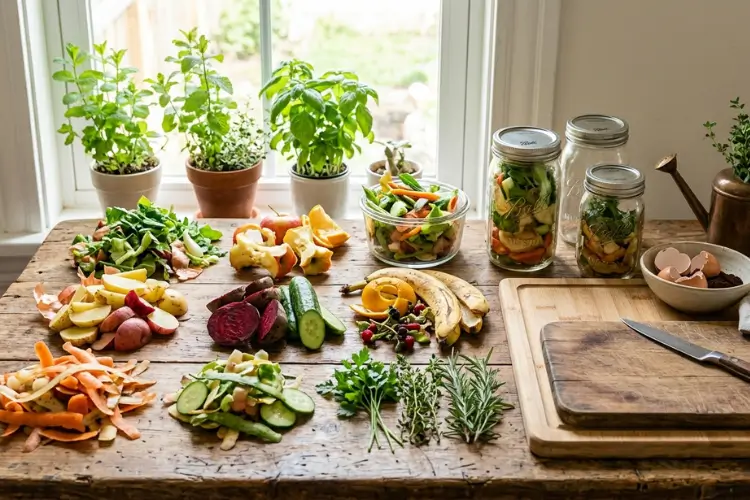
- Reducing food waste: Seeds, skins, and stems from most of this list are compostable rather than trash, which pairs naturally with a few simple zero waste swaps in the kitchen.
It won’t change your grocery list. It might change how you think about what’s on it.
Both Right and Wrong at the Same Time
Twenty everyday vegetables. All of them, botanically, fruit.
Not because someone’s playing a trick on you. Because two different systems have been sorting the same produce aisle for well over a century, and only one of them is based on plant biology.
Next time someone tells you a tomato isn’t a fruit, you’ll know exactly why they’re both right and wrong at the same time.
If you enjoyed digging into where your food actually comes from, you’ll probably also like these surprising animal facts and the story behind the world’s oldest living trees.