Quick version, before we dig in:
- At least 571 plant species have vanished since 1750. A newer estimate puts the real number closer to 850.
- Plants are disappearing about 500 times faster than they naturally would.
- Some of the plants on this list died out 425 million years ago. Others disappeared within your grandparents’ lifetime.
- A few were rediscovered. Most weren’t.
So what does it actually mean for a plant to be extinct?
Here’s the simple answer: a plant is extinct when no living specimen of it exists anywhere on Earth, not in the wild, not in a garden, not in a seed bank. Gone means gone. And according to research out of Royal Botanic Gardens, Kew and Stockholm University, that’s happened to at least 571 plant species in the last 250 years alone, more than the number of extinct birds, mammals, and amphibians combined.
That number probably surprises you. It surprised me too.
Because when most of us picture extinction, we picture animals. A dodo. A woolly mammoth. Nobody grows up with a poster of a extinct fern on their bedroom wall. But plants have been disappearing right alongside the animals, quietly, mostly unnoticed, for millions of years. And in the last two centuries, we’ve sped that process up dramatically.
This list walks through 15 of them. Some are ancient, wiped out by volcanoes and shifting continents long before humans existed. Others went extinct because of a single cotton field, a shipment of aromatic wood, or a wetland that got paved over. Each one has a story. Let’s get into it.
What Does It Mean for a Plant to Be “Extinct”?
A plant is classified as extinct when there’s no reasonable doubt that the last individual has died, according to the International Union for Conservation of Nature (IUCN), the global authority on species status.
That sounds simple. It isn’t.
Proving a negative is brutally hard. How do you prove something doesn’t exist anywhere on the planet? You can’t search every hillside, every riverbank, every patch of forest. So botanists rely on exhaustive search effort, historical records, and time, sometimes decades of it, before a species officially gets the label “extinct.”
Which is why the real number of extinct plants is almost certainly higher than what’s documented. Plants don’t leave carcasses. They don’t make headlines when they disappear. A tree can vanish from a hillside and nobody notices for fifty years.
Extinct vs. Extinct in the Wild vs. Critically Endangered
Not all “gone” is the same kind of gone. The IUCN uses a few different categories, and mixing them up is one of the most common mistakes in how this topic gets covered.
| Category | What It Means | Real Example |
|---|---|---|
| Extinct (EX) | No living individuals exist anywhere, in the wild or in cultivation | Silphium, the ancient North African herb |
| Extinct in the Wild (EW) | Gone from nature, but survives in gardens, greenhouses, or seed banks | Wood’s cycad, kept alive only through cultivated clones |
| Critically Endangered, Possibly Extinct | Almost certainly gone, but not enough search effort to confirm it fully | Hundreds of tropical species, mostly trees, still under evaluation |
That middle category matters more than people realize. A plant can be “extinct in the wild” and still exist, sometimes as a single specimen, propagated over and over in a botanical garden thousands of miles from where it once grew naturally. It’s not really alive out there anymore. But it’s not gone either.
How Many Plant Species Have Actually Gone Extinct?
Here’s where the data gets interesting.
At least 571 plant species have gone extinct since 1750. That figure comes from the first rigorous global analysis of plant extinction, led by botanist Rafaël Govaerts at Kew and published through a partnership with Stockholm University. It’s the most cited number in this space, and for good reason: it’s the first count that was actually built methodically, not estimated.
A more recent study, published in 2024 by Christenhusz and Govaerts, pushes that estimate higher, closer to 850 species, once you include plants that are almost certainly extinct but haven’t been formally confirmed yet.
And it’s not just a global story. Closer to home, if you’re in North America:
- 65 plant species have gone extinct in the continental United States and Canada since European settlement, according to a 2020 study in the journal Conservation Biology, led by Wesley Knapp of the North Carolina Natural Heritage Program, with researchers from University of Washington’s Burke Museum.
- Most of those extinctions happened in the western US, where the land simply wasn’t well documented before it was already being developed.
- Some of those 65 are technically “extinct in the wild,” surviving only because a botanical garden happened to be growing them when the wild population disappeared.
The trend line, no matter how you slice it, points the same direction. Plant extinction isn’t rare. It’s just quiet.
How Scientists Declare a Plant Extinct
You might assume there’s a simple test. There isn’t. Here’s roughly how it works:
- Search effort is documented. Botanists log every known site where the species was historically found, and every attempt made to relocate it.
- Herbaria and historic records are checked. Museum specimens, old field notes, and preserved samples get cross-referenced against modern surveys.
- The species is assessed against IUCN criteria. This includes things like how long it’s been since a confirmed sighting and how thoroughly its known habitat has been searched.
- A formal extinction status is published. Only after all of that does a species officially get labeled Extinct or Extinct in the Wild on the IUCN Red List.
By the way, this is exactly why rediscoveries happen. A plant declared extinct after decades of searching can still turn up, if someone finally checks the right ravine at the right time of year.
15 Historic Plants That No Longer Exist
Some of these plants disappeared before humans existed. Others disappeared because of us, sometimes because of one very specific, very avoidable decision. I’ve ordered them roughly from oldest to most recent, so you can watch the story shift from “the planet did this” to “we did this.”
1. Silphium
Last seen: around the 1st century AD | Cause: overharvesting
Silphium was a flowering herb native to North Africa, prized across the ancient Mediterranean for its medicinal and culinary uses. It was so valuable that it appeared on coins. And that demand is exactly what killed it. It was harvested faster than it could reproduce, and by the time anyone thought to try cultivating it deliberately, it was already gone. No wild population, no garden specimen, nothing. Silphium is often cited as one of the earliest documented cases of humans overharvesting a species into extinction.
2. Cooksonia
Last seen: roughly 425 million years ago | Cause: natural evolutionary turnover
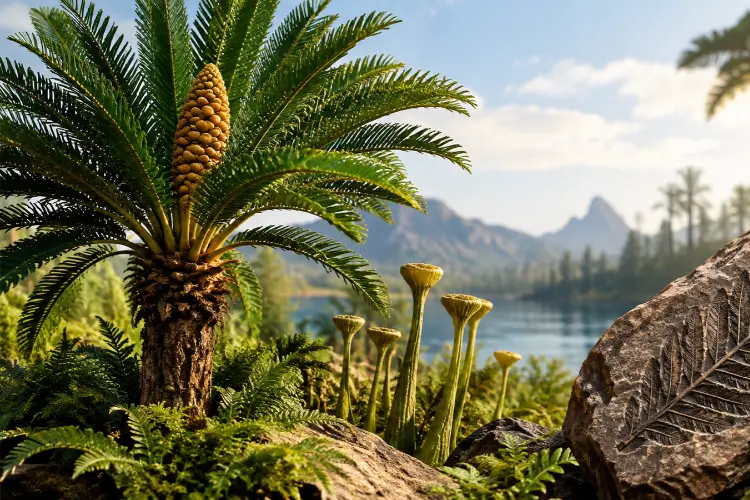
Cooksonia is believed to be one of the very first vascular land plants, meaning one of the first plants to develop internal tissue capable of moving water and nutrients around. To put that in perspective: dinosaurs wouldn’t show up for another 360 million years. Cooksonia didn’t go extinct because of any catastrophe. It was simply outcompeted, over tens of millions of years, by plants that evolved better ways to survive on land.
3. Glossopteris
Last seen: roughly 252 million years ago | Cause: the end-Permian mass extinction
Glossopteris was a genus of seed ferns that dominated ancient forests across what are now separate continents, evidence, actually, that helped confirm the existence of the supercontinent Pangaea, since fossils of it turn up on landmasses that are now thousands of miles apart. It was wiped out in the Permian mass extinction, the most severe extinction event in Earth’s history, which killed off the vast majority of species on the planet, plant and animal alike.
4. Lepidodendron and Sigillaria
Last seen: roughly 250-300 million years ago | Cause: climate shift at the end of the Carboniferous period
These were giant, tree-sized relatives of today’s tiny club mosses, and they once formed vast swamp forests across ancient North America and Europe. As sea levels dropped and the climate turned drier toward the end of the Carboniferous and into the Permian, these swamp giants couldn’t adapt fast enough. Here’s the strange part: their compressed remains became a huge portion of the coal we still burn today. A plant that went extinct 250 million years ago is, in a very real sense, still shaping our climate right now.
5. Araucaria mirabilis
Last seen: roughly 160 million years ago | Cause: volcanic burial
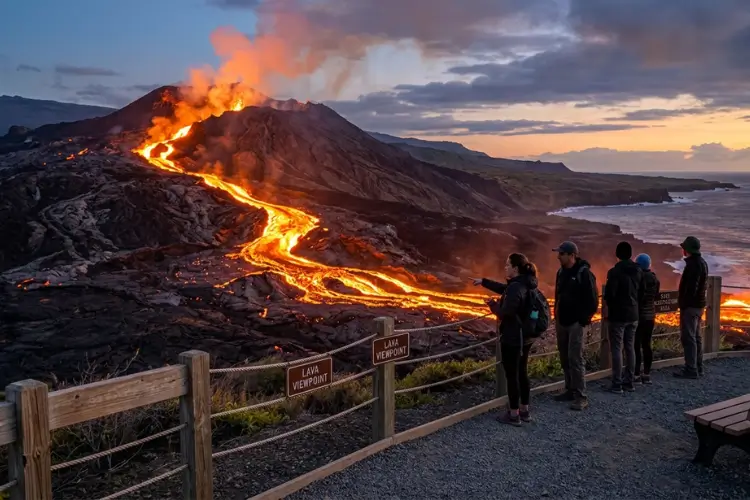
This coniferous tree grew over 125 feet tall in what is now Patagonia, Argentina. It was wiped out by a volcanic eruption, buried so thoroughly and so quickly that exceptionally detailed fossils of it survive today. Sometimes the very event that ends a species is the same event that preserves the evidence of it for 160 million years. If that kind of volcanic power sounds more fascinating than frightening, there are still a handful of places where you can watch lava flow safely today, no 160-million-year wait required.
6. Franklin Tree (Franklinia alatamaha)
Last seen in the wild: 1803 | Cause: unknown, possibly agricultural runoff
Here’s the truth nobody tells you about this one: we don’t actually know why it went extinct. The Franklin tree was discovered growing wild along the Altamaha River in Georgia in 1765, by botanist John Bartram and his son William. It grew nowhere else on Earth. Within a few decades of its discovery, it had vanished entirely from the wild. Some botanists suspect nearby cotton plantations disrupted the soil or introduced a fungal pathogen, but nobody has ever confirmed it. The only reason the Franklin tree still exists at all is that William Bartram went back and collected its seeds in 1773, thirty years before the wild population disappeared. Every Franklin tree alive today, in gardens across the eastern US, descends from those seeds. It’s a reminder that not every native species makes it onto a list of common trees in the United States, some only survive because someone intervened just in time.
7. St. Helena Olive (Nesiota elliptica)
Last confirmed: 2003 | Cause: deforestation
Native only to the remote island of St. Helena in the South Atlantic, this tree survived Portuguese exploration in the 1500s and British settlement in the 1600s, both of which cleared huge amounts of the island’s forest for farming. It clung on in isolated pockets for centuries. The very last known individual, a tree that had been cared for and monitored, died in 2003. That’s within many of our lifetimes. This isn’t ancient history.
8. Toromiro Tree (Sophora toromiro)
Extinct in the wild since: the 1950s-1960s | Cause: deforestation
Native exclusively to Easter Island (Rapa Nui), the toromiro was already declining for centuries as the island’s forests were cleared. By the mid-20th century, it was gone entirely from its native habitat. But: a few seeds had been collected earlier and planted in botanical gardens across Europe. The toromiro survives today only in cultivation, hundreds of miles and an entire ocean away from the island it evolved on.
9. Wood’s Cycad (Encephalartos woodii)
Extinct in the wild since: the early 1900s | Cause: habitat loss and a genetic dead end
This one might be the strangest entry on the list. Wood’s cycad was found as a single clump of stems in a South African forest in 1895. It was male. Cycads need both a male and a female plant to reproduce sexually, and no female Wood’s cycad has ever been found, anywhere, ever. Every living Wood’s cycad on Earth today, and there are quite a few in botanical gardens, is a genetically identical clone propagated from that one original male plant. It’s sometimes called the loneliest plant in the world, and honestly, that’s not an exaggeration.
10. Chile Sandalwood (Santalum fernandezianum)
Last photographed: 1908 | Cause: overharvesting for its aromatic wood
Native to the Juan Fernandez Islands off the coast of Chile, this tree was harvested aggressively for its fragrant wood, prized for incense and perfume. The demand outpaced the tree’s ability to regenerate. It was last documented, in a photograph, in 1908. Extensive searches since then have turned up nothing.
11. Banded Trinity (Thismia americana)
Last seen: 1916 | Cause: habitat destroyed by industrial development
This one is unusual: a leafless plant with no chlorophyll, found only in the wetlands around Chicago’s Lake Calumet. It was discovered in 1912. The site where it grew was converted for industrial development within a few years, and despite extensive searching, it has never been seen again, anywhere in the world. It’s the only known North American member of its genus, and it’s gone.
12. Interrupted Brome (Bromus interruptus)
Extinct in the wild since: 1972 | Cause: modern agricultural technology
Here’s one that went extinct for a genuinely modern reason. This grass was a weed that grew specifically among cultivated crops across the British Isles. As farming technology improved, specifically better seed-cleaning methods, the crop seed it had always traveled alongside stopped carrying its seeds too. It simply had nowhere left to grow. It survives today only in seed banks and a few cultivated plots, entirely dependent on human effort to keep existing.
13. Kokia cookei (Hawaiian Tree Cotton)
Extinct in the wild since: the mid-20th century | Cause: habitat loss and coextinction
Native to Hawaii, Kokia cookei’s decline is widely believed to be linked to coextinction, meaning it may have depended on a pollinator species that itself went extinct, taking the plant down with it. Add habitat clearing on top of that, and the wild population couldn’t recover. It survives today only through grafted cultivation, since the species struggles to reproduce on its own even in gardens.
14. Franciscan Manzanita (Arctostaphylos franciscana)
Extinct in the wild: believed so for decades, until 2009 | Cause: urbanization
Native only to San Francisco, this shrub was assumed extinct in the wild for most of the 20th century as the city grew over its habitat. Then, in 2009, a single wild specimen was spotted, by chance, during highway construction work near the Golden Gate Bridge. One plant. That’s it. It was carefully relocated and is now being propagated, but for decades, everyone believed it was simply gone.
15. Thistle Milk-Vetch and the Quiet North American Extinctions
Last seen: documented in the 2020 Conservation Biology study | Cause: land use change
This one represents an entire category rather than a single dramatic story. Thistle milk-vetch (Astragalus kentrophyta var. douglasii) and the pale bugseed (Corispermum pallidum), both found in the Pacific Northwest, are two of the 65 confirmed North American plant extinctions from that 2020 study. Neither was ever abundant. Neither made headlines. They simply disappeared as land use changed around them, unnoticed until researchers went looking decades later and couldn’t find them anywhere. Most plant extinctions look like this: quiet, undramatic, and almost entirely invisible until someone goes looking.
Why Do Plants Go Extinct? The Main Causes, Ranked
Looking across all 15 of these, and the broader research behind them, a few causes show up over and over:
- Habitat loss. By far the most common driver, whether it’s deforestation, urbanization, or land converted for farming, and just one more item on the long list of reasons why forests are important well beyond the species living in them.
- Overharvesting. Silphium and Chile sandalwood were both loved to death, harvested faster than they could reproduce.
- Climate shift. Ancient extinctions like Glossopteris and the Carboniferous coal-forest giants were driven by long-term changes in temperature and sea level.
- Coextinction. Some plants depend entirely on a specific pollinator or partner species. Lose the partner, and the plant often follows.
- Unknown causes. The Franklin tree is a genuine mystery. So are several others. Sometimes we simply don’t know, and that’s an honest, if unsatisfying, answer.
The main drivers of modern plant extinctions specifically, according to current conservation research, are changes in land use, direct exploitation, and climate change, roughly in that order.
Plants Once Thought Extinct That Were Rediscovered
Not every story on this list ends in permanent loss. Here’s the hopeful part.
- Franciscan manzanita, as covered above, was rediscovered in 2009 after decades of being presumed gone, quite literally found during highway construction.
- Botanists have documented 430 plant species once thought extinct that have since been rediscovered, according to the same global survey that produced the 571 figure. One well-known example is the Chilean crocus (Tecophilaea cyanocrocus), long assumed extinct in the wild before small surviving populations were found.
- Several hawthorn species and a bittersweet shrub variety in North America were, until a 2020 study, thought to be extinct in the wild. Researchers discovered they’d actually survived, unnoticed, in botanical garden collections the whole time.
Here’s what that tells you: “extinct” isn’t always the final word. It’s the word we use when the search effort runs out. Sometimes the search just needs to start again.
Why Plant Extinction Matters
Here’s the part worth sitting with.
Plants aren’t the backdrop other species live in front of. They’re the infrastructure. Remove one, and the animals, fungi, and insects that depended on it can start disappearing too. Ecosystems don’t fail all at once. They unravel one quiet extinction at a time, and plants are usually the first thread to go.
The good news is that this isn’t a closed book. New extinctions are still being confirmed, but so are new rediscoveries. Search efforts today, using better data and more coordinated global tracking than ever before, are actively finding plants long assumed gone.
If this list left you wanting to do something with that, start local. Look into which native plants near you are endangered, not yet extinct, and see what it actually takes to protect them. That’s usually where the real leverage is, long before a species ever reaches this list.