Quick answer first, because you didn’t come here for a preamble.
The 15 tallest mountains in the world, ranked by height above sea level, are Everest, K2, Kangchenjunga, Lhotse, Makalu, Cho Oyu, Dhaulagiri I, Manaslu, Nanga Parbat, Annapurna I, Gasherbrum I, Broad Peak, Gasherbrum II, Shishapangma, and Gyachung Kang. All but one sit in the Himalayas or the Karakoram.
But here’s the part almost nobody tells you up front.
“Tallest” and “highest” aren’t actually the same word. Everest wins one of those titles. It doesn’t win the other. I’ll explain exactly what that means in a second, because once you get it, you’ll never look at a mountain ranking the same way again.
Wait, “Tallest” or “Highest”? Here’s the Truth Nobody Tells You
Most lists like this one use “tallest” and “highest” as if they’re interchangeable.
They’re not.
Highest means the greatest elevation above sea level. That’s the measurement almost everyone means when they picture a mountain ranking, and it’s the one this article uses for the list below. By that measure, Everest wins, hands down, at 8,848.86 meters (29,031.7 feet).
Tallest, technically, means the greatest distance from a mountain’s base to its summit. And by that definition, Everest doesn’t even crack the top spot.
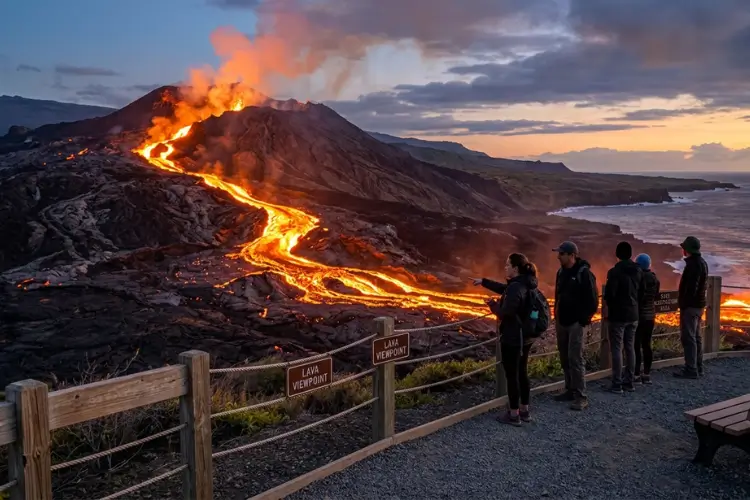
That honor goes to Mauna Kea, a dormant volcano on Hawaii’s Big Island. Measured from its true base on the Pacific seafloor to its peak, Mauna Kea rises roughly 10,205 meters (about 33,480 feet), more than a thousand meters taller than Everest’s entire height above sea level. You just can’t see most of it, because nearly two-thirds of Mauna Kea is underwater.
So which mountain is actually the “tallest”? Depends who you ask, and depends what you’re measuring from.
Why this list uses “highest above sea level”
Because that’s what 99% of people mean when they search for this list, and because it’s the measurement that produces a clean, verifiable, universally agreed-upon ranking. Base-to-peak measurements get murky fast. Where exactly does a mountain’s “base” start? Geologists don’t fully agree, and that ambiguity is exactly why Mauna Kea rarely shows up on official mountaineering lists even though it technically deserves the crown.
Keep that asterisk in your back pocket. You’ll sound sharp at trivia night.
How Mountains Are Actually Measured
There are three ways scientists size up a mountain, and each one crowns a different winner.
- Elevation above sea level. The standard, most-used method. Everest wins here.
- Base-to-summit height. Measures the mountain’s full bulk, wherever it starts. Mauna Kea wins here.
- Distance from the Earth’s center. Because the Earth bulges at the equator, a mountain near the equator can be “taller” from the planet’s core outward, even with a lower sea-level elevation. Chimborazo in Ecuador wins this one, despite standing at only 6,263 meters above sea level.
Three methods. Three different champions. That’s the whole reason this topic keeps confusing people, and now you’re not one of them.
The 15 Tallest Mountains in the World, Ranked
This is the list you actually came for. Every peak below tops 7,900 meters. Every one of them will humble you just reading the stats.
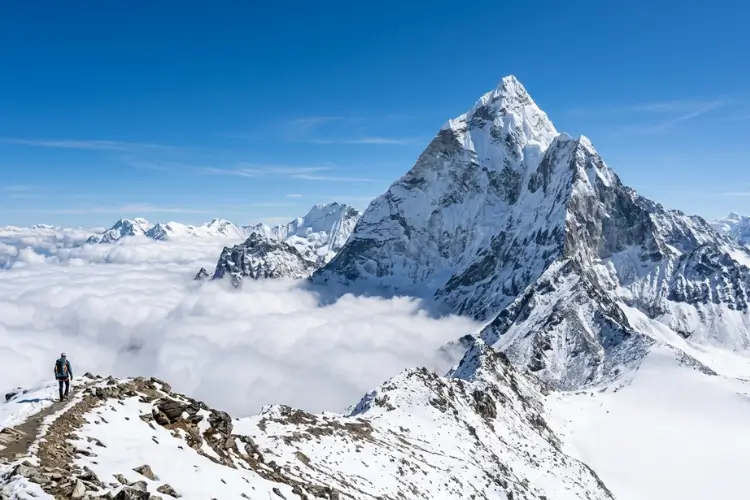
1. Mount Everest
Height: 8,848.86 m (29,031.7 ft) | Location: Nepal-China border, Himalayas
Everest is the standard every other mountain gets measured against. Its official height was last updated in 2020, when China and Nepal jointly resurveyed the peak and confirmed the 8,848.86-meter figure you see today. Sir Edmund Hillary and Tenzing Norgay made the first confirmed ascent in 1953. Since then, thousands have followed, and the mountain has developed a reputation for overcrowding near the summit during peak climbing windows.
2. K2
Height: 8,611 m (28,251 ft) | Location: China-Pakistan border, Karakoram range
K2 is shorter than Everest, but don’t let that fool you. Climbers widely consider it the harder, more dangerous ascent, thanks to its steep faces and weather violent enough to rival the windiest places in the world. It’s earned the nickname the “Savage Mountain” for good reason. Roughly 1 in every 4 to 5 summit attempts historically has ended in a fatality, a ratio far steeper than Everest’s.
3. Kangchenjunga
Height: 8,586 m (28,169 ft) | Location: Nepal-India border, Himalayas
For a stretch in the 19th century, before better surveying tools existed, Kangchenjunga was believed to be the tallest mountain on Earth. Its name translates roughly to “Five Treasures of Snow,” a nod to its five distinct summit peaks.
4. Lhotse
Height: 8,516 m (27,940 ft) | Location: Nepal-China border, Himalayas
Lhotse sits directly connected to Everest by the South Col, and climbers headed for Everest’s summit ascend the Lhotse Face along the way. It’s essentially Everest’s quieter neighbor, overshadowed but nearly as massive.
5. Makalu
Height: 8,485 m (27,838 ft) | Location: Nepal-China border, Himalayas
Makalu’s defining feature is its shape: a sharp, isolated, four-sided pyramid, carved by glaciers grinding at it from every side. It stands as one of the most technically demanding eight-thousanders to climb.
6. Cho Oyu
Height: 8,188 m (26,864 ft) | Location: Nepal-China border, Himalayas
Cho Oyu has a reputation as the “easiest” of the eight-thousanders, relatively speaking, which is exactly why many climbers use it as a training ground before attempting Everest. Easiest is a relative word here. It has still claimed dozens of lives.
7. Dhaulagiri I
Height: 8,167 m (26,795 ft) | Location: Nepal, Himalayas
Between 1808 and 1847, Dhaulagiri was believed to be the world’s highest mountain, before Kangchenjunga briefly took that title, before Everest finally settled the debate in 1852. Its name means “White Mountain.”
8. Manaslu
Height: 8,163 m (26,781 ft) | Location: Nepal, Himalayas
Manaslu translates to “Mountain of the Spirit.” It’s become one of the more popular eight-thousanders for commercial expeditions in recent years, thanks to a comparatively accessible route relative to its neighbors.
9. Nanga Parbat
Height: 8,126 m (26,660 ft) | Location: Pakistan, Himalayas
Nanga Parbat earned the grim nickname “Killer Mountain” during the early 20th century, after a string of failed expeditions and a high early fatality rate. Modern climbing techniques have made it far safer than its history suggests.
10. Annapurna I
Height: 8,091 m (26,545 ft) | Location: Nepal, Himalayas
Annapurna I holds a genuine claim to mountaineering history. In 1950, Maurice Herzog and Louis Lachenal became the first climbers to summit any peak above 8,000 meters, doing it here, two decades before most of the other eight-thousanders had ever been climbed. They paid for it. Both lost fingers and toes to frostbite on the descent.
11. Gasherbrum I
Height: 8,080 m (26,509 ft) | Location: China-Pakistan border, Karakoram range
Also known as Hidden Peak, Gasherbrum I sits deep in a remote corner of the Karakoram, far less crowded and far less commercialized than its Himalayan counterparts.
12. Broad Peak
Height: 8,051 m (26,414 ft) | Location: China-Pakistan border, Karakoram range
Broad Peak earns its name honestly. Its summit ridge stretches roughly 1.5 kilometers, giving it one of the widest, most sprawling summit crests among the eight-thousanders.
13. Gasherbrum II
Height: 8,035 m (26,362 ft) | Location: China-Pakistan border, Karakoram range
Considered one of the more approachable eight-thousanders from a technical standpoint, Gasherbrum II sits just a short distance from K2 in the same remote stretch of the Karakoram.
14. Shishapangma
Height: 8,027 m (26,335 ft) | Location: Tibet, China
Shishapangma is the shortest and youngest of the fourteen eight-thousanders, and the only one located entirely within Chinese territory rather than straddling a border.
15. Gyachung Kang
Height: 7,952 m (26,089 ft) | Location: Nepal-China border, Himalayas
Here’s the question you’re probably asking. Why does the list jump from fourteen eight-thousanders straight to a mountain under 8,000 meters?
Because Gyachung Kang is the tallest peak on Earth that doesn’t clear the 8,000-meter threshold. It sits in a class of its own, higher than every other non-eight-thousander on the planet by a wide margin, which is exactly why it earns the fifteenth spot on this list.
The 15 Tallest Mountains at a Glance
| Rank | Mountain | Height (m) | Height (ft) | Range | Location |
| 1 | Mount Everest | 8,848.86 | 29,031.7 | Himalayas | Nepal / China |
| 2 | K2 | 8,611 | 28,251 | Karakoram | China / Pakistan |
| 3 | Kangchenjunga | 8,586 | 28,169 | Himalayas | Nepal / India |
| 4 | Lhotse | 8,516 | 27,940 | Himalayas | Nepal / China |
| 5 | Makalu | 8,485 | 27,838 | Himalayas | Nepal / China |
| 6 | Cho Oyu | 8,188 | 26,864 | Himalayas | Nepal / China |
| 7 | Dhaulagiri I | 8,167 | 26,795 | Himalayas | Nepal |
| 8 | Manaslu | 8,163 | 26,781 | Himalayas | Nepal |
| 9 | Nanga Parbat | 8,126 | 26,660 | Himalayas | Pakistan |
| 10 | Annapurna I | 8,091 | 26,545 | Himalayas | Nepal |
| 11 | Gasherbrum I | 8,080 | 26,509 | Karakoram | China / Pakistan |
| 12 | Broad Peak | 8,051 | 26,414 | Karakoram | China / Pakistan |
| 13 | Gasherbrum II | 8,035 | 26,362 | Karakoram | China / Pakistan |
| 14 | Shishapangma | 8,027 | 26,335 | Himalayas | China (Tibet) |
| 15 | Gyachung Kang | 7,952 | 26,089 | Himalayas | Nepal / China |
The Seven Summits: The Tallest Mountain on Every Continent
So what about the rest of the planet?
Fair question. If your search history has ever wandered from “tallest mountains in the world” to “tallest mountain near me,” this section is for you.
The Seven Summits are the highest peak on each continent, and only one of them, Everest, overlaps with the list above.
- Asia: Mount Everest, 8,848.86 m
- South America: Aconcagua, Argentina, 6,961 m
- North America: Denali, Alaska, USA, 6,190 m
- Africa: Kilimanjaro, Tanzania, 5,895 m
- Europe: Elbrus, Russia, 5,642 m
- Antarctica: Vinson Massif, 4,892 m
- Oceania: Puncak Jaya (Carstensz Pyramid), Indonesia, 4,884 m
Climbing all seven has become its own mountaineering milestone, a bucket-list challenge distinct from chasing the eight-thousanders. Denali and Kilimanjaro alone draw far more climbers each year than most of the Karakoram peaks combined, mostly because they’re achievable without the extreme altitude risk of the Himalayan giants. Kilimanjaro in particular packs five separate ecosystems into a single climb, rainforest to glacier, which is exactly the kind of only-on-Earth oddity we round up in our random animal facts that may surprise you.
Everest Earns Its Fame. Just Not That Title.
Here’s what all of this really comes down to.
Everest earns its fame fairly. It’s the highest point above sea level on the entire planet, and nothing else comes close. But “tallest” was never as simple a word as it sounds, and now you know why.
Fourteen mountains on Earth clear 8,000 meters. All but a scattered few sit within a few hundred miles of each other, tucked into the same two mountain ranges. That’s not a coincidence. It’s what happens when two continents spend forty million years slowly colliding.
And if you’re the type who likes your nature served in superlatives, the mountains are just the start. The same planet that built an 8,848-meter peak also grows the biggest flowers on Earth and hides some of the largest insects in the world in its rainforests.
Next time someone tells you Everest is the tallest mountain in the world, you’ll know exactly what to say back.